
Understanding Your VA Disability Rating System

The Department of Veterans Affairs (VA) uses a system to evaluate and assign disability ratings, which determine a veteran's compensation and benefits. This VA disability rating system uses percentages from 0% to 100% to indicate the severity of service-connected conditions. Understanding this system is essential for veterans navigating the claims process.
The VA carefully evaluates each service-connected disability based on medical evidence and established criteria. The evaluation assesses the impact of the condition on daily activities, work, and social functioning.
This rating isn't random; it's based on legal guidelines and official procedures. The VA distinguishes between service-connected disabilities, those incurred or worsened during military service, and non-service-connected disabilities. Only service-connected disabilities qualify for VA disability compensation.
How the VA Calculates Ratings
For veterans with multiple service-connected conditions, the VA uses a specific calculation method, sometimes called "VA Math." This method ensures that every condition contributes to the overall rating, accurately reflecting the combined effect on the veteran’s well-being.
VA Compensation Rates and Resources
The VA disability rating system determines the compensation amount veterans receive. Compensation rates are adjusted periodically. For example, in 2025, rates increased by 2.5% due to a cost-of-living adjustment.
A veteran with a 100% disability rating in 2025 received $3,831.30 monthly if single, $4,044.91 with a spouse, and $4,387.79 with a spouse and two parents. You can find more details on VA compensation rates here.
Numerous resources are available for veterans and their families, including caregiver support networks like NJ Care Giving. While complex, the VA disability rating system strives to accurately reflect the impact of military service on a veteran’s life.
To help veterans quickly understand the rating scale, we've provided a quick reference table below:
The following table provides a simplified overview of the VA Disability Rating Scale. This information is for general reference only and should not be substituted for official VA guidance.
VA Disability Rating Scale Quick Reference
Essential disability rating percentages and compensation eligibility overview
| Rating Percentage | Severity Level | General Description | Compensation Eligibility |
|---|---|---|---|
| 0% | None | No compensable disability | Not eligible for compensation |
| 10% | Mild | Minimal impact on daily activities | Eligible for compensation |
| 30% | Moderate | Noticeable impact on daily activities | Eligible for compensation |
| 50% | Moderately Severe | Significant impact on daily activities | Eligible for compensation |
| 70% | Severe | Substantial impact on daily activities | Eligible for compensation |
| 100% | Total | Unable to work or perform most daily activities | Eligible for compensation |
This table summarizes the different rating percentages, their general severity level, a brief description of the impact on daily life, and the eligibility for compensation. For detailed information on specific conditions and their corresponding ratings, it’s essential to consult the complete VA disability rating schedule. Each rating level has specific criteria that must be met for a veteran to receive that rating.
Complete VA Disability Compensation Chart

Understanding your VA disability benefits and how compensation is calculated can feel overwhelming. This guide breaks down the 2025 VA disability compensation rates, including the 2.5% cost-of-living adjustment (COLA) effective December 1, 2024. These rates determine the monthly payments veterans receive based on their assigned disability rating and the number of dependents they have.
Understanding the VA Disability Rating System
The VA disability rating system assigns percentages from 10% to 100%, in increments of ten. Each percentage level corresponds to a specific monthly payment. Your individual rating, along with your dependent status (spouse, children, or dependent parents), determines the exact amount you receive.
How Dependents Affect VA Disability Payments
The presence of dependents significantly impacts your monthly compensation. The more dependents you have, the higher your monthly payment will be. This system recognizes the added financial responsibilities that come with supporting a family while managing a service-connected disability.
2025 VA Disability Compensation Rates Table
The table below, "Complete VA Disability Compensation Rates," provides a detailed overview of the monthly compensation amounts for 2025. It breaks down the payments by disability rating and dependent status.
Remember, this information is for illustrative purposes and shouldn't replace official VA guidance. For the most current and personalized information, consult the official VA website or a VA-accredited representative.
Complete VA Disability Compensation Rates: Monthly compensation amounts by disability rating and dependent status.
| Disability Rating | Veteran Only | With Spouse | With Spouse + 1 Child | With Spouse + 2 Children | Additional Child |
|---|---|---|---|---|---|
| 10% | $175.51 | – | – | – | – |
| 20% | $346.95 | – | – | – | – |
| 30% | $537.42 | $601.42 | $648.42 | $750.42 | +$73 |
| 40% | $774.16 | $859.16 | $922.16 | $1,058.16 | +$73 |
| 50% | $1,102.04 | $1,208.04 | $1,287.04 | $1,457.04 | +$73 |
| 60% | $1,395.93 | $1,523.93 | $1,617.93 | $1,821.93 | +$73 |
| 70% | $1,759.19 | $1,908.19 | $2,018.19 | $2,258.19 | +$73 |
| 80% | $2,044.89 | $2,214.89 | $2,340.89 | $2,614.89 | +$73 |
| 90% | $2,297.96 | $2,489.96 | $2,630.96 | $2,938.96 | +$73 |
| 100% | $3,831.30 | $4,044.91 | $4,201.35 | $4,544.23 | +$174 |
Key takeaways from the table include the substantial increase in compensation as the disability rating rises and the additional amounts provided for each dependent.
Additional Compensation Considerations
Beyond the standard rates, additional compensation may be available. Factors such as children beyond two, children over 18 in qualifying educational programs, and spouses requiring Aid and Attendance can increase your monthly payment. Be sure to explore these options to ensure you receive all eligible benefits.
Understanding Your Individual VA Compensation
While the VA disability chart offers a valuable starting point, your individual circumstances will determine your final monthly payment. Consulting with a VA-accredited representative can help you navigate the complexities of the system and maximize your benefits. They can provide personalized guidance based on your unique situation.
Disability Rating Categories And Common Conditions

This guide explores the different condition categories the VA uses for disability ratings. Understanding these categories and the VA's evaluation process is key to a successful claim. We'll cover common conditions within each category, offering practical examples and showing how they relate to potential rating percentages.
Musculoskeletal Conditions
Musculoskeletal conditions affect the bones, joints, muscles, and connective tissues. They are frequently claimed by veterans.
Here are a few examples:
- Osteoarthritis: This degenerative joint disease causes pain, stiffness, and limited range of motion. Ratings vary depending on the severity and the specific joints involved. Imagine a veteran whose osteoarthritis limits their ability to walk or lift objects. The resulting limitations in daily activities directly impact the assigned rating.
- Back Pain: Back injuries, from slipped discs to spinal stenosis, can severely affect a veteran's life. The VA considers range of motion, pain levels, and functional limitations to assign ratings. For example, a veteran with chronic back pain requiring regular medication and limiting physical activity would likely receive a higher rating than someone with occasional discomfort.
- Limb Loss or Amputation: These conditions receive high ratings based on the specific limb and the level of amputation. The loss of a hand, for instance, would have a different rating than the loss of a finger.
Cardiovascular Conditions
Cardiovascular conditions involve the heart and blood vessels and can range from minor issues to serious illnesses.
Some common conditions are:
- Hypertension (High Blood Pressure): Ratings for hypertension depend on the severity and any related complications. A veteran with hypertension requiring multiple medications to control their blood pressure might receive a higher rating than someone managing their condition with lifestyle changes.
- Heart Disease: Conditions like coronary artery disease and heart failure are evaluated based on symptoms, diagnostic test results, and functional limitations. A veteran experiencing shortness of breath and chest pain, confirmed by medical tests, would likely receive a higher rating than someone with less severe symptoms.
Respiratory Conditions
Respiratory conditions impact breathing and lung function.
Consider these examples:
- Asthma: The severity and frequency of asthma attacks influence the VA disability rating. A veteran requiring frequent hospitalizations for asthma attacks would likely receive a higher rating than someone managing their asthma with medication and experiencing infrequent attacks.
- Sleep Apnea: This breathing disorder disrupts sleep and causes daytime fatigue. The VA considers the severity and treatment effectiveness. A veteran using a CPAP machine might receive a different rating than someone with mild sleep apnea not requiring treatment.
Neurological Conditions
Neurological conditions affect the brain, spinal cord, and nerves. These can be mild or severely debilitating.
Here are some examples:
- Traumatic Brain Injury (TBI): The VA uses a comprehensive system to assess TBI based on cognitive impairment, physical limitations, and behavioral changes. A veteran experiencing memory loss, difficulty concentrating, and personality changes after a TBI would likely receive a higher rating.
- Peripheral Neuropathy: This condition causes numbness, tingling, and pain in the extremities. A veteran experiencing constant pain and difficulty walking due to peripheral neuropathy would likely receive a higher rating than someone with occasional numbness and tingling.
Mental Health Conditions
Mental health conditions are increasingly recognized as significant disabilities.
Some examples are:
- Post-Traumatic Stress Disorder (PTSD): The VA assesses PTSD based on symptom severity and their impact on daily life. A veteran experiencing flashbacks, nightmares, and difficulty maintaining relationships due to PTSD would likely receive a higher rating.
- Depression: Ratings for depression are based on severity and treatment effectiveness. A veteran with severe depression impacting their ability to work or perform daily activities might receive a higher rating than someone with mild depression.
- Anxiety: Anxiety disorders are evaluated based on symptom frequency and intensity. A veteran experiencing frequent panic attacks and difficulty leaving their home due to anxiety would likely receive a higher rating.
Sensory Impairments
Sensory impairments affect senses like vision and hearing.
- Hearing Loss: Ratings depend on the degree of hearing loss in each ear. A veteran with significant hearing loss in both ears requiring hearing aids would likely receive a higher rating.
- Vision Loss: The VA evaluates the severity of vision impairment in each eye. A veteran with significant vision loss impacting their ability to read or drive would likely receive a higher rating.
As of August 2024, 5.5 million veterans had a service-connected disability. Of those employed, roughly 36.5% worked in government positions (Discover more insights). This data highlights how service-connected disabilities affect veterans and their careers. Understanding how your condition aligns with the VA rating schedule is crucial for maximizing your benefits.
Decoding Your VA Rating Decision Letter
Receiving your VA disability rating decision letter marks a significant milestone in your claim. Understanding its contents, however, can feel overwhelming. This guide breaks down the key components, language, and potential next steps, empowering you to navigate this important document.
Key Components of Your Rating Decision
Your rating decision letter contains essential information that determines your benefits. Let's explore the core elements:
-
Effective Date: This crucial date signifies the start of your VA disability benefits and is the basis for calculating any retroactive payments (back pay). Make sure this date aligns with your claim and medical records.
-
Disability Ratings: The VA assigns a percentage rating to each service-connected disability, reflecting its severity. A 30% rating, for instance, indicates moderate impairment. These individual ratings contribute to your overall combined disability rating.
-
Diagnostic Codes: These codes, corresponding to specific medical conditions recognized by the VA, link your disabilities to the VA disability rating chart, which determines your compensation amount. Familiarize yourself with these codes to understand how the VA categorizes your conditions.
-
Rationale: The VA provides a justification for each assigned rating, citing medical evidence and relevant legal precedents. This section is critical for understanding the VA’s decision-making process, especially if you are considering an appeal.
Understanding the Language and Terminology
VA rating decisions often employ complex medical and legal terms. Don't be intimidated by the jargon. Here's a practical approach:
-
Break Down Complex Terms: Consult a medical dictionary or online resources to decipher unfamiliar terms. Understanding the medical rationale behind your rating empowers you to advocate for your benefits effectively.
-
Focus on the Key Takeaways: Prioritize understanding the core information: your disability rating percentages and the effective date. This information summarizes your benefit level and when you can expect to receive them.
-
Seek Clarification: If any part of your rating decision remains unclear, reach out to a VA-accredited representative or a Veterans Service Officer (VSO). They can provide personalized guidance and explain complex concepts in plain language. Resources like Florida disability grants might also be helpful depending on your location.
Identifying Potential Errors and Appeals Options
Thoroughly review your rating decision for any potential errors. Common errors include:
-
Incorrect Effective Dates: An inaccurate effective date can significantly impact your back pay. Double-check that the effective date corresponds to your claim submission and supporting medical documentation.
-
Misinterpreted Medical Evidence: The VA may sometimes misinterpret or overlook key medical records. Ensure all relevant evidence has been properly considered and accurately reflected in your rating.
-
Incorrect Application of VA Regulations: The VA must adhere to specific regulations when assigning disability ratings. Verify that your rating aligns with the appropriate criteria outlined in the VA disability rating chart.
If you identify any errors, you have the right to appeal. The appeals process allows you to submit additional evidence and argue for a more accurate and fair rating. A VA-accredited representative can provide invaluable support during this process, guiding you through the procedures and helping you build a strong case. By proactively understanding your rating decision, you take control of your VA benefits and ensure you receive the support you deserve.
Mastering VA Math and Combined Ratings
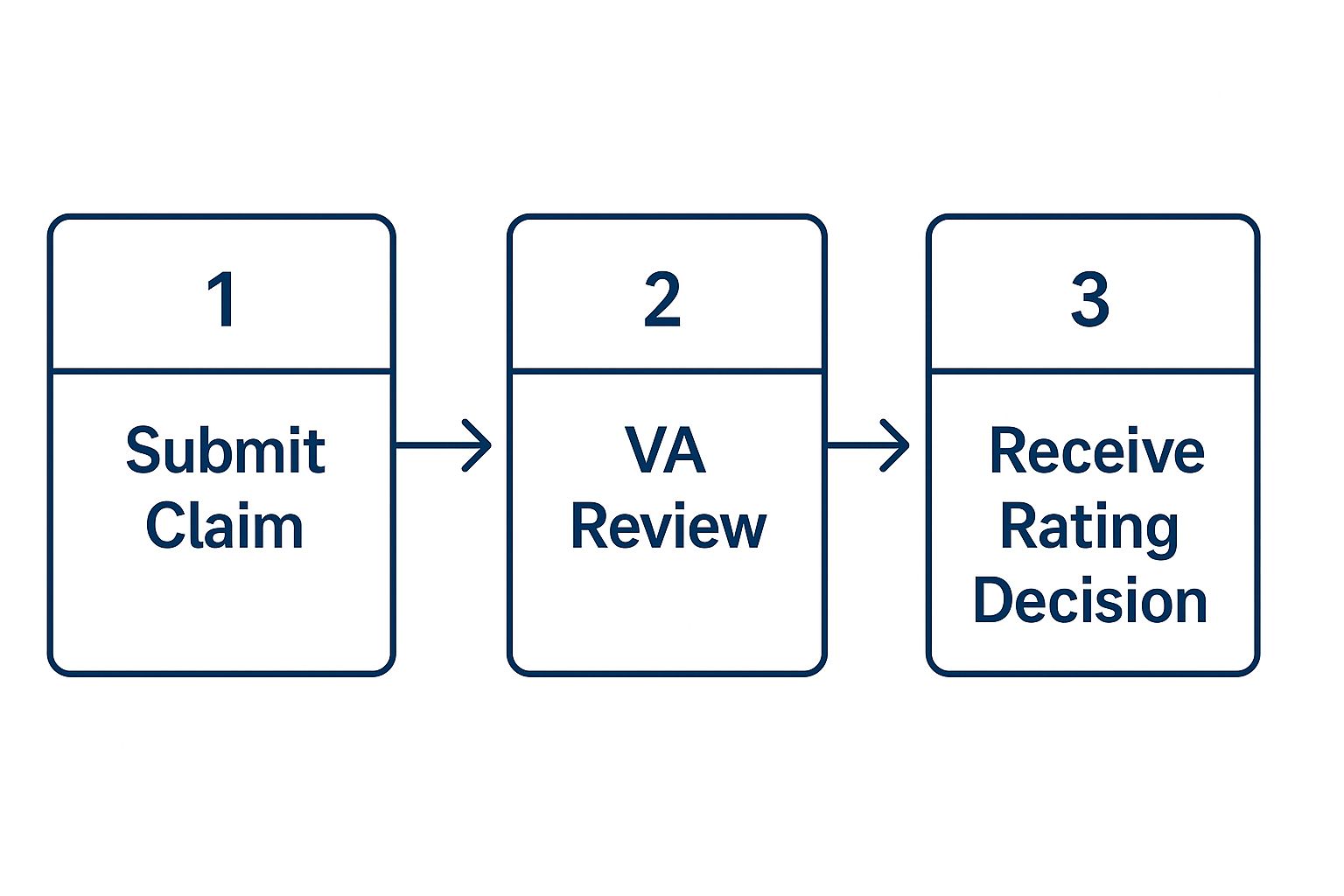
The infographic above visually represents the VA disability claim process, from submission and review to the final rating decision. Understanding these steps is crucial for veterans navigating this often complex system.
The VA uses a unique calculation method for combined disability ratings, considering the "whole person" concept rather than simply adding individual ratings. This approach assesses the overall impact of disabilities on a veteran’s ability to function. Let's explore how this "VA Math" works.
Understanding the Whole Person Concept
The whole person concept focuses on the veteran's remaining functional capacity after accounting for all service-connected disabilities. For example, a veteran with a 50% disability rating and a 30% rating doesn’t receive a combined rating of 80%. The initial 50% rating signifies a 50% loss of function. The second rating is then calculated based on the remaining 50% capacity.
Calculating Combined Ratings: VA Math in Action
The VA follows a specific formula to determine combined disability ratings:
-
Highest Rating First: Begin with the highest individual disability rating.
-
Calculate Remaining Capacity: Subtract the highest rating from 100% to determine the remaining functional capacity.
-
Apply the Second Rating: Multiply the remaining capacity by the second disability rating.
-
Calculate Combined Rating: Add the result from Step 3 to the highest rating.
Let’s illustrate with an example: A veteran has a 50% rating and a 30% rating. First, 100% – 50% = 50% remaining capacity. Then, 50% * 30% = 15%. Finally, 50% + 15% = 65% combined rating.
Let's further explore some examples in the following table:
VA Math Calculation Examples
Step-by-step examples showing how multiple disability ratings combine
| Individual Ratings | Step-by-Step Calculation | Combined Rating | Rounded Rating |
|---|---|---|---|
| 50%, 30% | 100 – 50 = 50; 50 * 0.30 = 15; 50 + 15 = 65 | 65% | 70% |
| 70%, 20% | 100 – 70 = 30; 30 * 0.20 = 6; 70 + 6 = 76 | 76% | 80% |
| 40%, 40% | 100 – 40 = 60; 60 * 0.40 = 24; 40 + 24 = 64 | 64% | 60% |
| 60%, 10%, 10% | 100 – 60 = 40; 40 * 0.10 = 4; 60 + 4 = 64; 100 – 64 = 36; 36 * 0.10 = 3.6; 64 + 3.6 = 67.6 | 67.6% | 70% |
As you can see from the examples, the VA math calculation can be quite complex, particularly when more than two ratings are involved. It's important to note that final combined ratings are often rounded to the nearest ten.
Bilateral Factor and Its Impact
The bilateral factor comes into play when a veteran has disabilities affecting both sides of the body (e.g., both knees). This factor increases the combined rating, acknowledging the greater impact of paired disabilities. To receive this consideration, veterans must apply and submit medical evidence linking their bilateral condition to their military service. Learn more about the application process.
Impact of Smaller Ratings on Overall Percentage
Due to the compounding nature of VA math, even smaller individual disability ratings can significantly influence the final combined rating. Understanding this system empowers veterans to potentially maximize their overall disability compensation.
Employment Benefits and Vocational Rehabilitation
Connecting your VA disability rating to employment opportunities and vocational rehabilitation programs is a crucial step in securing your financial future. This section explores how your rating can influence your job prospects and the benefits designed to support your career transition.
Individual Unemployability (IU)
Individual Unemployability (IU) provides compensation at the 100% rate, even if your combined disability rating is lower. This benefit is for veterans unable to maintain substantially gainful employment due to service-connected disabilities.
This doesn't mean you can't work at all. Rather, it acknowledges the difficulty of holding suitable employment in a competitive job market. For example, a veteran with a 70% rating for back pain and 40% for PTSD might qualify for IU if these conditions significantly impact their ability to work consistently.
Vocational Rehabilitation and Employment (VR&E)
The VR&E program helps veterans with service-connected disabilities prepare for, find, and keep suitable jobs. VR&E offers a range of services:
-
Education and Training: Pursue degrees, vocational training, or apprenticeships to develop new skills. Imagine a veteran retraining as a software developer after an injury prevents them from continuing physical labor.
-
Job Placement Assistance: Receive help with resumes, interviews, and connecting with employers. VR&E specialists work with veterans to identify appropriate career paths.
-
Reasonable Accommodation Requirements: VR&E helps employers understand and implement accommodations required under the Americans with Disabilities Act (ADA), ensuring veterans can perform their duties comfortably and effectively. This might include modified work environments, adjusted schedules, or assistive technology.
The prevalence of disabilities among veterans offers insights into their unique employment challenges. Between June 2024 and May 2025, 6.2% of veterans had a disability, compared to 7.8% of non-veterans. Read the full research
Employment Patterns Among Veterans With Disabilities
Understanding employment trends can inform your career decisions. Data consistently reveals a higher prevalence of government employment among veterans with service-connected disabilities. Factors contributing to this trend may include job security, federal hiring preferences, and accessible work environments. However, opportunities also exist in the private sector, especially with the growing emphasis on diversity and inclusion.
Maximizing Your Benefits and Employment Potential
Veterans with disabilities can significantly improve their compensation and career prospects by carefully considering IU, engaging with VR&E services, and understanding employment trends. Consulting with a Veterans Service Officer (VSO) or a VA-accredited representative is strongly recommended. Developing a personalized plan that addresses your specific needs and utilizes available resources is key to navigating the veterans disability chart alongside employment benefits and achieving your professional goals.
Quick Reference Tools and Essential Resources
Navigating the VA disability system can feel overwhelming. This guide provides a collection of essential resources designed to simplify the process, offering quick access to crucial information, forms, and support organizations. Staying organized and informed is key to effectively managing your VA benefits.
Key Online Resources
The VA website (VA.gov) is your primary source of information. It offers comprehensive details on benefits, healthcare, and other valuable resources. You can access the veterans disability chart, download required forms, and even check your claim status. The site is continuously updated to ensure you have the most current information.
Below is a screenshot of the VA's eligibility page:
This image highlights the importance of service connection as a core eligibility requirement for VA disability benefits. Understanding these criteria is the first step in the claims process.
For veterans transitioning back into the workforce, Vocational Rehabilitation provides valuable resources and support. The eBenefits portal is another essential tool, offering personalized access to your VA records and benefits information.
Veterans Service Organizations (VSOs)
Veterans Service Organizations (VSOs) offer invaluable assistance to veterans navigating the VA disability system. They provide guidance on the claims process, help with paperwork, and can even represent you during appeals. Connecting with a local VSO can significantly streamline your interactions with the VA and provide personalized support tailored to your specific needs.
Mobile Apps and Tracking Tools
Staying organized and on top of deadlines is crucial. Several mobile apps are available to help track your claims, manage appointments, and access important VA information on the go. These apps offer a convenient way to interact with the VA and keep your claims process moving forward efficiently.
Checklists and Timeline Reminders
Creating a checklist for each stage of your claim can ensure you gather all necessary documentation and meet all deadlines. Setting timeline reminders can prevent delays and help you stay proactive. This organization is essential for managing your claim effectively.
Troubleshooting Common Issues
Even with the best planning, unexpected challenges can arise. A resource guide addressing common issues like missing documents or delayed decisions can save you valuable time and frustration. Proactively understanding these potential roadblocks can smooth out the claims process.
Utilizing these tools and resources will empower you to stay informed, organized, and in control of your VA benefits. Ready to take the next step and ensure you receive the support you deserve? Contact Homefront Group today for a free consultation. Our experienced team of veteran advocates and attorneys is dedicated to helping you navigate the complexities of the VA system and secure the benefits you’ve earned.