

Navigating the Fundamentals of Veteran Benefits Eligibility

Understanding veteran benefits eligibility can be complex. This section clarifies the core principles determining access to these important resources. One of the first things to consider is your discharge status.
The Importance of Discharge Status
For most VA programs, a discharge status "other than dishonorable conditions" is essential. This includes designations ranging from honorable discharges to general discharges under honorable conditions. However, a dishonorable discharge usually disqualifies a veteran from most benefits. Maintaining accurate records of your service and separation is therefore crucial. This establishes the foundation for accessing a wide range of potential benefits. Understanding the VA's priority group system is also key.
Understanding the VA Priority Group System
The VA prioritizes veteran enrollment based on factors like service-connected disabilities, income, and enrollment date. Similar to boarding a plane, certain groups receive priority. For example, veterans with service-connected disabilities and lower incomes generally receive higher priority. This system ensures those with the greatest need receive timely access to essential services. Knowing your placement in this system provides a clearer understanding of your benefits landscape. Eligibility, however, goes beyond these basic factors.
Service Periods and Benefit Packages
Different service periods can lead to specific benefit packages. Wartime service, for example, may qualify you for pension benefits, while peacetime service may offer other options. This historical context shapes the benefits available to different generations of veterans. It reflects the evolving nature of veteran support as societal needs change. Verification is also a crucial step in the process.
Verification and Documentation
The VA uses rigorous processes to verify veteran status and eligibility. This often requires submitting documentation like DD-214 forms, medical records, and financial information. Accurate and complete documentation is essential for a smooth and successful application. U.S. veteran benefits eligibility is traditionally tied to discharge status, with 'other than dishonorable conditions' required for most VA programs. As of 2025, enrollment prioritization divides nonservice-connected veterans into sub-groups. Those enrolled before January 16, 2003 (Sub-priority c) retain automatic eligibility. Post-June 15, 2009, enrollees (Sub-priority d) face income thresholds of 10% above the VA's geographic limits. Even a 0% disability rating qualifies veterans for condition-specific care (Sub-priority e). However, Project 2025 proposals suggest future restrictions could impact recognized medical conditions. The VA's VetPop2023 model projects veteran population trends through 2053, informing eligibility policies for healthcare, pensions, and disability compensation. Learn more here. Understanding these fundamental eligibility components helps you explore specific programs available.
Unlocking Your VA Healthcare Eligibility
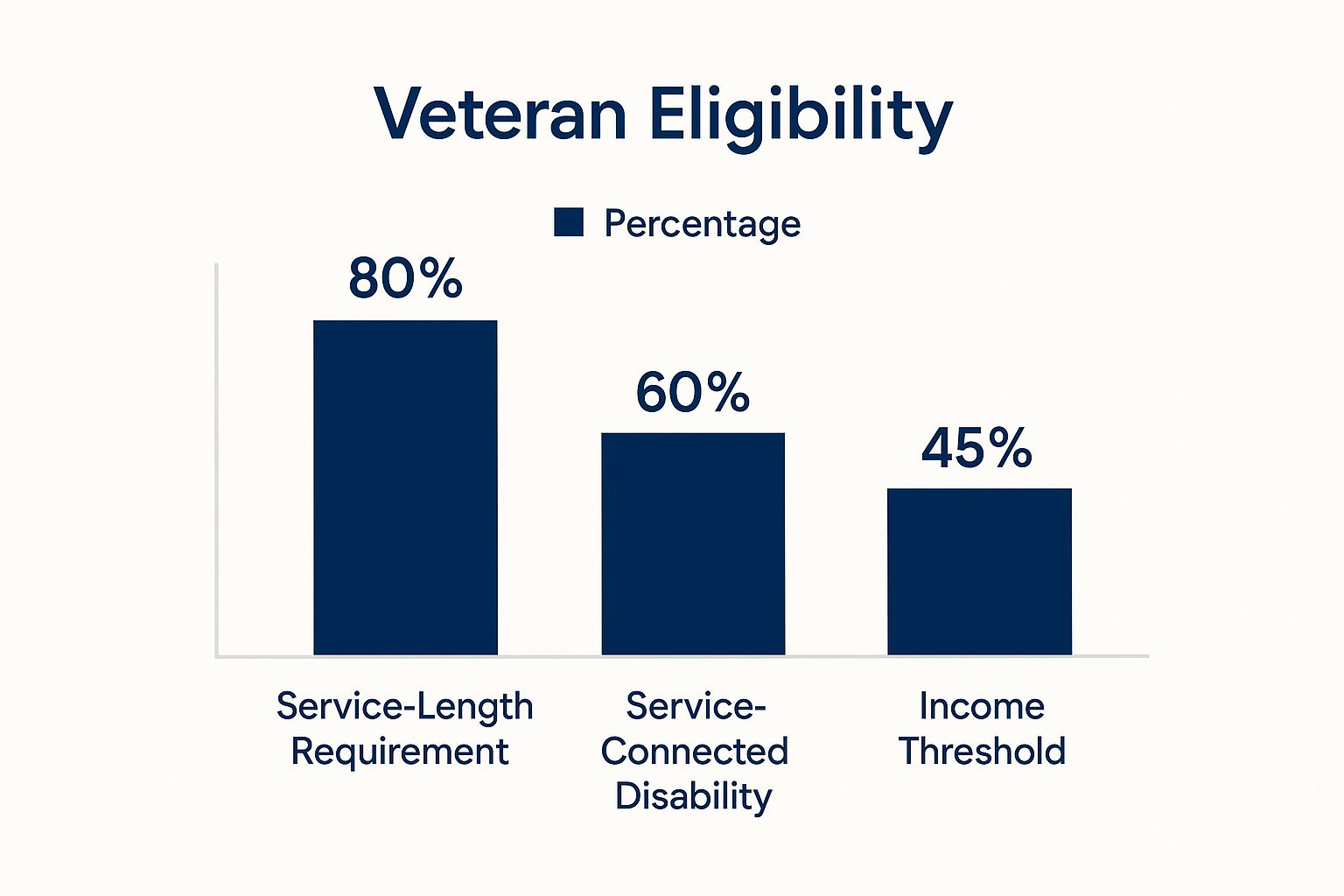
Accessing healthcare is a significant benefit for veterans. However, understanding eligibility, especially for healthcare, can be challenging. This section clarifies the priority group system, a crucial factor in determining your access level and potential waiting periods.
Understanding VA Healthcare Priority Groups
The VA assigns veterans to different priority groups, dictating the order in which they receive healthcare services. This system ensures those with the most urgent needs receive care first. These groups are based on several factors, including service-connected disabilities, income levels, and specific periods of service.
For example, a veteran with a service-connected disability will typically have higher priority than a veteran without one. Additionally, income plays a role, particularly for veterans without service-connected disabilities.
How Priority Groups Impact Your Care
Your assigned priority group affects several aspects of your healthcare access. Higher priority often translates to shorter waiting times for appointments and procedures. For example, veterans in higher priority groups may experience quicker access to specialist referrals.
Furthermore, priority group assignments can influence the cost of your care. Some groups are eligible for cost-free or reduced-cost services. This is a substantial financial benefit for those who qualify. Understanding these nuances empowers veterans to effectively navigate the system.
Visualizing the Priority Group System
The data chart below illustrates the distribution of veterans across the eight priority groups, showing the percentage of veterans within each group. It highlights the concentration of veterans in certain categories.
As the chart indicates, a significant portion of veterans fall into specific priority groups, reflecting various factors impacting eligibility. This visualization helps in understanding the overall distribution.
To further break down the priority groups and their eligibility criteria, refer to the table below:
Understanding the nuances of each group is essential for veterans seeking VA healthcare. The following table provides a detailed breakdown:
VA Healthcare Priority Groups
| Priority Group | Eligibility Criteria | Benefits Access Level |
|---|---|---|
| 1 | Service-connected disabilities 50% or more disabling; or unemployable due to service-connected conditions | Highest |
| 2 | Service-connected disabilities 30-40% disabling | High |
| 3 | Service-connected disabilities 10-20% disabling; or a Purple Heart recipient | Medium |
| 4 | Former POWs; or awarded the Medal of Honor | High |
| 5 | Service-connected disabilities 0% non-compensable; or diagnosed with a specific condition related to military service; or a veteran of the Gulf War | Medium |
| 6 | Non-service-connected disabilities and income below a certain threshold | Medium to Low |
| 7 | Non-service-connected disabilities and income above a certain threshold | Low |
| 8 | Higher income veterans with no service-connected disabilities | Lowest |
This table clarifies the eligibility criteria for each priority group, outlining the factors that determine a veteran's placement within the system. Understanding these criteria is the first step towards accessing appropriate VA healthcare services.
Recent Policy Changes and Their Impact
Eligibility criteria and priority group assignments can be affected by policy changes. For example, recent updates to the VA healthcare system have adjusted income thresholds for certain priority groups.
These adjustments aim to better align eligibility with the evolving needs of the veteran population. Staying informed about these changes is essential.
Regularly checking the VA website and consulting with veteran service organizations can provide crucial insights into how these changes might affect your eligibility. Preparing the required documentation is also crucial for a seamless application process. With proper preparation, veterans can effectively access the healthcare they’ve earned.
Securing Disability Compensation You've Earned

Disability compensation offers vital financial support to veterans dealing with service-related health conditions. However, obtaining these benefits requires a solid understanding of the VA's evaluation procedures. This includes demonstrating the connection between your military service and your current health issues, backed by evidence that meets their specific criteria.
Connecting Service Experience to Current Health
The VA employs a thorough process to confirm the link between your military service and any disabilities you are currently experiencing. This often involves a comprehensive review of your medical and service records, as well as any supporting documentation you can provide. For instance, if you suffered a back injury while serving, the VA will carefully assess how that specific injury contributes to any current back pain you may be experiencing. This meticulous evaluation ensures that benefits are distributed fairly and accurately.
Understanding Disability Ratings
The VA uses a percentage-based system, ranging from 10% to 100% in increments of ten, to rate the severity of service-connected disabilities. Each percentage corresponds to a specific monthly compensation amount. A 10% rating, signifying a relatively minor condition, could provide $168+ monthly, whereas a 100% rating, indicating total disability, could result in $3,737+ monthly. This tiered system ensures that the financial support aligns with the impact the disability has on a veteran’s daily life. Between August 2024 and 2025, discussions arose concerning potential limitations on eligible conditions, such as musculoskeletal problems and mental health disorders, through reforms in the disability evaluation process. You can find more detailed information on these ratings at VA Claims Insider.
Calculating Combined Ratings
Many veterans experience multiple service-connected disabilities. In these situations, the VA calculates a combined disability rating. This rating takes into account the individual ratings for each condition and how they interact. The process isn't a straightforward addition of percentages; it’s a more nuanced calculation designed to reflect the overall effect of all service-connected disabilities. This approach ensures equitable compensation for the combined influence of multiple conditions.
Effective Documentation Strategies
Successfully claiming disability compensation hinges on providing strong supporting documentation. This includes medical and service records, as well as any additional evidence that strengthens your claim. Think of it as building a comprehensive case – the more substantial the evidence, the stronger your claim becomes.
Qualifying Conditions and Timelines
A wide range of conditions may qualify for disability compensation; however, each case undergoes an individual review. The claims process also has varying timelines. Understanding these aspects and managing expectations realistically helps veterans navigate the process more efficiently.
Special Monthly Compensation and Appeals
Veterans with particularly severe disabilities may qualify for Special Monthly Compensation. This program provides supplemental financial assistance beyond standard compensation rates. If a claim is denied, veterans have the right to appeal the decision. Knowledge of these procedures is essential for veterans seeking the full scope of benefits they have earned. This understanding empowers them to effectively advocate for themselves and pursue the best possible outcome. By understanding the complexities of disability compensation, you can effectively pursue the benefits earned through your service. This includes knowing how to present a compelling case and access additional support when needed.
Accessing Pension Benefits for Wartime Service

While disability compensation addresses service-connected injuries or illnesses, pension benefits provide crucial financial support to wartime veterans facing financial hardship. Many veterans are unaware of this benefit, but understanding the eligibility requirements can be vital for those who qualify. This section will explore the wartime service periods that may qualify you for pension benefits. Key conflicts include World War II, the Korean War, the Vietnam War, and the Gulf War.
Qualifying Wartime Service Periods
Eligibility for VA pensions depends on service during specific wartime periods. These periods are defined by the VA, and fulfilling these service requirements is the first step toward determining your potential eligibility. For instance, serving during the Vietnam War era, even if not stationed in Vietnam, could still qualify you. This distinction is important for veterans who served in supporting roles during such conflicts.
Understanding these nuances is essential for accurately assessing your eligibility. It’s important to note that simply serving during a wartime period doesn't guarantee eligibility; other factors also come into play.
Income and Net Worth Evaluations
The VA utilizes specific financial thresholds to determine eligibility for pension benefits. Your income and net worth are assessed against these limits. This means that even with qualifying wartime service, your financial situation plays a critical role in determining your eligibility. The VA offers detailed guidance on what it considers countable income and assets. This evaluation acts like a financial snapshot, enabling the VA to assess your financial need.
Countable Income and the Maximum Annual Pension Rate
To calculate your potential pension amount, the VA calculates your countable income. This figure is then compared against the Maximum Annual Pension Rate (MAPR). The MAPR is adjusted annually and varies based on factors such as the number of dependents and any special needs, including being housebound or requiring aid and attendance. A veteran with one dependent, for example, will have a different MAPR than a veteran with no dependents.
These adjustments ensure benefits reflect current living costs and provide adequate support. Pension benefits for wartime veterans have specific financial thresholds. To illustrate, in 2025, housebound veterans receive $20,732 annually ($1,727 monthly). Those with one dependent qualify for $25,982 yearly ($2,165 monthly). Aid and Attendance benefits reach $28,300 annually ($2,358 monthly), but require documented proof of the need for assistance with daily living. These figures consider inflation and living expenses, but eligibility remains contingent on wartime service and income below VA-defined limits. More detailed statistics can be found here. The VA's income limits are updated annually and account for geographic adjustments, resulting in regional variations in eligibility.
To better understand the benefit rates based on individual circumstances, refer to the table below:
Pension Benefit Rates by Category
This table shows the monthly and annual pension benefit amounts based on dependent status and level of care needed.
| Veteran Category | Monthly Payment | Annual Payment | Special Requirements |
|---|---|---|---|
| Housebound Veteran | $1,727 | $20,732 | Proof of housebound status |
| Veteran with One Dependent | $2,165 | $25,982 | Proof of dependent status |
| Veteran Receiving Aid and Attendance | $2,358 | $28,300 | Proof of need for aid and attendance |
These figures reflect the 2025 rates and are subject to change. It’s crucial to consult the VA for the most up-to-date information.
Enhanced Pension Benefits for Special Needs
Veterans who are housebound or require aid and attendance might qualify for enhanced pension benefits. These benefits offer supplemental financial support to cover the added costs related to these needs. Thorough documentation is essential to demonstrate eligibility. For example, medical records and statements from healthcare providers can be used to confirm the need for aid and attendance.
Impact of Dependents on Pension Calculations
Your number of dependents directly affects your pension calculations. Each dependent increases the MAPR, resulting in a potentially higher pension amount. This acknowledges the increased financial responsibilities associated with supporting a family. Accurate reporting of your dependents is essential for receiving the correct benefit amount.
Documentation for Verification
Accessing pension benefits requires verifying both your wartime service and financial status. This typically involves providing various documents, such as discharge papers, financial statements, and medical records. The VA offers detailed checklists outlining the required documentation, ensuring you have everything necessary for a seamless application. Gathering these documents in advance streamlines the process and minimizes potential delays. Obtaining veteran benefits eligibility requires a clear understanding of the specific criteria for each program, including factors such as wartime service, income levels, and any special needs. By fully understanding these criteria, you can navigate the application process effectively and secure the benefits you deserve.
Maximizing Your Education and GI Bill Opportunities
Education benefits are a cornerstone of post-military life, providing veterans a powerful springboard to new careers and personal growth. Understanding veteran benefits eligibility, specifically concerning the GI Bill, can sometimes feel overwhelming. This section clarifies the key differences between various GI Bill programs, helping you identify which best suits your individual needs and how to maximize its potential.
Comparing GI Bill Programs
The GI Bill encompasses several programs, each with its own eligibility criteria and benefit levels. Two of the most well-known are the Post-9/11 GI Bill and the Montgomery GI Bill (MGIB). Think of them as two distinct paths leading to the same destination: education. Each is designed for different service histories.
-
Post-9/11 GI Bill: This program typically offers the most comprehensive benefits. It can potentially cover tuition and fees, provide a monthly housing allowance, and offer a books and supplies stipend. Eligibility generally requires at least 90 days of aggregate service after September 10, 2001.
-
Montgomery GI Bill: The MGIB provides a monthly education benefit paid directly to the veteran. While it may not cover all expenses like the Post-9/11 GI Bill, it offers flexibility in how the funds are used. Eligibility is often tied to specific service commitments and contributions.
Comparing both programs side-by-side is important to understand their nuances. Each program offers distinct advantages depending on your educational goals and financial situation. When planning for your future, it’s also important to understand how your pension benefits might be affected. Learn about pension protection strategies here.
Time-In-Service and Benefit Level
Your time-in-service is a crucial factor in determining your GI Bill benefit level, especially for the Post-9/11 GI Bill. Generally, more time served results in a higher percentage of tuition and fees covered, along with a larger housing allowance. This structure incentivizes longer service commitments.
Delimiting Dates and Eligibility Windows
GI Bill benefits are often subject to delimiting dates. These dates establish the timeframe within which you must use your benefits. It’s vital to know these dates to ensure you utilize your benefits effectively before they expire.
Transferring Benefits to Family Members
Under certain circumstances, transferring your Post-9/11 GI Bill benefits to a spouse or dependent children is possible. This can be an excellent way to support your family’s educational aspirations. Understanding the eligibility requirements for transferring benefits is essential, as they vary based on service commitments and other factors.
The Yellow Ribbon Program
The Yellow Ribbon Program can significantly expand your tuition coverage. This program allows participating schools to contribute additional funds toward your education, which the VA then matches. Understanding the Yellow Ribbon Program’s eligibility requirements and finding participating schools is crucial.
Vocational Rehabilitation and Employment (VR&E)
Veterans with service-connected disabilities may be eligible for Vocational Rehabilitation and Employment (VR&E) services. This program offers personalized support for training, education, and employment assistance. It helps veterans overcome employment challenges related to their disabilities.
Checking Remaining Benefits and Maximizing Value
Managing your GI Bill benefits effectively involves tracking your remaining benefit months. This allows you to plan your education strategically and maximize the value of your benefits. By understanding your remaining entitlement, you can make informed choices about your education path and use your benefits efficiently.
Qualifying For VA Home Loans and Housing Benefits
VA home loan benefits offer significant advantages to veterans looking to buy a home. However, eligibility depends on several factors, such as the length of your service and the type of discharge you received. This section explains the eligibility requirements for various groups of veterans, from those who served in World War II to current service members.
Service Requirements Across Different Eras
The VA maintains specific service requirements for its home loan program. These criteria differ depending on your period of service. For instance, World War II veterans have different eligibility requirements compared to veterans of the Gulf War era. This reflects the evolving needs and demographics of the veteran population over time. The length of service also plays a vital role. Minimum service requirements exist, but longer service periods can sometimes provide additional benefits.
Impact of Discharge Characterization
Your discharge characterization directly affects your VA home loan eligibility. Generally, a discharge under “other than dishonorable” conditions is necessary. This includes honorable discharges, general discharges, and other similar classifications. A dishonorable discharge, however, will usually disqualify you. Keeping accurate records of your service and discharge is essential. This documentation will be crucial when you apply for a loan.
Eligibility For National Guard and Reserve Members
National Guard and Reserve members have specific eligibility paths for VA home loans. Qualification usually requires a certain length of active duty service. Call-ups to active duty can count toward eligibility, but the specific requirements depend on the nature and duration of the call-up. It's important to remember that periods of inactive duty training generally do not count toward these requirements. Understanding these distinctions is key for National Guard and Reserve members exploring VA loan options.
Understanding Your Certificate of Eligibility
The Certificate of Eligibility (COE) is a vital document confirming your eligibility for a VA home loan. It details your specific entitlements and verifies that you meet the VA's requirements. Consider the COE your key to accessing these loan benefits. It assures lenders that you qualify, allowing them to move forward with your application.
Entitlement Restoration and Subsequent Loans
Veterans who have previously used their VA loan benefit might be able to have their entitlement restored. This enables them to obtain another VA-backed loan. The process usually involves selling the original property and paying off the existing loan. This allows veterans to use the VA loan benefit multiple times, making it a valuable resource for homeownership.
Eligibility For Surviving Spouses
Surviving spouses of eligible veterans may also qualify for VA home loan benefits. This provides essential financial support to surviving spouses seeking to purchase a home. Eligibility for surviving spouses depends on several factors, including the circumstances of the veteran's death and the surviving spouse's marital status.
Funding Fees and Down Payment Options
VA home loans often include a funding fee, which helps reduce the loan's cost to taxpayers. The funding fee amount varies depending on your service category and whether you make a down payment. Even a small down payment can lower your funding fee. Veterans with service-connected disabilities may be exempt from the funding fee entirely. Understanding how these elements influence your funding fee will aid in accurate budgeting.
Adaptive Housing Grants For Disabled Veterans
Veterans with service-connected disabilities requiring specially adapted housing may qualify for grants. These grants can help pay for modifications needed to make a home accessible. The Specially Adapted Housing (SAH) and Special Housing Adaptation (SHA) grants assist veterans needing changes such as ramps, wider doorways, or adapted bathrooms. These programs aim to create more comfortable and accessible living spaces.
By understanding the specifics of VA home loan eligibility, you can pursue the benefits you earned through your service. This includes gathering the necessary documentation and determining which programs best meet your needs. With this knowledge, veterans can navigate the process more efficiently and achieve their homeownership goals.
Strategic Approaches to Maximize Your Benefits Access
Navigating the veteran benefits system can be challenging. This section provides proven strategies to help you secure all the benefits you deserve. Consider it your personal guide to maximizing your benefits access.
Conducting a Comprehensive Benefits Audit
A benefits audit helps you uncover potential benefits you might be missing. It involves reviewing your service history, discharge status, and current needs. Think of it as taking stock of your resources.
-
Start with the Basics: Gather your DD-214, medical records, and any other important documents. These documents are the foundation of your benefits claim.
-
Utilize Online Resources: The VA website offers helpful tools like the GI Bill Comparison Tool. These resources help you explore potential education benefits.
-
Seek Professional Guidance: Veterans Service Officers (VSOs) offer invaluable support and can help you understand the benefits landscape. They can provide personalized advice and assistance.
Strengthening Your Claims With Effective Documentation
Solid documentation is essential for a successful benefits claim. It supports your eligibility and strengthens your application. Think of it as presenting your case to the VA.
-
Medical Records: When applying for disability compensation, ensure your medical records clearly connect your condition to your military service.
-
Service Records: Your service records should accurately detail your duties, deployments, and any injuries or illnesses sustained during service.
-
Buddy Statements: Statements from fellow service members who can corroborate events related to your claim offer valuable support. These firsthand accounts can significantly bolster your case.
Navigating the Appeals Process
A denial can be discouraging, but it's not the end of the road. The appeals process offers a way to have your claim reconsidered. It's your opportunity to present your case again.
-
Understand Your Options: Learn about the different appeal options available and select the best one for your circumstances.
-
Seek Expert Assistance: A VSO or an attorney specializing in veterans' benefits can offer crucial support during the appeals process, helping you gather more evidence and build a strong appeal.
Working Effectively With Veterans Service Officers
VSOs are experienced advocates who can guide you through the VA system. They provide support and expertise throughout the process.
-
Find a Local VSO: Many organizations provide free VSO services. Find a VSO near you for individualized help.
-
Prepare for Your Meeting: Collect all necessary documentation before meeting with your VSO to make the most of your time together. This helps them quickly understand your situation and create a plan.
Avoiding Common Eligibility Pitfalls
Many veterans encounter common eligibility issues that can delay or even prevent their claims. Being aware of these common mistakes can save you time and frustration.
-
Missing Documentation: Make sure you submit all required documentation. Missing even one document can cause substantial delays.
-
Incomplete Applications: Fill out every section of the application completely and accurately. Incomplete applications can be rejected.
-
Misunderstanding Eligibility Criteria: Thoroughly review the eligibility requirements for each benefit you’re applying for. Misinterpreting these requirements can lead to a denied claim.
Adapting to Life Changes
Life events like marriage, divorce, or having a child can affect your veteran benefits eligibility. Stay informed about how these changes might impact your benefits. Regularly review your benefits and update your information with the VA to ensure you’re receiving the correct benefits.
Staying Current on Policy Changes
VA benefits and eligibility requirements can change due to new legislation or policy updates. Staying informed about these changes is crucial for maximizing your benefits. Subscribing to VA newsletters or following veteran advocacy organizations can keep you updated on changes that might affect you.
By following these strategies, you can successfully navigate the VA benefits system and ensure you receive the full support you’ve earned. Homefront Group is dedicated to empowering veterans. Take our free 3-minute quiz to discover your eligible benefits and start building a secure future.