
Here's a straightforward fact about the VA tinnitus rating: it’s a flat 10%. That’s it. It doesn't matter if the ringing is in one ear or both, or if it's a constant roar or an intermittent hiss. This single percentage is the maximum schedular rating the VA gives for tinnitus, which makes it a bit of an outlier compared to other service-connected conditions.
Understanding the Basics of Your Tinnitus Claim
When the VA gives you a rating for tinnitus, it's their way of providing disability compensation for that persistent ringing, buzzing, or humming in your ears that started because of your military service. Think of it as the VA officially recognizing that your time on duty caused a lasting medical problem.
But here’s where tinnitus claims get interesting. Since the VA rates it at a flat 10%, your claim isn't about proving how bad the ringing is. Your entire focus needs to be on one thing: service connection. You have to show the VA, with clear evidence, that something that happened during your military service is the direct cause of your tinnitus today.
Why Is Tinnitus So Common Among Veterans?
It’s no secret that tinnitus is one of the most common disabilities veterans face. The reason is pretty obvious when you think about it: military life is loud. Really loud. Whether you were on a flight line, in an engine room, on the rifle range, or in a combat zone, you were likely around hazardous noise. It’s just part of the job.
The VA’s own numbers tell the story. Over 2.3 million veterans are currently receiving disability benefits for tinnitus, making it the most prevalent service-connected condition. Unlike hearing loss, which is rated on a sliding scale depending on severity, the VA keeps it simple with a 10% rating for tinnitus. That means a veteran who was around constant artillery fire and has severe ringing gets the same 10% as someone who has intermittent ringing from working near loud engines. You can find more details about veteran tinnitus prevalence and ratings on disabilitylawgroup.com.
What This Means for Your Claim
So, what does this all mean for you? It means you can stop worrying about trying to prove the intensity of your symptoms. That's not the battle you need to fight. Your mission is to simply connect the dots for the VA.
To set you up for a successful claim, let’s quickly break down the key characteristics of the VA’s approach to tinnitus.
VA Tinnitus Rating at a Glance
| Rating Aspect | VA Specification |
|---|---|
| Disability Rating | A flat 10%, regardless of severity or number of ears affected. |
| Bilateral Factor | No extra percentage is given if tinnitus is in both ears. |
| Primary Goal of Claim | To prove service connection, not symptom severity. |
| Common Cause | Most often linked to noise exposure during military service. |
As the table shows, the path is clear. Your entire claim boils down to proving that link to your service.
Here's where you need to focus your energy:
- A Current Diagnosis: First things first, you need a doctor to officially diagnose you with tinnitus.
- An In-Service Event: Pinpoint the specific noise exposure, event, or injury from your time in the military that caused it.
- The Medical Link: This is the "nexus"—the professional medical opinion that connects your current diagnosis directly back to that in-service event.
This guide is designed to walk you through each of these steps, helping you pull together the evidence you need to build a solid, undeniable case for your VA tinnitus rating.
How to Prove Service Connection for Tinnitus
When you're fighting for a VA tinnitus rating, it’s easy to get sidetracked by how bad your symptoms are. But here's the reality: the VA's decision doesn't hinge on the severity of the ringing. It all comes down to one thing—proving a solid connection between your military service and your tinnitus.
Think of your claim as a three-legged stool. For it to be solid enough for the VA to accept, all three legs must be strong and firmly in place.
Here are the three legs you need to build with irrefutable evidence:
- A Current Diagnosis: You need an official, up-to-date tinnitus diagnosis from a medical professional.
- An In-Service Event or Injury: You must be able to point to a specific event, injury, or sustained noise exposure that happened during your time in the service.
- A Medical Nexus: This is the crucial link—a professional medical opinion that connects your current diagnosis directly back to that in-service event.
If any one of these legs is weak or missing entirely, your claim will almost certainly be denied. Let's break down how to gather the right evidence for each of these pillars.
Gathering Evidence for Your Claim
First things first, get a current diagnosis. If you haven't done so already, schedule an appointment with an audiologist or an Ear, Nose, and Throat (ENT) specialist. While there isn't a machine that can physically detect tinnitus, a doctor can officially diagnose it based on your reported symptoms after ruling out other medical issues.
Next up is documenting the in-service event. This is where your service records are worth their weight in gold.
Pro Tip: Your Military Occupational Specialty (MOS) or Air Force Specialty Code (AFSC) can be your most powerful piece of evidence. The VA already presumes that many military jobs involve hazardous noise, which can make proving your case much, much easier.
Think back to your time in service. Common sources of hazardous noise include:
- Combat Deployments: Any exposure to gunfire, explosions, or IEDs.
- Training Exercises: All that time spent on the firing range or during live-fire drills.
- Job Duties: Working on a flight line, in an engine room, around heavy machinery, or serving as an infantryman are all classic examples.
Finally, you need the "nexus." This is the bridge that connects your diagnosis to your military service, and it's most effectively built with a nexus letter from a medical expert. A strong nexus letter will explicitly state that it is "at least as likely as not" that your military noise exposure caused your tinnitus.
This diagram helps visualize where tinnitus fits within the larger VA disability landscape, especially when compared to hearing loss.
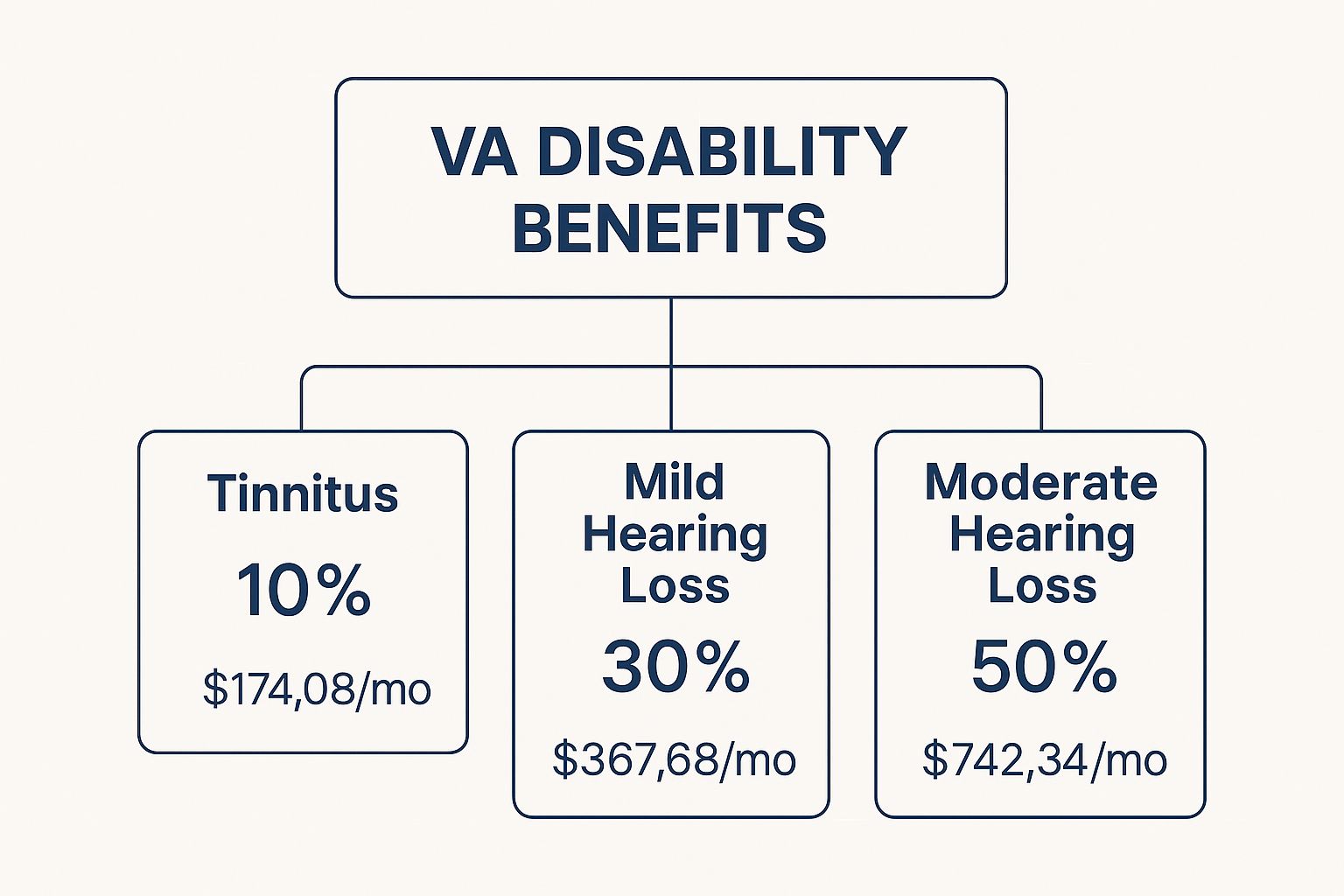
As you can see, the standard 10% rating for tinnitus is set, while ratings for hearing loss can be significantly higher depending on the severity.
The Growing Need for Strong Claims
Getting this process right is more critical now than ever. Tinnitus rates among active duty service members have been on the rise for years, a trend directly tied to the high-decibel environments of modern military operations. Recent research from the VA shows a clear increase in tinnitus cases that lines up with noise exposure during service, leading to major quality-of-life issues like sleep disruption and psychological distress. This unfortunate trend underscores just how important it is for veterans to build a solid claim from the start.
Navigating Your Tinnitus C&P Exam

When it comes to getting a VA tinnitus rating, the Compensation and Pension (C&P) exam is the single most important appointment you'll have. You have to understand that this isn't just another doctor's visit. Think of it more like an official interview where your testimony is the main piece of evidence.
There’s no machine that can measure tinnitus, so the entire exam really comes down to how well you can describe what you're experiencing. You'll sit down with an audiologist whose job is to fill out a Disability Benefits Questionnaire (DBQ) based on what you tell them. That form goes straight to the VA rater making the decision, and the audiologist's opinion on it carries a ton of weight.
This is your chance to tell your story, so you need to be ready to communicate the facts clearly and honestly. Don't downplay it, but don't exaggerate, either.
What to Expect During the Exam
The tinnitus C&P exam is usually pretty straightforward. The audiologist will likely give you a basic hearing test to see if you have any related hearing loss, but the real meat of the appointment is the conversation. The examiner will use the DBQ to ask you specific questions about your tinnitus.
Be prepared to talk about:
- When it started: When did you first notice the ringing? Can you link it to a specific event, time, or place during your military service?
- What it sounds like: Is it a classic ringing, or more of a buzzing, hissing, or even a roaring sound?
- How often it happens: Is the noise there 24/7, or does it come and go?
- Where you hear it: Is it in your right ear, left ear, or both?
The most vital part of the exam is explaining how tinnitus affects your daily life. Your personal testimony on the functional impact of your symptoms is the evidence the VA uses to grant service connection.
For example, do you find it hard to concentrate at work because of the constant noise? Does the ringing keep you up at night, leaving you exhausted the next day? Does it make it impossible to follow conversations in a crowded restaurant? Giving these real-world examples is what connects the dots for the VA rater and shows how your quality of life has suffered.
Tips for a Successful C&P Exam
Your best tools in this exam are honesty and consistency. The audiologist is trained to spot inconsistencies, so just stick to the facts of your condition.
To put your best foot forward, it can be helpful to understand the basics of clinical documentation improvement. This ensures the notes from your exam accurately capture the severity of your condition. At the end of the day, what you say during this appointment becomes the foundation for the VA's final decision.
How Secondary Conditions Connect to Tinnitus
While the VA caps a tinnitus rating at 10%, don't let that number fool you. The true impact of that constant ringing or buzzing often goes far beyond your ears, and this is where understanding secondary conditions becomes absolutely crucial for your overall VA claim.
Think of it this way: your service-connected tinnitus is the first domino to fall. The constant, intrusive noise doesn't just stay in your head; it can trigger a whole cascade of other health problems. These new issues, known as secondary conditions, can be rated separately, often leading to a much higher combined disability rating.
The Tinnitus Domino Effect
Imagine living with a smoke alarm that never turns off. That's what severe tinnitus can feel like. It's not just an annoyance—it's a chronic, relentless stressor that grinds you down day after day, night after night. It can make it impossible to concentrate, find a moment of peace, or get the restorative sleep your body needs.
This constant battle takes a toll. Over time, what started as "just" ringing in the ears can evolve into serious, life-altering health issues. Many veterans discover that their tinnitus is the root cause of other debilitating problems, and getting the VA to recognize that link is key to being compensated for the full extent of your disabilities.
Some of the most common conditions we see linked to tinnitus include:
- Mental Health Conditions: The inescapable noise is a well-known catalyst for anxiety, depression, and chronic irritability.
- Insomnia: How can you sleep when there's a constant sound in your head? This often leads to severe and chronic sleep disturbances.
- Migraines: The relentless strain and neurological stress from tinnitus are common triggers for debilitating headaches and migraines.
Building Your Case for Secondary Conditions
Proving a secondary condition requires the same thing as your primary claim: establishing a clear link, or "nexus," to your service-connected disability. You need to show the VA, with solid evidence, exactly how your tinnitus caused or worsened the secondary issue.
Let's say you're filing for depression secondary to tinnitus. It's not enough to just say you think they're connected. You need medical evidence to back it up. The single most powerful tool you can have here is a well-written nexus letter from a qualified medical professional.
A strong nexus letter must use specific language. The doctor needs to state that it is "at least as likely as not" that your service-connected tinnitus caused or aggravated your secondary condition (like depression or migraines). This is the legal standard the VA requires to grant service connection.
A good letter won't just state the connection; it will explain the why. It might detail how the neurological fatigue from constant tinnitus disrupts brain chemistry and contributes to clinical depression, or how the inability to escape the noise leads to the hypervigilance and stress characteristic of an anxiety disorder.
Don't forget the power of your own story. Personal statements, along with letters from family or friends (often called "buddy letters"), can paint a vivid picture for the VA rater. These documents describe, in real-world terms, how the tinnitus has destroyed your sleep, forced you to withdraw from social situations, and directly led to the secondary conditions you're now fighting. Successfully connecting these conditions can make a life-changing difference in your overall rating and the benefits you've earned.
Upcoming Changes to VA Tinnitus Ratings

The ground is shifting under one of the most common VA disability claims. For years, securing a VA tinnitus rating has been a relatively straightforward way for many veterans to get a 10% disability rating. But that long-standing rule is on the verge of a major overhaul.
The VA is getting ready to do away with the separate, standalone 10% rating for tinnitus. What does this mean for you? Essentially, tinnitus will no longer be rated as its own distinct condition. Instead, the VA will view it exclusively as a symptom of another service-connected issue, like hearing loss or a traumatic brain injury (TBI). This is a huge pivot from how tinnitus claims have been handled for decades.
This change completely rewrites the playbook for future claims. The days of filing for tinnitus alone and walking away with a 10% rating are coming to an end.
The New Tinnitus Rating System Explained
Under the proposed changes, getting a separate, compensable rating for tinnitus is going to be a lot harder. The VA’s new method will tie any compensation for tinnitus directly to your hearing loss rating. This creates a much more complicated evaluation process for anyone filing a claim down the road.
Here's a simple breakdown of how it’s expected to work:
- If you have compensable hearing loss (rated 10% or higher): You will not get an additional rating for tinnitus. The VA will simply roll the tinnitus into your overall hearing loss condition.
- If you have non-compensable hearing loss (a 0% rating): You can still get a 10% rating for your tinnitus. This is the only situation where a 10% tinnitus rating will be awarded on its own under the new rules.
This new regulation is rooted in the modern medical consensus that tinnitus is a symptom, not a standalone disease. The VA is updating its rating schedule to reflect this, but the change will have a massive impact on veterans who haven't filed yet.
Who Is Affected by These Changes
First, the good news. If you already have a service-connected VA tinnitus rating of 10%, you can relax. You are "grandfathered in," and your existing benefit is protected from this change. The story is much different, however, for veterans who have been waiting to file their claim.
Recent policy updates are set to overhaul how tinnitus ratings are awarded. Historically, under Diagnostic Code 6260, veterans could receive a standalone 10% disability rating for tinnitus. The VA's new plan eliminates this separate rating, instead compensating tinnitus as a symptom of another condition. If a veteran's hearing loss is already rated at 10% or more, no extra compensation will be given for tinnitus. This shift could significantly impact the benefits available to thousands of future filers who would have previously qualified for the independent 10% rating. You can discover more insights about tinnitus rating updates on vaclaimsinsider.com for a detailed analysis of these changes.
The bottom line is that the window to file under the current, more veteran-friendly rules is closing fast. If you have service-related tinnitus but haven’t filed your claim yet, acting now is critical to avoid being evaluated under the new, much stricter criteria.
Answering Your VA Tinnitus Rating Questions
As you get into the weeds of the VA claims process, you’re bound to have some specific questions pop up. Let's tackle some of the most common ones veterans ask about getting a VA tinnitus rating. I'll give you straight answers to clear up the confusion.
Can I Get a VA Rating for Tinnitus if I Have No Hearing Loss?
Yes, you absolutely can. Think of it this way: the VA treats tinnitus and hearing loss as two completely different issues. They aren't a package deal. You can get the standard 10% rating for service-connected tinnitus even if you ace your hearing tests.
The real challenge isn't proving how well you hear, but proving the ringing itself is tied to your service. You need to focus your energy on gathering solid evidence that shows your tinnitus started during or was caused by your time in the military. This usually points back to noise exposure, a head injury, or even certain medications you were prescribed.
What Should I Do if My Tinnitus Claim Is Denied?
Getting a denial letter is frustrating, but it's not the end of the line. The very first thing you need to do is read that letter carefully. The VA has to tell you exactly why they denied your claim—was it a lack of medical evidence, a weak service connection, or maybe an unfavorable C&P exam?
Once you know the "why," you have a few options. You can file a Supplemental Claim and add new, relevant evidence (like a strong nexus letter). You could also request a Higher-Level Review, where a more experienced rater takes a fresh look at your file. Or, you can appeal directly to the Board of Veterans' Appeals. In my experience, the most direct path to turning a denial into an approval is often by strengthening the proof of service connection.
Is the 10 Percent Tinnitus Rating for Each Ear?
This is a common question, but the answer is no. The 10% rating is a single, flat rate for the condition of tinnitus, period. It doesn't matter if you have the ringing in just one ear (unilateral) or in both (bilateral). The VA’s rating schedule, under Diagnostic Code 6260, doesn't offer more for two ears.
Whether your tinnitus is a constant roar or an intermittent hiss, in your left ear or both, the maximum schedular rating you can receive for the condition by itself is 10%. The VA does not "stack" ratings for each ear.
This rule really highlights what's most important: proving the condition is connected to your service, not getting caught up in describing exactly where or how loud the sound is.
How Will the VA Test Me for Tinnitus?
Here’s where a lot of veterans get mixed up. There isn't a machine that can objectively measure or prove you have tinnitus. It’s a subjective condition, meaning you're the only one who can hear it. Because of this, the real "test" is your own credible testimony during your Compensation and Pension (C&P) exam.
The audiologist will conduct a standard hearing test, but that’s mostly to check for any separate hearing loss claims. For the tinnitus part, they're going to interview you and fill out a Disability Benefits Questionnaire (DBQ). They’ll ask when the ringing started, what it sounds like, how often it happens, and—this is key—how it messes with your daily life. Your consistent, honest, and detailed answers are the most powerful evidence you can provide.
Also, as you work on managing your health and finances, it’s worth looking into programs and services that offer a disability discount, which can provide some helpful support.
At Homefront Group, we are committed to helping veterans secure the benefits they have rightfully earned. If you're struggling with a denied claim or need guidance on building a strong case, take our 3-minute quiz to see how we can help. Visit us at https://homefrontgroup.com/ to get started.