Decoding Your VA PTSD Rating
Navigating the VA disability system can be overwhelming for veterans, first responders, and others dealing with Post-Traumatic Stress Disorder (PTSD). Understanding your VA PTSD rating is crucial for accessing the support and benefits you deserve. These ratings, from 0% to 100%, determine access to vital resources like healthcare, financial aid, and vocational rehabilitation. A key concept within this system is Total Disability Individual Unemployability (TDIU), which provides benefits for those unable to work due to their PTSD.
The VA's evaluation and rating process for PTSD has changed over time, reflecting advancements in mental health understanding and the long-term impact of trauma. An effective approach accurately captures the functional impairment caused by PTSD, recognizes its varying effects, and provides appropriate support based on the severity of the condition. While designed to be comprehensive, the system can be difficult to understand. Knowing your rating, its criteria, and associated benefits is essential for advocating for your needs.
This guide breaks down the VA PTSD ratings chart, explaining the percentage levels and their specific criteria. We'll explore how these ratings translate into tangible benefits and offer guidance on navigating the claims process. Whether you're a newly diagnosed veteran, a first responder dealing with trauma, or appealing a current rating, this article aims to empower you with the knowledge you need to manage your claim and secure your earned benefits.
1. VA 0% PTSD Rating

A VA 0% PTSD rating can be confusing for veterans. It means the Department of Veterans Affairs (VA) has diagnosed you with PTSD, linking it to your military service. However, your symptoms aren't currently severe enough to warrant monthly compensation payments. Understanding this rating is vital for veterans navigating VA claims, especially regarding appeals or future claims related to toxic exposure or other service-connected conditions.
What does a 0% rating mean?
A 0% rating doesn't mean the VA dismisses your PTSD. It means your current symptoms, based on available evidence, don't meet the criteria for higher compensation. The VA uses a rating schedule to assess symptom severity and its impact on your work and social life. Even with real symptoms, a 0% rating is possible if they don't significantly disrupt your daily life.
Features of a 0% PTSD Rating
Here's a summary of the key features:
- Formal PTSD Diagnosis: The VA officially recognizes your PTSD.
- Service Connection Established: The VA confirms the link between your PTSD and your service.
- Symptoms Present But Not Severe: Your symptoms are acknowledged but not considered debilitating.
- No Monetary Compensation: You won't receive monthly payments.
- Eligibility for VA Healthcare: You can access VA healthcare for your PTSD, including therapy and medication.
Pros and Cons of a 0% PTSD Rating
A 0% rating has both advantages and disadvantages.
Pros:
- Establishes Service Connection: This is crucial for future claims if your symptoms worsen.
- Access to VA Treatment: You can receive specialized PTSD care through the VA.
- Streamlined Re-evaluation: Requesting a re-evaluation is easier than filing a new claim if your condition changes.
Cons:
- No Monthly Compensation: The lack of financial aid can be difficult.
- Potential Underrepresentation of Impact: The rating might not reflect the challenges you experience.
- Difficulty Upgrading Rating: Getting a higher rating requires documented proof of worsening symptoms.
- Limited VA Benefits: You won't qualify for benefits tied to compensable ratings.
Examples of Veterans with a 0% PTSD Rating
Consider these examples:
- A veteran with mild, occasional nightmares who works full-time without accommodations.
- A veteran managing mild, situational anxiety without medication or continuous therapy.
- A veteran whose symptoms are controlled with occasional therapy and don't significantly affect their life.
Tips for Veterans with a 0% PTSD Rating
Here are some recommendations:
- Meticulous Record-Keeping: Document all symptoms, their frequency, severity, and how they affect your work, relationships, and well-being. Include specific examples.
- Consistent Treatment: Continue attending therapy and/or medication management appointments. This provides valuable documentation.
- Request Re-evaluation if Necessary: Don't hesitate to request a re-evaluation if your symptoms worsen. Your medical records will be key evidence.
- Attend All VA Appointments: Maintain a continuous record of your condition within the VA system.
A 0% PTSD rating, while not providing immediate financial help, is a significant first step. It acknowledges your condition, establishes service connection, and provides access to VA healthcare. By actively managing your condition, documenting symptoms, and seeking re-evaluation when needed, you can ensure appropriate care and support in the future.
2. VA 30% PTSD Rating

A 30% VA PTSD rating indicates a veteran's post-traumatic stress disorder significantly impacts their occupational and social functioning. This often includes occasional dips in work efficiency and intermittent periods where completing job tasks becomes impossible. Despite these hurdles, individuals with a 30% rating generally maintain satisfactory daily functioning, including routine behaviors, self-care, and normal conversations. This rating is significant as it acknowledges the real-world impact of PTSD and offers valuable benefits, while also highlighting the challenges of navigating the VA disability system.
A 30% rating doesn't mean a veteran's life is easy. It signifies they are experiencing real challenges related to their PTSD, but are still managing to function in most areas of their lives. The rating is a crucial step in accessing support and compensation.
Features of a 30% PTSD Rating
The symptoms associated with a 30% PTSD rating can vary, but often include:
- Depressed mood: Persistent feelings of sadness, hopelessness, or a loss of interest in activities.
- Anxiety: Excessive worry, nervousness, and fear, sometimes leading to avoidance behaviors.
- Suspiciousness: Distrust of others, difficulty building close relationships, and being constantly on guard (hypervigilance).
- Panic attacks (weekly or less often): Sudden and intense fear accompanied by physical symptoms like a racing heart, shortness of breath, and dizziness.
- Chronic sleep impairment: Trouble falling asleep, staying asleep, or achieving restful sleep.
- Mild memory loss: Difficulties recalling names, directions, or recent events.
- Monthly compensation payment (approximately $508.05 for a single veteran without dependents as of 2023): This tax-free compensation offers financial support. This amount is subject to change based on cost-of-living adjustments and individual veteran circumstances (dependents, etc.).
Pros of a 30% PTSD Rating
There are several advantages to receiving a 30% PTSD rating:
- Monthly tax-free compensation: Financial assistance can ease the strain related to managing PTSD.
- Formal recognition of disability: Validation of the veteran's experience and easier access to support services.
- Priority group 1 VA healthcare enrollment: Faster access to needed medical and mental health care.
- Eligibility for additional VA programs: Potential access to vocational rehabilitation, housing assistance, and other valuable programs.
Cons of a 30% PTSD Rating
While beneficial, a 30% rating may have some drawbacks:
- May not fully compensate for severe symptoms: The 30% rating might not address all the financial needs if symptoms are significant but don't meet the 50% criteria.
- Requires ongoing documentation: Veterans must consistently document symptoms and their impact to maintain the rating.
- Potential underestimation of functional limitations: Some veterans may feel their limitations are more impactful than reflected by the 30% rating.
Examples of a 30% PTSD Rating
Here are some examples of how a 30% rating might present:
- A veteran maintains employment but needs occasional time off due to anxiety or panic attacks.
- A veteran experiences weekly panic attacks but manages daily tasks and relationships.
- A veteran has sleep issues and mild memory problems but continues working and socializing.
Tips for Veterans with a 30% PTSD Rating
Here's some advice for veterans with a 30% rating:
- Keep a detailed journal: Document symptom frequency, severity, duration, and impact on daily life.
- Continue mental health treatment: Consistent therapy and medication management improve symptoms and provide documentation.
- Communicate with healthcare providers: Discuss all symptoms and their impact for accurate diagnosis and treatment.
- Consider a Disability Benefits Questionnaire (DBQ): A DBQ can streamline the claims process.
A 30% VA rating offers valuable benefits, but veterans should understand the criteria and diligently document their symptoms. If you believe your symptoms justify a higher rating, consult a Veterans Service Officer (VSO) or an accredited attorney specializing in VA disability claims. They can offer guidance on gathering evidence and navigating the appeals process.
3. VA 50% PTSD Rating
A 50% VA disability rating for PTSD indicates that a veteran experiences considerable occupational and social impairment, with reduced reliability and productivity due to their condition. This rating acknowledges a serious impact on the veteran's ability to function effectively in daily life, affecting both work and personal relationships. It represents a significant step up on the VA rating scale compared to lower ratings, yet still allows for increases if symptoms worsen. Understanding the specifics of the 50% rating is vital for veterans seeking accurate disability assessment.
This rating is important because it marks a substantial benchmark in the VA disability system for PTSD. Achieving the 50% level often opens doors to benefits that can greatly enhance a veteran's quality of life, such as increased financial compensation and access to essential support services. It also officially recognizes the substantial daily challenges faced by veterans with this service-connected condition.
Features of a 50% PTSD Rating
- Flattened Affect: A noticeable decrease in emotional expression.
- Speech Disturbances: May include circumstantial, circumlocutory (indirect), or stereotyped speech.
- Frequent Panic Attacks: Experiencing panic attacks more than once a week.
- Cognitive Impairment: Difficulties understanding complex commands, impaired short and long-term memory, and problems with judgment and abstract thought.
- Mood and Motivation Disturbances: Significant shifts in mood and motivation, impacting daily function.
- Social and Occupational Impairment: Challenges establishing and maintaining relationships in work and social environments.
- Financial Compensation: Approximately $1,049.58 per month for a single veteran without dependents (as of 2023). This amount can vary depending on individual circumstances and dependents.
Pros of a 50% PTSD Rating
- Increased Compensation: Provides substantially higher monthly compensation than a 30% rating, promoting financial stability.
- Formal Recognition of Impairment: Officially acknowledges the serious impact of PTSD on work and social life.
- Additional Benefits: May qualify for additional VA benefits, including Vocational Rehabilitation and Employment (VR&E) and VA dental care.
- TDIU Eligibility: May serve as a foundation for a claim for Total Disability based on Individual Unemployability (TDIU) if work history and symptoms prevent substantial gainful employment.
Cons of a 50% PTSD Rating
- Higher Rating Burden: Requires veterans to demonstrate they don't meet the criteria for higher ratings (70% or 100%).
- Potential for Re-evaluations: May lead to more frequent VA re-evaluations to confirm the ongoing severity of the condition.
- Subjectivity in Rating Criteria: The difference between 50% and 70% can be subjective, potentially requiring appeals.
Examples of Veterans with a 50% PTSD Rating
- A veteran maintaining employment but needing significant accommodations like flexible hours or reduced workload, and experiencing frequent absences due to PTSD symptoms.
- A veteran experiencing multiple panic attacks weekly, disrupting their ability to work and engage socially.
- A veteran whose memory problems affect their job performance and relationships with family and friends.
Tips for Veterans Seeking a 50% or Higher Rating
- Gather Supporting Evidence: Collect statements from coworkers, supervisors, family, and friends detailing the observed effects of your PTSD.
- Consistent Treatment: Maintain regular mental health treatment with thorough documentation of symptoms, functional limitations, and daily impact.
- Detailed C&P Exams: Provide comprehensive descriptions of your PTSD symptoms' frequency, duration, and effects during Compensation and Pension (C&P) examinations.
- Seek Professional Assistance: Consider consulting a Veterans Service Officer (VSO) or an attorney specializing in VA disability claims, especially for appeals.
While a 50% rating offers vital support, each veteran's PTSD experience is unique. If your symptoms are more severe than those typically associated with a 50% rating, pursuing a higher rating is recommended to ensure you receive the appropriate support and compensation. Thorough documentation and effective advocacy are crucial for a fair outcome.
4. VA 70% PTSD Rating

A 70% PTSD rating from the VA signifies considerable occupational and social impairment. These deficiencies affect most areas of a veteran's life, impacting work, school, family relationships, judgment, thinking, and mood.
This rating acknowledges the severity of symptoms and how they affect daily life. It represents a critical point on the VA PTSD rating scale, impacting a veteran's financial stability and access to crucial support.
Features of a 70% PTSD Rating
Here's what characterizes a 70% PTSD rating:
- Suicidal ideation: Recurring thoughts of death or suicide.
- Obsessive rituals: Ritualistic behaviors that disrupt daily life.
- Speech disturbances: Speech that is sometimes illogical, unclear, or off-topic.
- Near-continuous panic or depression: Persistent, overwhelming feelings that hinder independent function.
- Impaired impulse control: Unprovoked irritability with the potential for violent behavior.
- Spatial disorientation: Difficulty understanding one's position in space.
- Neglect of personal appearance and hygiene: Lessened attention to personal care.
- Difficulty adapting to stressful circumstances: Trouble coping with stress, especially in work environments.
- Inability to establish and maintain effective relationships: Struggles to form and keep healthy relationships.
- Monthly compensation (as of 2023): Roughly $1,663.06 for a single veteran with no dependents. This amount can vary depending on individual factors and dependents.
Pros and Cons of a 70% Rating
A 70% rating offers significant benefits but also comes with challenges.
Pros:
- Substantial monthly compensation: Offers financial assistance reflecting the serious impairment.
- Strong basis for TDIU claim: Improves the chances of receiving Total Disability based on Individual Unemployability if maintaining gainful employment is not possible.
- Recognition of significant life impairment: Acknowledges PTSD's profound impact on everyday life.
- Priority access to VA programs and benefits: Provides opportunities to access various VA services for veterans with severe PTSD.
- May reduce threshold for additional benefits and services: Makes it easier to access other needed support.
Cons:
- Requires documentation of very serious symptoms: Entails discussing sensitive, potentially traumatic experiences.
- May involve increased scrutiny during C&P exams: Can be a difficult and stressful process.
- Can be difficult to distinguish from 100% criteria: The line between 70% and 100% can be unclear and require extensive documentation.
Examples and Tips for Veterans
Here are some examples of veterans who might qualify for a 70% rating:
- A veteran unable to maintain employment due to recurring PTSD symptoms.
- A veteran with frequent suicidal thoughts requiring ongoing safety planning.
- A veteran displaying verbal or physical aggression when triggered, harming family relationships.
- A veteran isolated with minimal social contact due to PTSD's overwhelming effects.
Tips for Veterans Seeking a 70% Rating:
- Be open with providers: Honestly discuss any suicidal thoughts, emphasizing your commitment to safety.
- Document everything: Keep thorough records of symptoms, including impaired impulse control or difficulties with stress.
- Consider support during C&P exams: Having a trusted person present offers emotional support and acts as a witness.
- Discuss TDIU: If employment is significantly affected, explore Total Disability based on Individual Unemployability with a Veterans Service Officer.
- Track medication side effects: Record any side effects and how they impact your functioning.
Popularity and Evolution
Recognition of severe PTSD has grown significantly, partly thanks to research by the National Center for PTSD and advocacy from veterans' groups. This has led to a greater understanding of the criteria for higher-level ratings, like the 70% rating, ensuring veterans get the benefits they deserve. This rating is especially vital for veterans dealing with toxic exposure, medical malpractice claims, estate planning, financial planning, motor vehicle accidents, or workers' compensation, as it provides crucial financial support and access to helpful services.
5. VA 100% PTSD Rating
A 100% VA PTSD rating represents the highest level of disability compensation the Department of Veterans Affairs (VA) offers for post-traumatic stress disorder. This rating is reserved for veterans experiencing "total occupational and social impairment" due to their PTSD. Obtaining this rating requires substantial evidence demonstrating severe functional limitations impacting nearly every aspect of daily life. Understanding the criteria, benefits, and challenges associated with a 100% rating is essential.
This rating is significant because it represents the maximum support available to veterans struggling with the most debilitating forms of PTSD. For those whose lives are profoundly impacted, knowing the path to a 100% rating is crucial.
Features of a 100% PTSD Rating
The VA employs specific criteria to determine a 100% PTSD rating. These criteria often manifest as:
- Gross impairment in thought processes or communication: This can include difficulty forming coherent thoughts, expressing oneself verbally, or understanding others.
- Persistent delusions or hallucinations: These can involve disturbing sensory experiences or fixed, false beliefs affecting daily function.
- Grossly inappropriate behavior: This refers to actions significantly out of context, disruptive, or potentially harmful.
- Persistent danger of hurting self or others: This includes suicidal thoughts, self-harm, and aggressive outbursts.
- Intermittent inability to perform activities of daily living (ADLs): This encompasses basic self-care like hygiene, dressing, and eating.
- Disorientation to time or place: Veterans might struggle to understand their environment, the date, or their own identity.
- Memory loss: This can include forgetting names of close relatives, their occupation, or even their own name.
Benefits of a 100% PTSD Rating
A 100% rating unlocks several vital benefits:
- Maximum monthly compensation: Approximately $3,621.95 for a single veteran without dependents (as of 2023). This amount may be higher for veterans with dependents.
- Permanent and Total (P&T) status: Often granted at this level, eliminating future re-evaluations.
- Dependents Educational Assistance (DEA) program: Offers educational benefits to eligible dependents.
- CHAMPVA healthcare eligibility for dependents: Provides healthcare coverage for qualifying family members.
- Property tax exemptions: Available in many states.
- Commissary and exchange privileges: Access to military shopping facilities.
- No separate unemployability proof required. The 100% rating inherently establishes unemployability.
Pros and Cons of a 100% PTSD Rating
| Pros | Cons |
|---|---|
| Maximum disability compensation | Extremely high threshold for symptom severity and documentation needs |
| Potential for Permanent and Total (P&T) status | Possible frequent re-evaluations if not P&T |
| Eligibility for DEA and CHAMPVA benefits | Difficulty obtaining even with severe symptoms if any independent function exists |
Examples of Cases Warranting a 100% Rating
- A veteran experiencing frequent, intense flashbacks preventing work or relationships.
- A veteran needing constant supervision due to suicidal thoughts and self-harming behavior.
- A veteran with profound memory loss impacting basic daily tasks.
- A veteran experiencing command hallucinations leading to dangerous actions.
Tips for Obtaining a 100% PTSD Rating
- Detailed Documentation: Gather comprehensive reports from all mental health providers specifically addressing the 100% rating criteria.
- Inpatient Treatment Records: Provide inpatient treatment records as compelling evidence.
- Statements from Family/Caregivers: Include statements detailing the required level of supervision or assistance.
- Inform Treatment Providers: Ensure all healthcare providers understand your symptoms' full range and severity.
- Expedited Processing: Consider requesting expedited processing if your symptoms include persistent suicidal thoughts or immediate dangers.
A 100% PTSD rating provides crucial support for veterans severely affected by this service-connected condition. While challenging to obtain, thorough documentation and consistent communication with healthcare providers are essential for navigating the process. Staying informed and proactive is key.
6. Total Disability Individual Unemployability (TDIU) for PTSD
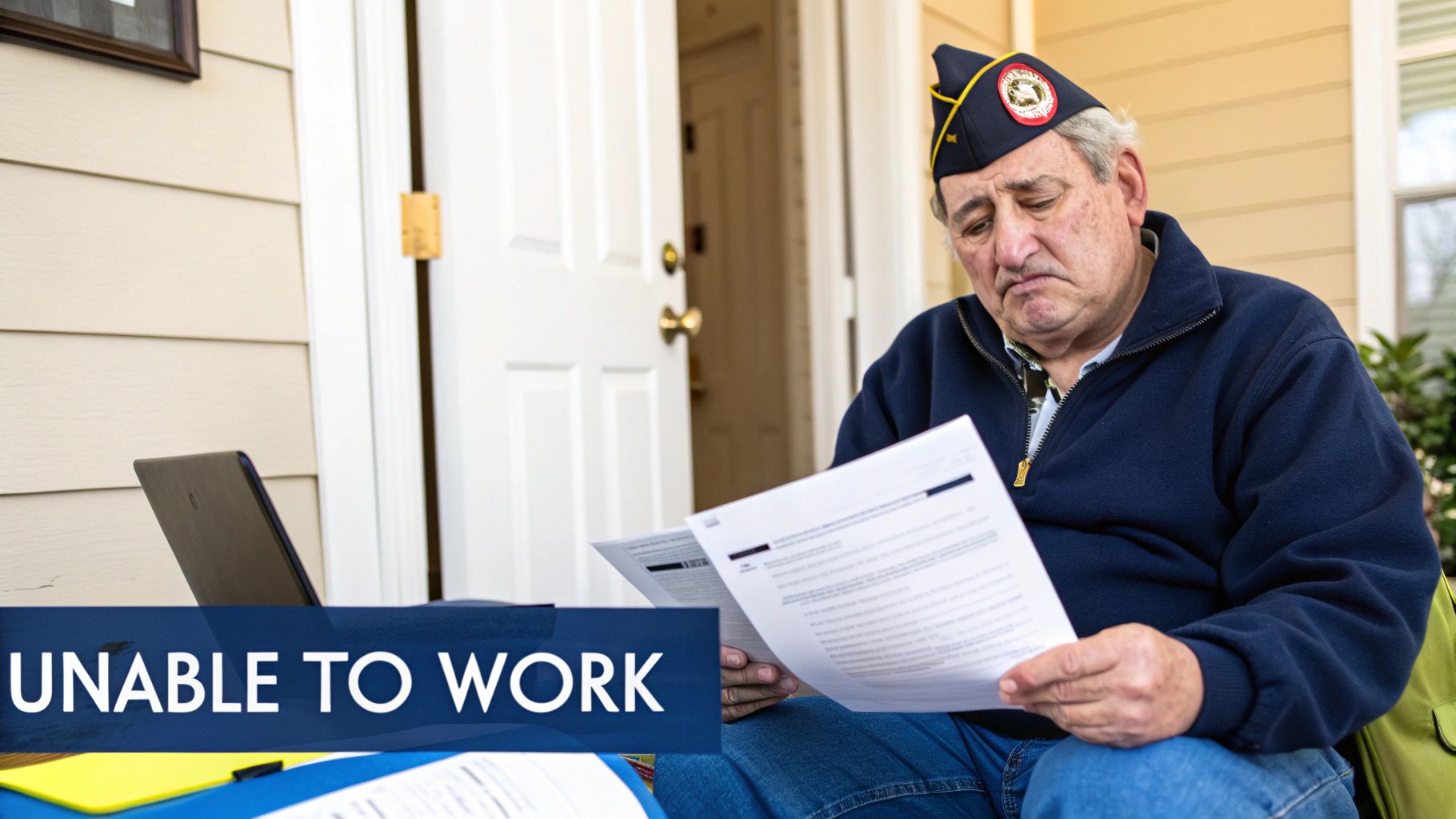
Total Disability Individual Unemployability (TDIU) is a vital benefit for veterans struggling with PTSD. It offers a path to 100% VA disability compensation even if the veteran's schedular PTSD rating is less than 100%. This benefit recognizes that PTSD can severely impact a veteran's ability to maintain substantially gainful employment. This impact can occur even if their symptoms don't perfectly align with a 100% schedular rating. TDIU can provide critical financial support, especially when navigating the often complex VA claims process.
What Is TDIU and How Does It Work?
TDIU isn't a rating in itself, but a benefit allowing the VA to compensate veterans at the 100% level. The key is demonstrating that your service-connected PTSD, along with any other service-connected conditions, prevents you from securing and maintaining substantially gainful employment. This means work comparable to that of similarly situated non-disabled individuals.
Eligibility Requirements
- You must have at least one service-connected disability rated at 60% or higher, or two or more service-connected disabilities with at least one rated at 40% or higher and a combined rating of 70% or more.
- You must be unable to maintain substantially gainful employment due to your service-connected conditions. The VA bases this not just on current employment status, but on overall work history, education, and abilities.
Benefits of TDIU
- Maximum Compensation: You'll receive the same monthly compensation as a veteran with a 100% schedular rating (approximately $3,621.95 for a single veteran as of 2023, subject to change).
- Access to Additional Benefits: TDIU often opens the door to the same benefits as a 100% schedular rating, including healthcare and dependent allowances.
- Focus on Employability: TDIU acknowledges that the economic effects of PTSD can go beyond the specific symptoms listed in the VA rating schedule.
Potential Drawbacks
- Stricter Scrutiny and Re-evaluations: TDIU claims are often subject to more frequent reviews than Permanent and Total (P&T) ratings.
- Restrictions on Employment: Receiving TDIU generally prevents substantial gainful employment. Marginal employment (earning below the poverty level) may be allowed, but consulting a VA-accredited representative is crucial.
- Documentation Burden: A successful TDIU claim requires detailed documentation. This includes your work history, failed employment attempts, and how PTSD symptoms impact your work abilities.
Real-World Examples
- A veteran with a 70% PTSD rating repeatedly fired due to PTSD-related anger outbursts.
- A veteran with a 50% PTSD rating and other service-connected disabilities totaling 70% who struggles to maintain concentration at work.
- A veteran whose PTSD medication causes side effects, like severe drowsiness, that prevent regular employment.
Tips for Applying for TDIU
- Gather Strong Evidence: Secure letters from former employers documenting PTSD-related performance issues, accommodations, and reasons for termination.
- Vocational Expert Testimony: A vocational expert can assess your employability and offer supportive testimony.
- Detailed Documentation: Thoroughly document failed work attempts, reasons for leaving jobs, and how PTSD symptoms affect your ability to work.
- Honesty is Key: Be upfront about any marginal employment or volunteer work.
- Simultaneous Applications: Consider applying for TDIU at the same time as requesting an increased PTSD rating.
Evolution and Advocacy
Veterans Justice Groups and landmark court decisions have broadened TDIU accessibility over time. These advocates have pushed for wider acknowledgment of PTSD's economic impact and a more flexible compensation approach. TDIU can be a lifeline for veterans whose PTSD prevents them from working. By understanding the requirements, gathering thorough documentation, and seeking expert help, veterans can improve their chances of receiving this important benefit.
6-Level VA PTSD & TDIU Comparison
| Rating Category | Complexity (🔄) | Resource Impact (⚡) | Outcomes (📊) | Ideal Use Case (💡) | Key Advantage (⭐) |
|---|---|---|---|---|---|
| VA 0% PTSD Rating | Low – Minimal documentation; re‐evaluation possible | Minimal – VA healthcare access without compensation | Acknowledges condition; potential for future rating increase | Veterans with mild symptoms and preserved daily functioning | Establishes service connection for future claims |
| VA 30% PTSD Rating | Moderate – Requires regular symptom documentation | Moderate – Monthly tax-free compensation with some support | Recognizes moderate occupational/social impairment with financial aid | Veterans managing occasional work and social challenges | Provides monetary support and access to priority healthcare |
| VA 50% PTSD Rating | Higher – Extensive evaluation and detailed documentation needed | Significant – Increased monthly benefits and additional service eligibility | Reflects noticeable work and relationship impairment | Veterans with substantial limitations in occupational and social roles | Enhanced compensation and eligibility for extra VA programs |
| VA 70% PTSD Rating | High – Comprehensive, detailed documentation required | High – Substantial compensation and broad benefits available | Indicates severe, pervasive life impairment | Veterans with severe symptoms affecting most life domains | Strong support for severe impairment with expanded benefit access |
| VA 100% PTSD Rating | Very High – Intensive evaluation and robust proof needed | Maximum – Highest compensation with complete benefits | Represents total occupational and social impairment | Veterans whose PTSD critically disrupts all aspects of functioning | Grants maximum benefits including Permanent & Total status |
| Total Disability Individual Unemployability (TDIU) for PTSD | Moderate–High – Requires thorough work history and vocational review | Elevated – Provides full 100% compensation despite lower scheduler rating | Compensates for inability to work due to PTSD, beyond clinical criteria | Veterans unable to maintain gainful employment due to PTSD | Offers economic recognition and full benefits without a 100% rating |
Taking the Next Step With Your VA PTSD Rating
Understanding the VA PTSD rating scale, from 0% to 100%, including crucial aspects like TDIU (Total Disability based on Individual Unemployability), is the first step toward securing the benefits you deserve. This guide has outlined the various rating levels (0%, 30%, 50%, 70%, and 100%) and how they correlate with the severity of PTSD symptoms. We’ve also explored how TDIU can provide total disability benefits even if your PTSD rating is less than 100%, allowing you to focus on your well-being without the pressure of employment. Internalizing these concepts is crucial for effectively navigating the claims process.
Understanding the rating system is just the beginning. Putting that knowledge into action requires a proactive approach. Start by honestly assessing your symptoms and how they affect your day-to-day life. This self-evaluation will be the foundation of your claim.
Next, gather comprehensive medical records, personal statements, and any other documentation that supports your claim. The more evidence you have, the stronger your case will be. Remember, this is a process, and you might need to adjust your strategy along the way.
Be prepared to adapt your approach as you learn more about the process and as your situation changes. The VA system can be complex. Staying informed about updates, changes in regulations, and current trends related to PTSD claims is vital for a successful outcome.
Staying Informed Is Key
Future developments in PTSD diagnosis and treatment may also influence the rating system, so continuous learning is essential. Keeping up-to-date on these developments can significantly impact your claim.
Key Takeaways:
- Accurate Self-Assessment: Honestly evaluate your symptoms and their impact.
- Thorough Documentation: Compile all relevant medical records and supporting evidence.
- Adaptability: Be prepared to adjust your approach as needed.
- Continuous Learning: Stay informed about changes in VA regulations and PTSD-related developments.
Navigating the complexities of VA claims can feel overwhelming, especially when dealing with the invisible wounds of PTSD. You don’t have to go through this alone. At Homefront Group, we understand the unique challenges faced by veterans and first responders. Founded by a former Navy JAG, our team of veteran lawyers and client advocates provides empathetic, expert guidance through every step of the process.
We offer specialized services for VA appeals, toxic exposure claims, medical malpractice, personal injury cases, and even estate and financial planning, ensuring you receive the justice and financial support you deserve. Take our free 3-minute quiz to identify your qualifying benefits, and let us build a personalized strategy to help you achieve your personal and financial goals. With $45 million in pending claims for injured veterans and support across the U.S., we connect you with top professionals in our robust network. Empower yourself to take control of your future. Visit Homefront Group today and discover how we can help you secure the benefits you’ve earned.