
Navigating the VA Appeals Process: What Veterans Need to Know

A VA claim denial can be discouraging. Understanding the VA appeals process, however, is the first step towards a successful resolution. Restructured by the Appeals Modernization Act (AMA), this process offers veterans several pathways to pursue their benefits. This provides more options and potentially faster resolutions than the previous system.
Understanding the Appeals Modernization Act (AMA)
The AMA established three appeal lanes: Higher-Level Review, Supplemental Claim, and Board Appeal. Each lane has specific characteristics designed for particular situations. This allows veterans to customize their appeal strategy based on their case and evidence. For instance, a Higher-Level Review suits cases where a veteran believes a procedural error occurred during the initial claim review.
The AMA has demonstrably improved efficiency and outcomes. Its implementation shifted the VA’s workload. In FY 2024, the Board of Veterans Appeals (BVA) issued 116,192 decisions. 61% were processed under the AMA and 39% under the older Legacy system. AMA appeals have 15-21 percentage points lower remand rates and roughly 10% higher grant rates than Legacy appeals. This data highlights the AMA's positive impact. Find more detailed statistics here.
Choosing the Right Appeal Lane
Selecting the correct appeal lane is crucial. This decision affects the appeal’s timeline and success. A Supplemental Claim is for new and relevant evidence. This includes updated medical records, expert opinions, or buddy statements. If the initial decision was based on a misapplication of law or a procedural error, a Higher-Level Review might be better.
Ensuring your appeal is well-presented is also vital. Common SEO mistakes in how you present information can also negatively impact your appeal.
Preparing for the Appeals Process
Thorough preparation is essential, regardless of the chosen lane. This involves gathering and organizing all documentation and accurately completing required forms. A well-prepared appeal strengthens your case and increases the chance of a favorable decision.
This includes a clear nexus letter linking your condition to your service, comprehensive medical records, and strong lay statements supporting your claim. A successful appeal often depends on the quality and completeness of the evidence.
Choosing Your Path: The Three AMA Appeal Options That Matter
Navigating the VA appeals process can be challenging. Selecting the right approach is essential for a successful and timely outcome. The Appeals Modernization Act (AMA) offers three distinct appeal options: Higher-Level Review, Supplemental Claim, and Board Appeal. Understanding each option helps veterans make informed decisions. Choosing wisely can significantly impact your chances of approval.
Higher-Level Review: A Fresh Perspective
A Higher-Level Review involves a senior VA employee re-evaluating your claim. This option is best when you believe a procedural error occurred or the initial reviewer misinterpreted evidence. No new evidence is permitted. It's like having a supervisor double-check the initial assessment. This offers a faster resolution than a Board Appeal.
Supplemental Claim: Strengthening Your Case with New Evidence
The Supplemental Claim is the correct path if you have new and relevant evidence. This could include updated medical records or a nexus letter from a medical professional. This option is ideal when new information strengthens your case. For example, a new diagnosis or additional medical test results could significantly influence the outcome.
Board Appeal: The Final Stage
A Board Appeal takes your appeal to the Board of Veterans' Appeals (BVA). This option is typically chosen when other appeal options have been exhausted, or if your case involves complex legal or medical issues. It offers the greatest chance of overturning a denial but is the most time-consuming. Consider this the final stage, where your case goes before an administrative judge.
To help you understand the differences, let's examine a comparison of the three AMA appeal options. The following table summarizes the key aspects of each:
Comparison of AMA Appeal Options
| Appeal Option | New Evidence Allowed? | Average Processing Time | Best For | Success Rate* |
|---|---|---|---|---|
| Higher-Level Review | No | 365 days | Procedural errors, misinterpretation of evidence | Varies |
| Supplemental Claim | Yes | 125 days | New and relevant evidence | Varies |
| Board Appeal | Yes | 1533 days | Complex cases, exhausted other options | Varies |
*Success rates vary widely depending on individual case circumstances.
As you can see, each option has unique characteristics that make it suitable for specific situations. Choosing the right one is crucial.
Comparing Your Options: Processing Time
The chosen path significantly impacts the timeline. The infographic below visualizes the average processing times.
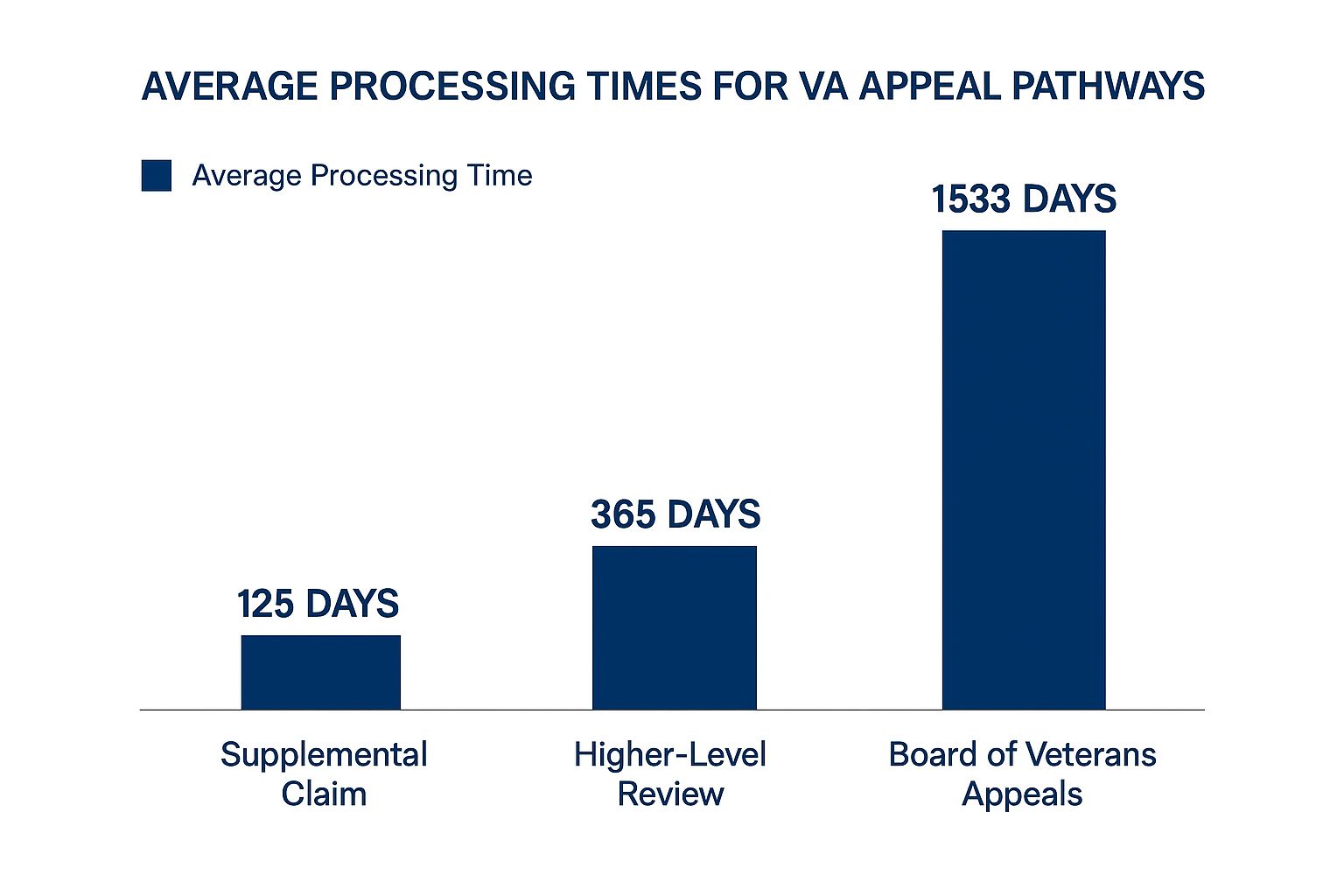
A Supplemental Claim has the shortest processing time at 125 days, followed by a Higher-Level Review at 365 days. A Board Appeal takes significantly longer, averaging 1533 days. Carefully consider your options and choose the best pathway based on your circumstances and evidence. Homefront Group can assist veterans in navigating these options.
Board Appeals Decoded: Navigating the Three Docket Options

The Board of Veterans' Appeals (BVA) offers veterans a powerful tool in the appeals process. However, with this power comes complexity. This section explains the three docket options at the BVA: Direct Review, Evidence Submission, and Hearing Request. Selecting the right docket is crucial for a successful appeal.
Understanding Your Docket Options: A Strategic Choice
Each docket has unique characteristics that affect your appeal. The Direct Review docket involves a review of existing evidence by a Veterans Law Judge. No new evidence is permitted. This option is advantageous if your current evidence is strong and you believe the prior decision was based on a legal or factual error.
The Evidence Submission docket allows you to submit new evidence to strengthen your case. This could include medical opinions or buddy statements to address any gaps in your initial claim. This docket balances the need for new information with a potentially faster resolution than a hearing.
The Hearing Request docket provides an opportunity to present your case directly to a Veterans Law Judge. This face-to-face interaction allows you to explain complex issues and personalize your appeal. However, it requires thorough preparation and a good understanding of hearing procedures.
Timing and Evidence: Critical Factors in the Appeals Process
The timelines for each docket are important. While a quick resolution is desirable, the best choice depends on your evidence. If obtaining new medical evidence takes time, choosing the Direct Review docket might be detrimental. The most effective approach balances speed with building a strong case.
Navigating this process can be challenging. The VA appeals system, while showing progress, still faces obstacles. The VA appeals backlog remains a significant issue impacting veterans across the country. In early 2024, backlogged VA claims reached a decade-high of 417,855 but decreased by 42.2% within a few months thanks to VA initiatives. This backlog, along with the influx of approximately 86,000 new appeals from the PACT Act, significantly affects the Board of Veterans' Appeals. Appeals under the Direct Review docket averaged 866 days to complete, while Evidence Submission and Hearing dockets averaged 1,056 and 1,089 days, respectively, in the third quarter of FY 2024. Find more detailed statistics here. Understanding these timelines is critical for veterans.
Making Informed Decisions with Homefront Group
Successfully navigating these complexities requires a deep understanding of the VA appeals process. Homefront Group provides specialized legal support to veterans. They can assist with choosing the appropriate docket, preparing your case, and presenting your appeal. Contact Homefront Group to develop a strategy and improve your chances of a successful outcome.
Building an Irrefutable Evidence Package That Wins Appeals
A successful appeal for VA disability benefits depends heavily on the evidence you present. Think of your evidence package as a carefully constructed building: each document serves as a crucial supporting element, contributing to a solid and persuasive case. This section will guide you through the process of assembling a compelling package that can turn denials into approvals.
Obtaining Compelling Medical Opinions
A strong medical opinion is paramount. A simple diagnosis isn't enough. You need a medical professional to clearly establish the connection, also known as the nexus, between your current condition and your military service. This professional opinion, often referred to as a nexus letter, should directly address the VA's reasons for denying your claim. For example, if the VA denied your claim for knee pain due to a lack of service connection, your medical opinion must explicitly link your current knee problems to an injury or event that occurred during your military service.
The Power of Lay Statements
Lay statements, written by you or someone close to you, provide a personal perspective that medical reports often lack. They detail how your condition affects your daily life, painting a clear picture of the severity of your disability. For instance, a lay statement could describe how your service-connected back pain prevents you from performing everyday tasks like lifting your child or sitting comfortably for extended periods. This personalizes your experience and reinforces the medical evidence.
Utilizing Buddy Statements Effectively
Similar to lay statements, buddy statements offer corroborating accounts of your time in service. They can validate events that led to your condition, especially if official military records are missing or incomplete. For example, if you experienced an undocumented traumatic event, a buddy statement from someone present can provide critical support for your claim. These statements offer firsthand accounts, adding weight and credibility to your appeal.
Understanding VA Evidence Hierarchies
The VA uses a hierarchical system for evaluating evidence. Knowing this hierarchy helps you structure your submission strategically. Generally, medical opinions from specialists relevant to your condition carry the most weight, followed by VA medical records, and then private medical records. Lay statements and buddy statements provide valuable context and support, especially when paired with strong medical evidence. Organizing your evidence package to emphasize the most compelling components significantly increases its effectiveness.
Examples of Winning Evidence Packages
Consider a veteran appealing a denied claim for hearing loss. A successful package might include a nexus letter from an audiologist connecting the hearing loss to noise exposure during service as an artilleryman. This could be supported by service records documenting artillery service and lay statements from family members describing the impact of the hearing loss on daily life. Another example might involve a successful appeal for PTSD, including a diagnosis from a psychiatrist, lay statements detailing behavioral changes, and buddy statements confirming exposure to traumatic events during deployment. These examples highlight how a combination of different evidence types, strategically presented, can lead to successful appeals. Homefront Group can provide additional examples and templates to help you build a strong evidence package. Contact Homefront Group to discuss your specific needs and learn how they can assist you in building a robust case for your VA appeal.
Tracking Your Appeal and Interpreting VA Decisions
The VA appeals process can often feel overwhelming. Actively tracking your appeal and understanding the decisions made by the VA can significantly empower you throughout this process. This involves knowing where to find information and how to interpret the language used in VA decisions. This section will guide you on how to effectively monitor your appeal and interpret the results.
Monitoring Your VA Appeal: Staying Informed
Staying informed about the status of your appeal can help reduce anxiety and allow you to prepare for the next steps. The VA offers various tools to help you monitor your appeal. The VA.gov website provides online access to your claim status. You can also contact the VA by phone for updates. It is highly recommended to keep detailed records of every interaction you have with the VA, including dates, times, and the names of the representatives you speak with. This documentation can be essential if any discrepancies arise.
Decoding VA Decisions: Understanding the Outcomes
VA decisions often include specific terminology that can be difficult to understand. Knowing the difference between a grant, partial grant, remand, and denial is crucial. A grant signifies that the VA has approved your appeal. A partial grant means the VA has approved some, but not all, of the conditions you claimed. A remand means your appeal is being sent back to the regional office for further review. A denial signifies the VA has rejected your appeal. Each outcome requires a different course of action, making accurate interpretation vital. Homefront Group assists veterans in understanding these nuances and developing a strategic plan based on their specific decision.
Understanding the Nuances of VA Decisions
VA decisions can be complex. For example, a decision might grant benefits for PTSD but remand your claim for a knee condition due to insufficient evidence. This means you've achieved a partial success but need to gather more evidence for the remanded condition. Another example could involve a denial for a back condition because the VA didn't find sufficient service connection. This would require gathering evidence linking your back condition to your military service. These examples illustrate the importance of understanding the details within each decision.
Real-World Examples: Interpreting VA Decisions
Correctly interpreting VA decisions directly influences your next steps. The VA continually strives to improve its efficiency in processing claims and appeals. In Fiscal Year 2025, the VA processed over one million disability claims faster than ever, achieving this milestone nearly two weeks earlier than in FY 2024. This is a significant accomplishment, particularly given the 15.6% increase in claims compared to the previous year. Of all disability claims processed in FY 2025, over 60% were granted. You can explore this topic further here.
Knowing When to Celebrate and When to Prepare
Understanding when to celebrate progress and when to prepare for further action is essential. A grant, even a partial one, is a positive step forward. However, a remand or denial requires careful analysis of the decision's rationale and preparation for your next steps. This might include gathering new evidence, consulting with medical professionals, or seeking legal assistance from organizations like Homefront Group. The VA appeals process is often a long journey, requiring persistence and a clear understanding of the process for success.
Choosing the Right Representative: Who Actually Gets Results
Navigating the VA appeals process can be daunting. While appealing solo is possible, the right representative can significantly improve your success. This decision is as crucial as choosing the correct appeal lane. This section explores the key differences between Veterans Service Organizations (VSOs), accredited attorneys, and claims agents, offering insights for an informed choice.
Understanding Your Representation Options: VSOs, Attorneys, and Agents
Each representative type offers unique advantages. VSOs, often staffed by veterans, provide free assistance and possess valuable VA claims experience. They can help gather evidence, complete paperwork, and represent you initially. This is invaluable for veterans unfamiliar with VA procedures.
Accredited attorneys bring legal expertise. They analyze complex legal issues, craft persuasive arguments, and represent you at Board of Veterans’ Appeals hearings. While attorneys typically charge fees, many work on contingency, meaning payment is due only if your appeal succeeds. This can alleviate financial concerns for veterans hesitant about upfront costs.
Claims agents, like attorneys, are VA-accredited but may lack a law degree. They offer similar services to attorneys, but with varying fee structures. Researching a claims agent’s qualifications, experience, success rate with similar claims, and VA accreditation is essential.
To help you compare these options, the table below outlines the key differences and similarities between each type of representative:
| Representative Type | Services Provided | Cost Structure | Expertise Level | Best For |
|---|---|---|---|---|
| Veterans Service Organization (VSO) | Assistance with paperwork, gathering evidence, initial representation | Free | Varies, often significant experience with VA claims | Veterans seeking free assistance and comfortable with potentially longer processing times due to high caseloads |
| Accredited Attorney | Legal analysis, persuasive argument development, representation at hearings | Typically contingency-based (payment upon success), but some may charge hourly rates | High level of legal expertise, specialized knowledge of VA law | Complex cases requiring legal expertise, veterans seeking strong advocacy at hearings |
| Claims Agent | Similar services to attorneys, including paperwork assistance and representation | Varies, may be hourly, flat fee, or contingency-based | Varies, some may have extensive experience, others less so | Veterans who prefer a non-attorney representative or those seeking a specific fee structure |
This table summarizes the key differences between the representative options. Consider your individual needs and the complexity of your case when making your choice.
Key Questions to Ask Before Choosing Representation
Before signing any agreement, ask key questions. Inquire about all potential representatives' experience with the VA appeals process, especially cases similar to yours. Ask about their communication practices, update frequency, and preferred communication methods (phone, email, etc.).
For attorneys and claims agents, discuss their fee structure thoroughly. Understand their percentage of your retroactive benefits if your appeal succeeds. Ensure all fees and expenses are in a written agreement. For VSOs, despite free services, inquire about caseloads and estimated wait times. Understanding a VSO’s capacity to handle your case is crucial due to their often-limited resources. Also, ask who will specifically work on your appeal. Sharing sensitive information requires trust and a solid working relationship.
Building a Strong Working Relationship with Your Representative
Open communication is crucial for a productive representative relationship. Provide all relevant claim information, including medical records, service history, and previous VA decisions. Update them on medical condition changes. Respond promptly to requests and maintain regular contact. This ensures your case receives due attention. Your representative is your appeal partner. Collaboration is key for a favorable outcome.
When and How to Change Representatives: Protecting Your Appeal
Changing representatives mid-appeal, while disruptive, might be necessary. Consider a change if communication breaks down, deadlines are missed, or you feel inadequately represented. However, be strategic. Secure another representative before terminating your current agreement. This ensures a seamless transition and avoids delays. Inform the VA of the change in writing, including your new representative’s contact information. Maintain meticulous records of all communication during the transition to avoid confusion. Changing representatives can revitalize a stalled appeal and be key to achieving the desired results.
Appeal-Killing Mistakes and How Veterans Avoid Them
Even strong cases can fail in the VA appeals process because of preventable errors. This can lead to significant delays or even denials, leaving veterans frustrated and discouraged. This section examines the most damaging mistakes veterans make during this critical process, drawing from real cases where seemingly small oversights led to significant setbacks.
Missed Deadlines: A Common Pitfall
One of the most common and easily avoidable mistakes is missing deadlines. The VA appeals process has strict timelines for each step. Missing a deadline, even by a single day, can derail your entire appeal.
For example, a veteran might miss the one-year deadline to file a Notice of Disagreement after receiving a denial. This can severely limit their ability to proceed. Successful appellants prioritize meeting deadlines.
They use calendars, reminders, and detailed record-keeping to stay organized throughout the process. This proactive approach ensures they remain on track and avoid costly delays.
Evidence Gaps: Building a Solid Foundation
Another frequent mistake is submitting an appeal with evidence gaps. This weakens the link between the claimed disability and military service. A robust evidence package is crucial for a successful appeal.
For instance, a veteran might claim back pain without medical records showing the injury began during their service. This makes it hard for the VA to establish a service connection.
Successful appellants build a comprehensive evidence package. This includes relevant medical records, lay statements from those familiar with the veteran’s condition, and, importantly, a nexus letter. A nexus letter from a medical professional directly links the condition to their military service, strengthening the claim.
Ineffective Arguments: Presenting a Persuasive Case
Many veterans struggle with crafting ineffective arguments. Simply disagreeing with the VA’s decision isn’t enough. Appeals must be supported by well-reasoned arguments explaining why the VA's decision was incorrect, backed by strong evidence.
For example, simply stating, “My back pain is service-connected” without explaining how and providing supporting evidence is unlikely to persuade the VA. Successful appellants focus on creating clear, concise, and persuasive arguments.
These arguments directly address the VA’s specific reasons for denial and are meticulously supported by the evidence provided. This targeted approach significantly increases the likelihood of a successful outcome.
Warning Signs and Corrective Actions: Getting Back on Track
Recognizing warning signs that your appeal might be going off track is crucial. If communication with the VA lags, requests for information go unanswered, or you haven't received updates in a while, it's time to act.
Consider solutions like HubSpot Jira integration for managing complex projects and maintaining clear communication. Engaging a representative, like an accredited attorney or a Veterans Service Organization (VSO), can also help.
A representative can manage communication, ensure timely follow-up, and provide expert guidance throughout the process.
Learning From Others' Successes: Turning Struggles into Triumphs
Veterans who initially struggled but ultimately succeeded offer valuable lessons. Many emphasize the importance of organization, persistence, and seeking professional help when needed. These are key elements of a successful appeal.
They often find that understanding the VA's rating criteria and tailoring their evidence accordingly significantly strengthens their case. By learning from others’ experiences, veterans can improve their chances of a positive outcome.
Avoiding these common mistakes can drastically increase your chances of a successful appeal. Homefront Group understands these challenges and provides expert legal support to veterans navigating the often complex VA appeals process. Contact Homefront Group today for a free consultation and learn how they can help you avoid these pitfalls and secure the benefits you deserve. Homefront Group is ready to assist you in your fight for the benefits you’ve earned.