Demystifying the TBI VA Rating Chart
Understanding the TBI VA Rating Chart is crucial for veterans seeking appropriate compensation and benefits. This listicle breaks down the 2025 TBI VA rating chart, outlining the criteria for each level, from 0% (asymptomatic) to 100% (total impairment), including Individual Unemployability (IU). Learn how these ratings translate to real-world support and how they can impact your VA claim. This information is essential for veterans navigating TBI-related claims, appeals, and benefit applications. We'll cover 0%, 10%, 40%, 70%, and 100% ratings, plus IU, to help you understand your potential benefits.
1. 0% VA Disability Rating for TBI (Asymptomatic/Normal Functioning)
The 0% VA disability rating for traumatic brain injury (TBI) often causes confusion among veterans. This rating is assigned when a veteran has a documented history of a TBI, confirmed through medical records, but currently exhibits normal neurological function and experiences no residual symptoms that negatively impact their ability to work or perform activities of daily living. Essentially, this rating acknowledges the occurrence of the injury but indicates that the veteran's current functioning is not impaired to a compensable degree according to the VA's TBI VA rating chart. It’s important to understand this nuanced category within the TBI VA rating chart to effectively navigate the VA claims process.
This 0% rating on the TBI VA rating chart is based on several key factors. The veteran must have a confirmed TBI diagnosis supported by medical documentation, such as hospital records, physician notes, or imaging studies. Neurological examination results should be within normal limits. Crucially, there should be no demonstrable cognitive impairment affecting work, social functioning, or daily life. Subjective symptoms, if reported, should be minimal and not interfere with the veteran's ability to maintain employment and engage in regular activities without accommodations.
Several features characterize a TBI assigned a 0% rating. These include a confirmed diagnosis with comprehensive medical documentation, normal neurological examination findings, absence of cognitive impairments impacting work or social life, minimal or no reported symptoms interfering with daily activities, and the ability to maintain gainful employment without requiring special accommodations. For example, a combat veteran with documented blast exposure but normal cognitive testing results, a service member who sustained a concussion during training but experienced a full recovery, or a veteran with a mild TBI who returned to their pre-injury functioning level would all potentially fall under this category.
The 0% rating has both advantages and disadvantages. On the positive side, it establishes service connection for the TBI, which is crucial for potential future claims should symptoms develop or worsen later. It provides a pathway to higher ratings if the veteran's condition deteriorates. Importantly, the veteran remains eligible for VA healthcare for TBI-related issues, even without receiving monthly compensation. Furthermore, the 0% rating has no immediate impact on employability or life activities.
However, there are drawbacks to consider. The most significant is the lack of monthly compensation payments. The 0% rating may not accurately reflect subtle cognitive changes that might not be readily apparent through standard neurological examinations. Upgrading the rating later can be challenging without clear evidence of symptom progression. Additionally, access to specialized TBI rehabilitation programs may be limited with a 0% rating.
For veterans with a 0% TBI rating, proactive steps are vital. Maintaining regular medical follow-ups is crucial to document any changes in symptoms over time. Keeping detailed personal records of any cognitive difficulties, even seemingly minor ones, can prove invaluable in future claims. Requesting comprehensive neuropsychological testing if symptoms develop can provide objective evidence of cognitive impairment. Finally, if new symptoms emerge or existing ones worsen, it's essential to file for an increase in the disability rating. This process can be complex, so seeking assistance from a Veterans Service Officer (VSO) or an accredited attorney specializing in VA claims is highly recommended.
This 0% rating deserves its place in the TBI VA rating chart as it recognizes the occurrence of a TBI, even in the absence of current functional impairment. It serves as a crucial starting point for veterans who may experience delayed onset or worsening of symptoms in the future, ensuring they have the necessary documentation and service connection established to pursue appropriate compensation and care when needed. Understanding the nuances of this rating empowers veterans to proactively manage their health and navigate the VA system effectively.
2. 10% VA Disability Rating for TBI (Mild Symptoms)
A Traumatic Brain Injury (TBI) can significantly impact a veteran's life, even if the initial injury seemed minor. Understanding the VA disability rating system, particularly for mild TBI, is crucial for veterans seeking appropriate compensation and care. This section focuses on the 10% VA disability rating for TBI, outlining its criteria, benefits, drawbacks, and practical advice for veterans navigating the claims process. This rating falls within the broader context of the TBI VA rating chart, which categorizes TBI severity based on functional impairment.
The 10% disability rating acknowledges the presence of mild, yet persistent, post-concussive symptoms resulting from a service-connected TBI. These symptoms, while not entirely debilitating, demonstrably interfere with the veteran's occupational and social functioning on occasion. It’s important to understand that the 10% rating recognizes the genuine impact of these symptoms, even if they don't severely restrict daily life. This distinguishes it from a 0% rating, which indicates no compensable disability.
Features of a 10% TBI Rating:
The VA uses specific criteria to assign a 10% rating. These typically include:
- Mild memory problems or difficulty concentrating: This could manifest as occasionally forgetting appointments, misplacing items, or struggling to focus on tasks.
- Occasional headaches or dizziness: These symptoms might occur a few times a week and can range in intensity.
- Mild sleep disturbances: Difficulty falling asleep, staying asleep, or experiencing restless sleep are common.
- Subjective cognitive complaints with minimal objective findings: A veteran might report cognitive difficulties, but standard neurological tests might not reveal significant abnormalities.
- Symptoms occur but don't prevent work performance: While the symptoms present challenges, the veteran can generally maintain employment.
Pros of a 10% TBI Rating:
While seemingly a modest percentage, a 10% rating offers valuable benefits:
- Monthly tax-free compensation: As of 2024, this equates to approximately $165-$175 per month. While not a substantial amount, it provides some financial relief.
- Establishes service connection for TBI: This is crucial for future claims and accessing VA healthcare specifically for TBI-related conditions. This service connection acknowledgment is foundational for any future increases in the rating should symptoms worsen.
- Easier to upgrade to a higher rating with symptom progression: If your TBI symptoms worsen, the existing 10% rating and established service connection simplifies the process of seeking a higher rating and increased compensation.
- Access to VA medical care for TBI-related conditions: This allows veterans to receive specialized care for their TBI from VA healthcare providers, including therapy, medication management, and other necessary treatments.
Cons of a 10% TBI Rating:
The 10% rating also has limitations:
- Relatively low compensation amount: The monthly payment may not adequately address all financial burdens associated with the TBI.
- May not cover all TBI-related medical expenses: Depending on the specific needs, additional healthcare costs might not be fully covered.
- Requires ongoing documentation to maintain or increase rating: Veterans must consistently document their symptoms and their impact on daily life to maintain the rating or justify an increase.
- Limited access to higher-level rehabilitation services: More intensive rehabilitation programs might not be readily available at this rating level.
Examples of Veterans Qualifying for a 10% Rating:
- An office worker who experiences occasional memory lapses affecting job performance, such as forgetting meeting details or misplacing important documents.
- A veteran experiencing mild headaches 2-3 times per week following a service-connected TBI.
- An individual with documented attention difficulties but able to maintain employment, perhaps with some accommodations.
Tips for Veterans Seeking a 10% Rating for TBI:
- Meticulous Documentation: Maintain a detailed daily journal documenting all symptoms, including frequency, intensity, and specific examples of how they impact your work, social activities, and daily life. This journal will be invaluable evidence when filing a claim or appealing a decision.
- Workplace Accommodations: If your symptoms affect your job performance, request reasonable accommodations through your HR department. Documentation of these accommodations can further support your claim.
- Consistent VA Healthcare: Regularly consult with VA healthcare providers and ensure all appointments and treatments are documented in your medical records. This demonstrates consistent effort to manage your condition.
- Vocational Rehabilitation: Explore vocational rehabilitation services offered by the VA if your work performance is significantly affected. These services can help you adapt to workplace challenges and maintain employment.
Understanding the nuances of the TBI VA rating chart is essential for veterans seeking appropriate compensation. While the 10% rating reflects mild symptoms, it represents a crucial first step in acknowledging the impact of a TBI and accessing necessary resources and benefits. Diligent documentation and engagement with VA healthcare providers are key to successfully navigating the claims process and ensuring you receive the support you deserve. Remember, even mild TBI symptoms can have a lasting impact, and seeking appropriate compensation is a vital step in managing your condition and ensuring your well-being.
3. 40% VA Disability Rating for TBI (Moderate Impairment)
A 40% VA disability rating for Traumatic Brain Injury (TBI) signifies a moderate level of impairment impacting cognitive function and daily life. This rating acknowledges the challenges veterans face in maintaining work performance and social relationships due to persistent TBI-related symptoms. It's a crucial point on the TBI VA Rating Chart, representing a significant impact on a veteran's overall quality of life, yet still allowing for a degree of independence and employability. This rating recognizes that while the veteran experiences consistent and noticeable symptoms, they may still be able to work with accommodations or in a reduced capacity. Understanding the specifics of this rating is essential for veterans seeking appropriate compensation and support.
The 40% rating on the TBI VA Rating Chart is based on the overall functional impact of the TBI, rather than solely on diagnostic tests. The VA evaluates the severity of symptoms and how they affect the veteran's ability to perform activities of daily living, including work, social interactions, and self-care. This assessment considers factors such as memory loss, concentration problems, executive function deficits, mood instability, and difficulties with communication. The 40% level indicates that these symptoms are present consistently and require significant adjustments in the veteran's life. While a veteran with this rating may still be able to maintain employment, they often require workplace accommodations or a reduced work schedule to manage their symptoms effectively.
For example, a construction supervisor who previously managed complex projects and oversaw multiple workers may now find themselves unable to handle such responsibilities due to cognitive impairments resulting from their TBI. They might struggle with multi-tasking, decision-making, and remembering crucial project details. Similarly, an administrative professional might require memory aids, simplified task assignments, and frequent breaks to maintain productivity. A veteran experiencing executive function difficulties might struggle with financial management, planning, and organizing daily tasks. These are real-world examples of how moderate TBI impacts daily life and justifies a 40% rating on the TBI VA Rating Chart.
Pros of a 40% VA Disability Rating for TBI:
- Substantial Monthly Compensation: Veterans at this level receive a significant monthly payment (approximately $755-$780 as of 2024), providing crucial financial support.
- Access to Vocational Rehabilitation Programs: These programs offer job training, placement services, and assistance in securing workplace accommodations.
- Eligibility for Dependent Benefits: If applicable, a veteran's dependents may also qualify for benefits.
- Priority Access to VA Mental Health and TBI Specialty Care: This ensures that veterans receive the specialized care and treatment they require.
Cons of a 40% VA Disability Rating for TBI:
- Indicates Significant Functional Impairment: While compensable, the rating indicates a significant impact on the veteran's overall quality of life.
- Potential Employment Challenges: Veterans may face employment discrimination or limited job opportunities due to their condition.
- Extensive Documentation and Medical Evaluations: Maintaining the rating requires thorough documentation and consistent medical evaluations.
- Ongoing Medical Management and Therapy: Veterans at this level often require continuous medical care and therapy to manage their symptoms.
Tips for Veterans with a 40% TBI Rating:
- Engage with Vocational Rehabilitation Counselors: Seek assistance with job training, job searching, and securing necessary workplace modifications.
- Utilize Assistive Technology and Memory Aids: Employ tools and techniques to manage memory problems and improve organizational skills.
- Prioritize Mental Health Treatment: Consistent mental health care is crucial for managing mood swings, anxiety, and other emotional symptoms.
- Meticulous Documentation: Maintain detailed records of how TBI symptoms specifically affect work performance and daily activities. This is essential for claims and appeals.
The 40% VA disability rating for TBI recognizes the significant challenges faced by veterans with moderate impairment. It serves as a vital resource in providing financial support, access to crucial services, and acknowledgement of the impact of TBI on their lives. By understanding the specifics of this rating and employing the provided tips, veterans can better navigate the VA system and access the support they deserve.
4. 70% VA Disability Rating for TBI (Severe Impairment)
A 70% VA disability rating for Traumatic Brain Injury (TBI) signifies a severe level of cognitive impairment that significantly impacts a veteran's ability to function in daily life, particularly in occupational and social settings. This rating within the TBI VA rating chart reflects a substantial disruption to normal cognitive processes and often necessitates significant support and accommodations. Understanding the criteria, implications, and resources associated with this rating is crucial for veterans seeking appropriate compensation and support.
This level of impairment goes beyond difficulties with specific tasks and reflects a broader impact on overall functioning. Veterans with a 70% rating typically struggle with complex problem-solving, abstract thinking, and maintaining focus. Their ability to learn new information and retain previously learned information is often severely compromised. This cognitive impairment translates into significant challenges in maintaining competitive employment, managing finances, and engaging in social interactions.
Characteristics of a 70% TBI Disability Rating:
Several key features characterize a 70% TBI rating, highlighting the severity of the impairment:
- Severe Memory Impairment Affecting Daily Tasks: Forgetfulness goes beyond occasionally misplacing items. Veterans may struggle to remember appointments, medications, or even recent conversations. This level of memory impairment significantly impacts daily routines and requires compensatory strategies or assistance.
- Significant Executive Dysfunction and Poor Judgment: Executive functions, such as planning, organizing, and decision-making, are significantly impaired. Veterans may exhibit impulsivity, poor judgment, and difficulty anticipating consequences, impacting their ability to manage daily life effectively.
- Marked Personality Changes and Mood Disturbances: TBI can lead to significant personality changes, including increased irritability, emotional lability, and difficulty controlling anger. Mood disturbances, such as depression and anxiety, are also common and can further complicate daily functioning.
- Inability to Maintain Competitive Employment: While some veterans with lower TBI ratings can maintain employment with accommodations, those with a 70% rating often find it impossible to sustain competitive employment due to their cognitive deficits. The demands of a typical workplace often exceed their capacity, leading to job loss and financial instability.
- Requires Assistance with Complex Daily Living Activities: Veterans at this level of impairment may require assistance with complex activities like managing finances, making medical decisions, and navigating transportation. This need for assistance can significantly impact their independence and require substantial support from family members or caregivers.
Pros and Cons of a 70% Rating:
While a 70% rating acknowledges the significant impact of the TBI, it's important to understand both the benefits and challenges associated with this level of disability:
Pros:
- High Monthly Compensation: The 70% rating provides a higher level of monthly compensation (approximately $1,716-1,729 as of 2024), which can help alleviate financial burdens associated with lost income and increased healthcare costs. This financial support is crucial for veterans struggling to maintain financial stability due to their inability to work.
- Access to Comprehensive Rehabilitation Services: Veterans with a 70% rating are eligible for a wider range of rehabilitation services, including cognitive rehabilitation therapy, occupational therapy, and speech therapy. These services can help improve cognitive function, adapt to daily living challenges, and enhance overall quality of life.
- Eligibility for Individual Unemployability (IU) Consideration: The 70% rating makes veterans eligible to apply for Individual Unemployability (IU), a benefit that provides compensation at the 100% level if the veteran is unable to maintain substantially gainful employment due to their service-connected disability.
- Priority Access to all VA Healthcare Services: This rating ensures priority access to all VA healthcare services, facilitating timely and comprehensive medical care for the veteran’s TBI and other health concerns.
Cons:
- Represents Severe Functional Limitation Affecting Independence: A 70% rating reflects a substantial loss of independence, requiring assistance with many aspects of daily life. This dependence can be challenging for veterans accustomed to self-sufficiency.
- May Require Long-Term Care Planning: The severity of the impairment may necessitate long-term care planning, including considerations for assisted living or in-home care. This planning is essential to ensure ongoing support and address future needs.
- Significant Impact on Family and Social Relationships: Cognitive impairment can strain family and social relationships. Personality changes, mood disturbances, and the need for constant support can create challenges for loved ones and lead to social isolation.
- Limited Employment Opportunities and Career Advancement: Even with accommodations, employment opportunities for veterans with a 70% TBI rating are often limited, impacting their ability to pursue meaningful careers and achieve financial independence.
Actionable Tips for Veterans with a 70% TBI Rating:
- Apply for Individual Unemployability (IU) if unable to work: Given the significant impact on employment, pursuing IU benefits can provide crucial financial support.
- Establish power of attorney for financial and legal matters if needed: This step can ensure responsible management of finances and legal affairs if the veteran's cognitive impairment makes independent decision-making difficult.
- Utilize family caregiver support programs: These programs offer resources and support for family members providing care to veterans with TBI.
- Consider a comprehensive neuropsychological evaluation for treatment planning: A thorough evaluation can identify specific cognitive deficits and inform targeted treatment strategies to maximize functional improvement.
A 70% VA disability rating for TBI signifies a life-altering condition requiring substantial support and resources. Understanding the implications of this rating and utilizing available resources is crucial for veterans and their families navigating the challenges of severe TBI. While the TBI VA Rating Chart provides a framework for understanding the severity of TBI, individualized support and treatment are crucial for improving quality of life and maximizing functional independence.
5. 100% VA Disability Rating for TBI (Total Impairment)
The 100% VA disability rating for Traumatic Brain Injury (TBI) signifies the most severe level of impairment recognized by the Department of Veterans Affairs. This rating is reserved for veterans whose TBI has resulted in total occupational and social impairment, profoundly impacting their ability to function in daily life. Reaching this level on the TBI VA rating chart means the veteran experiences significant cognitive deficits, behavioral changes, and functional limitations that prevent any form of gainful employment and severely restrict their independence. This rating acknowledges the profound impact of TBI and aims to provide the highest level of support available to veterans facing these extreme challenges. This level of impairment often necessitates extensive care and support, highlighting the life-altering consequences of severe TBI.
The 100% rating is based on a comprehensive evaluation of the veteran's functional limitations, considering factors such as cognitive impairment, behavioral disturbances, and the need for assistance with daily living activities. The VA's Schedule for Rating Disabilities outlines the specific criteria required to reach this level of impairment, including persistent delirium or dementia, severe memory loss and disorientation, profound personality changes and behavioral problems, and a complete inability to work in any capacity. The rating is not solely based on medical diagnoses, but rather focuses on the demonstrable impact of the TBI on the veteran's life. This emphasis on functional limitations ensures that the rating accurately reflects the veteran’s real-world challenges and the support they require.
Several characteristics define this level of impairment. Veterans with a 100% TBI rating often require constant supervision or institutional care due to their inability to manage their own safety and well-being. They may exhibit persistent delirium or dementia, experience severe memory loss and disorientation, and demonstrate profound personality changes and behavioral problems. These symptoms collectively create a situation where the veteran is unable to perform even basic daily tasks without assistance. The complete inability to work in any capacity, even in sheltered environments, is another hallmark of this rating.
This rating carries significant implications for veterans and their families. The primary benefit is the maximum monthly compensation provided by the VA (approximately $3,737-3,800 as of 2024), intended to offset the financial burden of the disability. Furthermore, veterans with a 100% rating gain full access to all VA benefits and healthcare services, including specialized TBI care and support services. Dependents of these veterans also receive education benefits and access to healthcare through the Civilian Health and Medical Program of the Department of Veterans Affairs (CHAMPVA). Crucially, veterans with a 100% TBI rating are not required to seek employment, acknowledging their inability to participate in the workforce. They are also given priority for long-term care services, recognizing their significant and ongoing needs.
However, it’s important to recognize the downsides. A 100% TBI rating represents a severe, life-altering disability that profoundly impacts the veteran and their family. The need for institutional or intensive home care can place a significant burden on family caregivers, both emotionally and financially. The potential for functional improvement at this level of impairment is often limited, which can be emotionally challenging for everyone involved.
Several real-world examples illustrate the situations that warrant a 100% TBI rating. This includes a veteran with a severe TBI requiring 24-hour care due to safety concerns, an individual in a persistent vegetative state following a traumatic brain injury, or a veteran with severe dementia secondary to repeated TBI exposures. These examples highlight the severity of impairment required to qualify for this rating.
For veterans and their families navigating this challenging situation, several tips can be helpful. Establishing a comprehensive care team, including a neurologist, psychiatrist, and social worker, is crucial for managing the multifaceted aspects of TBI. Applying for the Aid and Attendance benefit can provide additional financial assistance for caregiving expenses. Utilizing the VA’s comprehensive family caregiver program can offer support and resources to caregivers. Finally, considering legal guardianship may be necessary if the veteran’s decision-making capacity is severely impaired. This ensures that their best interests are protected and that appropriate decisions are made regarding their care.
6. Individual Unemployability (IU) for TBI
Navigating the VA disability system can be complex, especially when dealing with the invisible wounds of a Traumatic Brain Injury (TBI). While the TBI VA rating chart outlines compensation levels based on the severity of your symptoms, it’s important to understand that even a rating below 100% can still significantly impact your ability to work. This is where Individual Unemployability (IU) comes into play. IU is a crucial benefit that can provide veterans with a 100% disability compensation rate, even if their TBI rating alone doesn't reach that threshold. This benefit recognizes the real-world employment challenges faced by veterans with TBI, acknowledging that the impact of cognitive impairments, emotional dysregulation, and physical limitations can extend far beyond what a standard rating might suggest. This section will delve into the specifics of IU for TBI, outlining eligibility requirements, benefits, potential drawbacks, and crucial tips for a successful application.
Individual Unemployability acknowledges that a veteran's ability to maintain substantially gainful employment can be severely compromised by their service-connected TBI, even if their disability rating is less than 100%. This benefit bridges the gap, providing financial support equivalent to a 100% rating when the veteran's TBI, either alone or in conjunction with other service-connected disabilities, prevents them from securing or maintaining suitable employment.
For TBI specifically, you are eligible for IU if your TBI rating is 60% or higher. If your TBI rating is less than 60%, you can still qualify for IU if your combined disability rating is 70% or higher, with at least one condition rated at 40% or more. The key here is demonstrating that your employment limitations are directly caused by your service-connected disabilities. This requires comprehensive medical and vocational documentation that clearly links your TBI symptoms to your inability to work. For example, a veteran with a 70% TBI rating experiencing severe cognitive symptoms impacting memory, concentration, and decision-making could qualify for IU if these symptoms prevent them from holding down a job. Similarly, a former skilled tradesperson with a combined TBI and PTSD rating, where the combined impact of both conditions prevents them from performing the physical and mental demands of their previous occupation, could also be eligible. Even professionals with less physically demanding jobs can qualify if their TBI results in executive function deficits that make sustained employment impossible.
The benefits of receiving IU are significant. It provides the full 100% compensation rate, granting access to all associated benefits, such as healthcare and dependent benefits. Importantly, once granted IU, there's no pressure to continually seek employment, allowing veterans to focus on their health and well-being.
However, securing IU requires meticulous preparation. The application process necessitates extensive documentation and evidence gathering. You must demonstrate consistent attempts at employment, or provide clear evidence of your unemployability through vocational assessments. Additionally, IU benefits are subject to periodic review by the VA, and there’s a risk of benefit reduction if your condition improves or if you engage in substantially gainful employment.
To strengthen your IU claim, gather comprehensive employment history documentation, including records of job searches, applications, and any attempts at work. Obtain detailed statements from former employers outlining performance issues directly related to your TBI symptoms. A vocational assessment from a qualified professional can provide objective evidence of your unemployability, further bolstering your claim. Most importantly, maintain detailed medical records consistently linking your TBI symptoms to your inability to work.
The following infographic provides a simplified visual guide to understanding the basic eligibility criteria for Individual Unemployability.
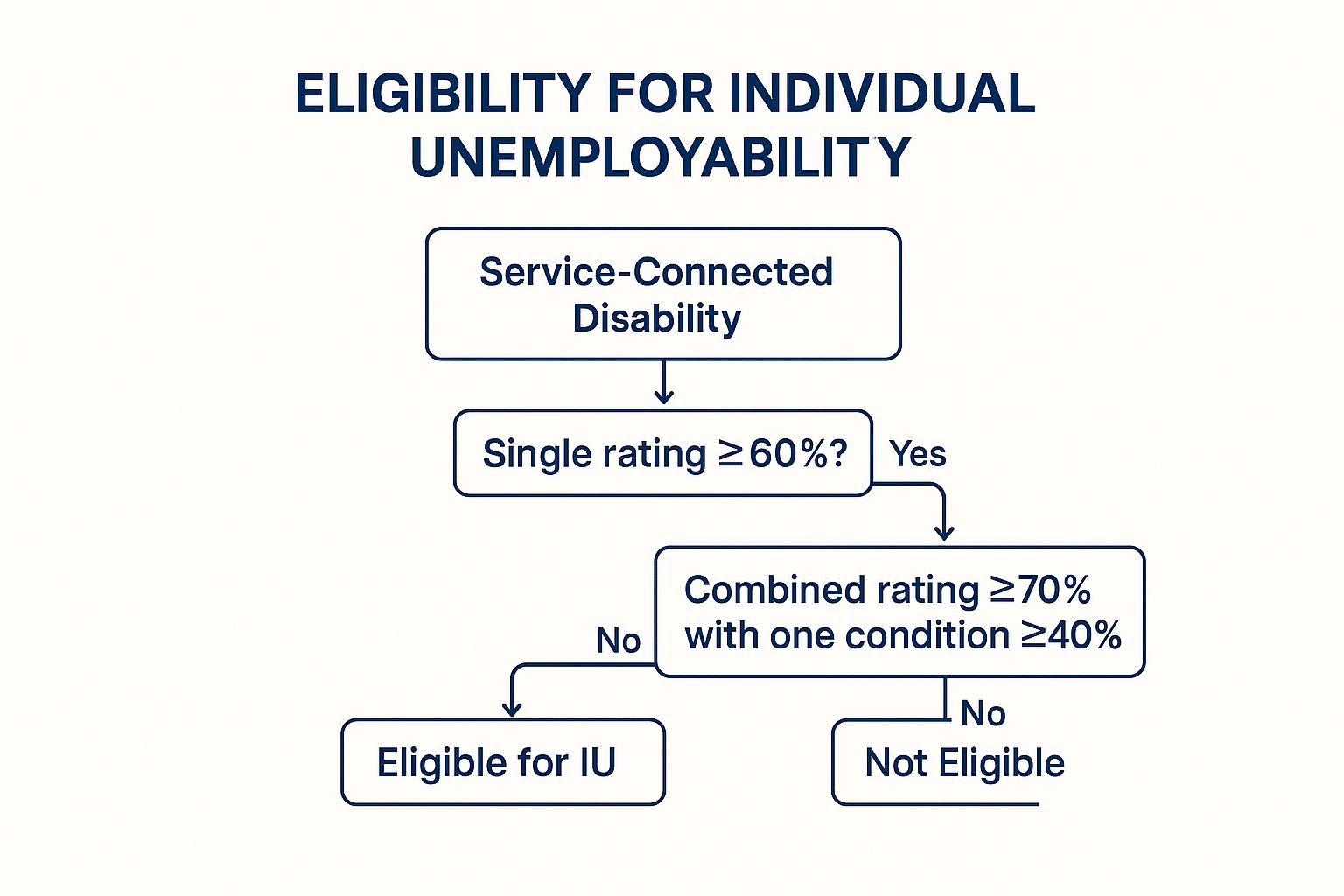
This decision tree clearly outlines the two primary pathways to IU eligibility: a single service-connected disability rated at 60% or higher, or a combined disability rating of 70% or greater with at least one condition rated at 40% or more. Understanding these criteria is the first step towards pursuing an IU claim.
While securing IU can be challenging, it's a vital lifeline for veterans whose TBI prevents them from working. By understanding the requirements, diligently gathering evidence, and seeking expert assistance when needed, you can significantly increase your chances of receiving this crucial benefit and gain the financial stability you deserve.
TBI VA Rating Categories Comparison
| VA Disability Rating | Implementation Complexity 🔄 | Resource Requirements ⚡ | Expected Outcomes ⭐📊 | Ideal Use Cases 💡 | Key Advantages ⭐💡 |
|---|---|---|---|---|---|
| 0% VA Disability Rating for TBI (Asymptomatic/Normal Functioning) | Low – requires confirmed diagnosis, no disabling symptoms | Minimal – medical documentation and regular follow-ups | Acknowledges injury without functional impairment; no compensation | Veterans with documented TBI but normal daily/work function | Establishes service connection; pathway for future claims; VA healthcare access |
| 10% VA Disability Rating for TBI (Mild Symptoms) | Moderate – documentation of mild symptoms needed | Moderate – ongoing symptom tracking and medical care | Mild impairment with occasional work/social interference; low compensation | Veterans with mild post-concussive symptoms who can still work | Monthly compensation; easier upgrade; access to VA care |
| 40% VA Disability Rating for TBI (Moderate Impairment) | Moderate-High – requires detailed medical evaluations and symptom documentation | Higher – vocational rehab, assistive technology, therapy | Significant functional impairment requiring workplace accommodations | Veterans with moderate cognitive and mood symptoms affecting work | Substantial compensation; vocational rehab; dependent benefits; specialty care access |
| 70% VA Disability Rating for TBI (Severe Impairment) | High – extensive medical management, documentation, therapy required | High – comprehensive rehabilitation and caregiver support | Severe cognitive deficits affecting independence and employability | Veterans unable to maintain employment with marked functional deficits | High compensation; Individual Unemployability eligibility; priority VA services |
| 100% VA Disability Rating for TBI (Total Impairment) | Very High – continuous supervision, institutional or home care needed | Very High – full care team, long-term management | Total occupational and social impairment; constant supervision needed | Veterans with profound cognitive and behavioral impairments | Maximum benefits; full VA healthcare and family support; no work requirement |
| Individual Unemployability (IU) for TBI | High – requires substantiated unemployability evidence and vocational assessments | High – medical and vocational documentation; legal support | 100% compensation despite <100% rating; no employability | Veterans rated ≥60% or combined ≥70% unable to maintain gainful employment | 100% pay without 100% rating; acknowledges real-world limitations; full benefits |
Securing Your Benefits with the TBI VA Rating Chart
Understanding the TBI VA Rating Chart is crucial for veterans seeking appropriate compensation for their traumatic brain injuries. From the 0% rating for asymptomatic cases to the 100% rating for total impairment, and including the possibility of Individual Unemployability (IU), this chart outlines the various levels of support available based on the severity of your condition. We've explored the key distinctions between a 10% rating for mild symptoms, a 40% rating for moderate impairment, and a 70% rating for severe impairment. Mastering these distinctions within the TBI VA Rating Chart empowers you to accurately assess your situation and advocate effectively for your needs. This knowledge is the foundation of a successful claim and can significantly impact your financial stability and overall well-being, enabling you to access crucial resources and support services.
Navigating the complexities of VA claims can be challenging, but you don't have to do it alone. Securing the benefits you deserve hinges on a thorough understanding of the TBI VA Rating Chart and a well-crafted claim. Homefront Group specializes in assisting veterans with TBI claims, offering expert guidance through every step of the process, from understanding the TBI VA Rating Chart to filing a compelling claim. Take the first step towards a stronger future: contact Homefront Group today for a free consultation and learn how they can help you navigate the TBI VA Rating Chart and secure the benefits you've earned. Homefront Group