

Understanding Secondary VA Claims Without the Confusion

A secondary VA claim is filed when you believe a new condition is related to an existing service-connected disability. This connection could mean the existing disability caused the new condition or made it worse. If you've already been awarded disability benefits for one health issue, you might be eligible for additional compensation for related problems.
Primary vs. Secondary Conditions: What's the Difference?
Your primary condition is the initial disability you claimed. Let's say you suffered a back injury while on active duty. This back injury would be your primary condition. A secondary condition is any health problem that develops later as a result of that primary condition. For instance, knee pain from an altered gait due to your back injury, or depression resulting from chronic back pain, would both be secondary conditions. Understanding this difference is vital for navigating the VA claims process.
How Secondary Conditions Impact Your VA Disability Rating
A successful secondary VA claim can increase your overall disability rating and your monthly payments. The VA uses a combined ratings table to calculate the overall rating. So, for example, a 30% disability rating for a primary condition and a 20% rating for a secondary condition won't necessarily result in a 50% combined rating. The combined rating could be closer to 55% or even higher. This means more financial support for you, so it's worth exploring potential secondary conditions.
Recognizing Potential Secondary Conditions You Might Be Overlooking
Many veterans don't realize how many conditions could be linked to their primary service-connected disability. Tinnitus, for example, can sometimes lead to sleep problems, anxiety, or even migraines. Flat feet can cause knee, hip, or back pain. Mental health conditions, such as PTSD, can sometimes cause physical health problems or worsen existing ones. It's crucial to discuss any new health issue with your healthcare provider and a Veterans Service Officer. They can help you determine if it might be a secondary condition related to your service.
Medical Nexus: The Key to a Successful Secondary Claim
The link between your primary and secondary conditions must be established with medical nexus evidence. This usually involves a nexus letter from a qualified healthcare professional. The letter explains, using medical terminology, how your primary condition is "at least as likely as not" the cause of your secondary condition. It requires a professional medical opinion based on your examination and history, not just a guess. The nexus letter is crucial for a successful claim. Without it, your claim is more likely to be denied.
Most Common Secondary Conditions That Actually Get Approved
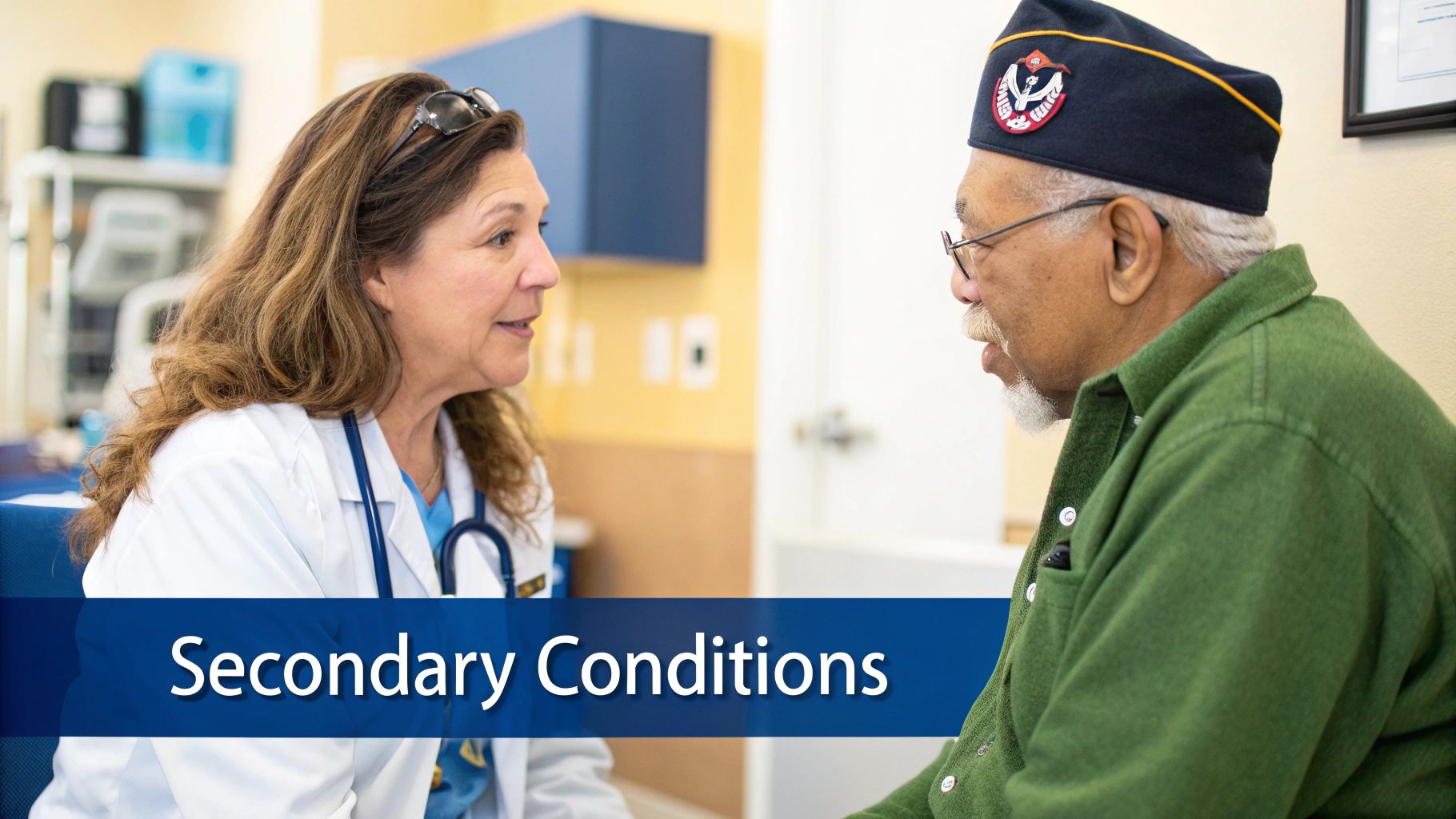
Filing a secondary VA claim can significantly improve your benefits. However, understanding which conditions have the highest approval rates is essential. Many veterans are unaware of the link between their service-connected disabilities and other health issues. This section clarifies those connections and offers insights into commonly approved secondary conditions.
Back Injuries and Mobility Issues
Back injuries often trigger a chain reaction of secondary conditions. A service-connected back injury can restrict mobility, leading to knee problems due to changes in how you walk. Chronic back pain frequently decreases activity levels, potentially leading to weight gain and worsening joint problems. Secondary VA claims address this domino effect, providing additional compensation for these interconnected challenges.
PTSD and Mental Health Conditions
Post-traumatic stress disorder (PTSD) rarely exists in isolation. It often leads to secondary mental health conditions such as anxiety, depression, and insomnia. The persistent stress and emotional toll of PTSD can disrupt sleep and worsen existing mental health vulnerabilities. Recognizing these interconnected issues is vital. Filing for secondary VA claims is crucial when appropriate. For instance, if PTSD prevents you from working, the resulting financial strain could worsen your anxiety and depression, justifying a secondary claim.
Pain Medication Side Effects as Secondary Conditions
Treatment for a service-connected disability can also create new health problems. Extended use of pain medication for a primary condition like a back injury can lead to secondary issues, such as gastrointestinal problems or even dependence. These medication side effects can qualify as secondary conditions. Documenting all health issues and their potential connection to your service-connected disability is essential.
Understanding VA Rating Correlations
Some condition combinations have notably higher approval rates. Recognizing and documenting these connections is key to a successful claim. The link between tinnitus and sleep disorders, for example, is often recognized by the VA, with some combinations having approval rates exceeding 80%. Similarly, the connection between PTSD and depression shows a strong statistical correlation in VA claim approvals.
Overlooked Secondary Conditions and Symptoms
Many veterans mistake symptoms for normal aging when they are actually compensable disabilities. Gradual hearing loss or mobility issues, for instance, could be linked to a prior service-connected injury. Increased irritability or difficulty concentrating could be secondary to a mental health condition like PTSD. Consulting with healthcare professionals and Veterans Service Officers is crucial to determine whether your symptoms are age-related or warrant a secondary VA claim. A thorough health examination helps identify overlooked secondary conditions. Furthermore, the claims landscape evolves alongside medical and insurance markets. Secondary VA claims, often related to insurance for vehicles driven for business purposes (sometimes called 'secondary use'), are a growing segment of auto insurance markets globally. Learn more about property and casualty insurance: https://www.mckinsey.com/~/media/mckinsey/industries/financial%20services/our%20insights/global%20insurance%20report%202025/global-insurance-report-2025-the-pursuit-of-growth.pdf. By understanding these often-missed connections, veterans can access all the benefits they deserve.
Building Medical Evidence That Actually Convinces the VA
Securing a successful secondary VA claim depends heavily on presenting strong medical evidence. Simply having doctors isn't enough. You need documentation that clearly connects your conditions in a way that the VA understands. This section will guide you through the process of gathering evidence that makes your secondary VA claims stronger.
Working Effectively With Your Healthcare Providers
The first step is open communication with your healthcare provider. Explain your service-connected disability and any new health problems you believe are related. For instance, if you have a service-connected back injury and are now experiencing knee pain, explain this potential connection to your doctor.
This dialogue ensures your provider understands the possible link and can document it accurately and completely. This detailed documentation becomes the basis of your secondary VA claim.
The Power of the Nexus Letter
The nexus letter is a critical piece of medical evidence. It's more than a standard doctor's note. A strong nexus letter explicitly and convincingly establishes the "at least as likely as not" connection required by the VA between your primary and secondary conditions.
It should offer a detailed medical explanation, referencing your medical history, examination findings, and relevant medical research. A nexus letter linking Post-Traumatic Stress Disorder (PTSD) to insomnia, for example, should detail how the veteran's particular PTSD symptoms disrupt their sleep. The letter’s quality directly impacts your claim’s success.
Preparing for C&P Exams Focused on Secondary Conditions
Compensation and Pension (C&P) exams are often required for secondary VA claims. Preparing for these exams is essential. Before the exam, gather all relevant medical records. This includes doctor's notes, test results, and treatment plans related to both your primary and secondary conditions. This preparation helps ensure the examiner has a complete understanding of your health.
During the exam, clearly and concisely describe your symptoms and how they affect your daily life. Explain how your secondary condition impacts your ability to work, sleep, and perform regular activities. Providing this information gives the VA rater important details for their evaluation.
Avoiding Common Documentation Mistakes
Certain documentation errors can weaken your claim. Make sure all medical records are accurate, complete, and current. Avoid vague language or broad descriptions. Instead, use specific medical terms and examples when you describe your symptoms.
For example, instead of saying "my back hurts sometimes," explain the kind of pain, where it is located, and how it limits your activities. This specificity strengthens your claim. Also, ensure your healthcare provider uses language consistent with the VA's rating criteria. Understanding and applying these criteria is key to a successful outcome.
Transforming Your Claim With Strong Evidence
Veteran success stories demonstrate the significant impact of strong medical evidence. One veteran, initially denied for a secondary claim related to knee pain stemming from a service-connected foot injury, eventually won his case. This victory came after he submitted a detailed nexus letter and thorough medical records.
This example shows how preparing proper medical evidence can transform a difficult claim into a successful one. Don't underestimate the value of a well-documented medical history and a convincing nexus letter. These factors can significantly improve your chances of receiving the benefits you are entitled to.
Filing Your Secondary VA Claims the Right Way
Filing secondary VA claims can often feel like navigating a complex maze. However, understanding the process and employing effective strategies can significantly improve your chances of a successful outcome. This guide offers practical advice and insights, drawing upon the experiences of veterans who have successfully secured their secondary claims.
Completing the Application Forms Accurately
The foundation of a successful claim lies in accurately completing the required VA forms. This involves providing precise details about your primary and secondary service-connected conditions, your service history, and all relevant medical treatment. Inconsistencies or omissions can lead to delays and complications. Before submitting, double-check all information to ensure accuracy and consistency across all forms. For instance, verify that your service dates and medical diagnoses align perfectly.
Submitting Essential Evidence Upfront
Submitting comprehensive evidence upfront is paramount. This includes medical records, a strong nexus letter, and any other documentation that substantiates the connection between your primary and secondary conditions. Withholding evidence for potential appeals can significantly prolong the process. A well-prepared initial claim can streamline the entire procedure and expedite the decision. Gathering strong evidence is the cornerstone of a successful secondary VA claim. Sometimes, unfortunately, the injury from the primary condition stems from fraudulent actions. To understand how to build a compelling case, reviewing examples of personal injury fraud investigation can be helpful.
Tracking Your Claim’s Progress Effectively
After submitting your claim, actively monitor its progress. The VA offers online tools and resources, such as the VA.gov website, to track your claim status. Regularly checking for updates allows you to stay informed and address any potential roadblocks promptly. Maintaining consistent communication with your Veterans Service Officer provides personalized guidance and support.
Strategic Timing for Multiple Secondary Claims
Deciding whether to file multiple secondary claims concurrently or individually requires careful strategic planning. If the conditions are clearly interconnected, filing them together can streamline the process. Conversely, if the conditions are distinct and require different types of evidence, filing separately might be more advantageous. This strategic approach allows you to tailor your evidence and arguments for each specific claim, maximizing your overall chances of success.
Realistic Timelines and Working With VA Regional Offices
Understanding typical processing times for secondary VA claims is crucial for managing expectations. The complexity of your condition and the workload of your specific VA regional office can influence the timeline. While some claims are processed quickly, others can take longer. Be prepared for potential variations. Maintaining open communication with your VA regional office and promptly responding to any requests for additional information can help prevent unnecessary delays.
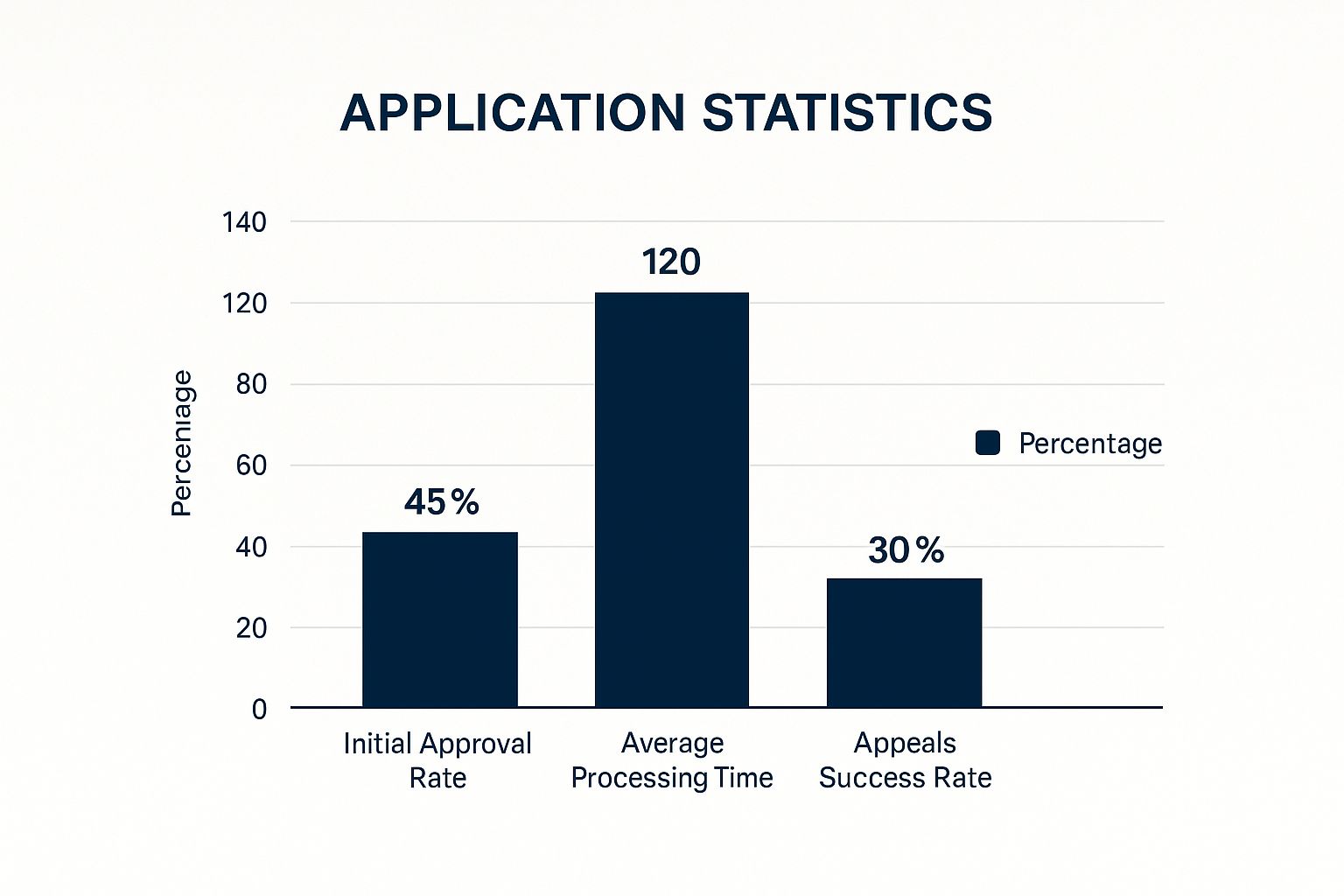
The infographic above visualizes key data points regarding secondary VA claims, including the initial approval rate (45%), the average processing time (120 days), and the appeals success rate (30%). These statistics underscore the importance of a thoroughly prepared initial claim, as the appeals process has a lower success rate and can significantly extend the time it takes to receive benefits. A compelling nexus letter connecting your secondary condition to your primary service-connected disability is essential.
To further clarify the process, let's examine a comparison of different secondary claim types:
To help you understand the timelines and requirements for various secondary claims, we've compiled the following table:
Secondary VA Claims Timeline and Requirements
| Claim Type | Average Processing Time | Required Evidence | Approval Rate | Common Issues |
|---|---|---|---|---|
| Mental Health Conditions Secondary to Physical Injuries | 4-8 months | Medical records, nexus letter from a mental health professional, service records | 40-50% | Establishing a clear nexus between the physical injury and the mental health condition |
| Orthopedic Issues Secondary to Back Injuries | 6-12 months | Medical imaging (X-rays, MRI), physical therapy records, nexus letter from an orthopedic specialist | 50-60% | Demonstrating the progression and severity of the orthopedic issue |
| Respiratory Problems Secondary to Burn Pit Exposure | 9-18 months | Medical records documenting respiratory issues, exposure records, nexus letter from a pulmonologist | 30-40% | Proving direct correlation between burn pit exposure and respiratory problems |
| Cardiovascular Disease Secondary to Agent Orange Exposure | 12-24 months | Medical records documenting cardiovascular issues, exposure records, nexus letter from a cardiologist | 20-30% | Establishing a definitive link between Agent Orange exposure and heart conditions |
This table offers a general overview. Individual timelines and requirements can vary.
By understanding the process, diligently gathering robust evidence, strategically timing your submissions, and actively communicating with the VA, you can navigate the secondary VA claims process effectively and improve your likelihood of a favorable outcome.
Winning Strategies From Successful Secondary Claims
Many veterans find it challenging to connect their service-connected disabilities to new health issues. This section explores strategies that set apart successful secondary VA claims from denied ones, using insights from approved claims and veterans who have navigated these complex cases successfully.
Timing Is Everything: Strategic Claim Submission
The timing of your secondary VA claim submission can significantly impact the outcome. Submitting too early without sufficient medical evidence can result in denial. However, waiting too long can make it harder to establish the necessary link between your conditions. Think of it as constructing a building: you need a strong foundation (your primary claim) before adding another floor (your secondary claim). For example, if your primary condition is a back injury, waiting until related knee problems are thoroughly documented strengthens your case for a secondary claim.
There's no magical waiting period for everyone but having full medical documentation about your primary condition is crucial for your secondary claim. Rushing the process isn't always the best approach.
Speaking the VA's Language: Effective Communication
Presenting your case effectively means communicating in a way that VA raters understand. This involves providing clear, concise, and medically sound explanations that directly address the VA's rating criteria. Avoid general descriptions of your symptoms. Instead, offer specific examples of how your secondary condition affects your daily life and ability to work. Think of it like explaining a technical issue to customer support – specific terms help them understand and resolve the problem quickly. Similarly, precise medical language helps the VA grasp the connection between your conditions, increasing your chances of approval.
Additionally, the claims landscape is subject to continual change, including that brought about by technological advancements in areas like transportation. The evolution of secondary VA claims, particularly those involving vehicle accidents, is influenced by shifting mobility trends. The increased utilization of vehicles for activities such as ride-hailing or deliveries directly impacts the nature of these claims. Explore this topic further.
Choosing the Right Approach: VSOs vs. Professional Representation
Deciding between working with a Veterans Service Organization (VSO) or seeking professional legal representation depends on the complexity of your claim. VSOs offer valuable free assistance, which is often suitable for straightforward secondary claims. However, for more complex situations involving multiple secondary conditions or significant medical documentation, legal expertise can be highly beneficial. Think of it as selecting the appropriate tools for a home improvement project – a hammer might be sufficient for simple tasks, but you might require specialized equipment for more intricate construction projects. Likewise, complex secondary claims can sometimes benefit from professional legal guidance.
VSOs are excellent resources for many claims, but legal advice from a qualified attorney becomes necessary if your case involves many complicating factors.
Framing Your Claim for Success: Subtleties That Matter
Small differences in how you present your claim can substantially influence the outcome. Clearly demonstrating the medical nexus—the connection between your primary and secondary conditions—is critical. A strong nexus letter from a healthcare professional directly addressing this link is often the deciding factor. This letter essentially bridges the gap between your conditions from the VA's perspective. For instance, if you are claiming depression secondary to chronic back pain, the nexus letter should explain how the pain directly contributes to your mental health condition. This direct connection is vital for establishing the "at least as likely as not" causality that the VA requires. A strong nexus letter should be detailed and comprehensive to have the best possible chance of supporting your claim.
Turning Denials Into Approvals Through Smart Appeals
A denial for a secondary VA claim can be discouraging. However, it's not necessarily the end of the road. It can be the beginning of a more effective strategy. This section explains why secondary claims are sometimes denied, how to analyze your denial letter, and how to navigate the appeals process.
Decoding Your Denial Letter: Identifying Opportunities
Your denial letter isn't just a rejection; it's a roadmap. The VA is required to provide specific reasons for the denial, and these reasons often reveal weaknesses in your initial claim. For instance, the denial might cite a lack of medical nexus evidence, which connects your secondary condition to your service-connected disability. This isn't a closed door; it's an indication of what you need to provide for a successful appeal. Understanding the rationale behind the denial is the first step to building a stronger case.
Bridging the Evidence Gap: Gathering Additional Support
Once you understand the reasons for the denial, gather additional evidence to address the VA's concerns. If the denial cites insufficient medical nexus, a more robust nexus letter from a qualified healthcare professional can make all the difference. This letter should explicitly link your secondary condition to your service-connected disability, using clear medical terminology. This additional evidence directly addresses the VA's concerns, significantly improving your chances.
Choosing Your Appeal Path: Higher-Level Review, Supplemental Claim, or Board Appeal?
The VA offers several appeal options: Higher-Level Review, Supplemental Claim, and Board Appeal. A Higher-Level Review is best when you believe the initial decision was based on an error or misunderstanding of the evidence. A Supplemental Claim is appropriate when you have new and relevant evidence that wasn't available during the initial filing. A Board Appeal is generally pursued for complex cases or those involving legal arguments about entitlement. Selecting the right appeal path is crucial for an effective appeal. Each option has specific requirements and timelines.
To help you understand these options, here’s a comparison table outlining the different appeal paths:
Secondary Claims Appeal Options Comparison: A detailed breakdown of different appeal paths, their advantages, processing times, and success rates for secondary VA claims
| Appeal Type | Best Used When | Processing Time | New Evidence Allowed | Success Rate |
|---|---|---|---|---|
| Higher-Level Review | Clear error in initial decision | A few months | No | Varies, generally lower |
| Supplemental Claim | New and relevant evidence available | Varies, potentially faster than Board Appeal | Yes | Varies, generally higher with strong evidence |
| Board Appeal | Complex cases, legal arguments | Several months to years | Yes | Varies, depends on case complexity and evidence presented |
This table summarizes the key differences between each appeal type, helping you make an informed decision about the best path for your situation. Choosing the right appeal type can significantly impact your processing time and chances of success.
Real Appeal Success Stories: Turning Denials Into Victories
Many veterans have successfully overturned denials through strategic appeals. One veteran, initially denied for a secondary claim related to knee pain stemming from a service-connected foot injury, secured benefits after submitting a comprehensive nexus letter from a specialist. Another veteran, whose claim for depression secondary to tinnitus was initially rejected, won on appeal after providing detailed evidence of worsening symptoms. These examples highlight the importance of persistence and addressing the specific reasons for denial with targeted evidence.
Presenting a Compelling Argument: Turning Denial Reasons Into Approval Opportunities
Your appeal is a persuasive argument. You're not just resubmitting your claim; you're addressing the VA's specific concerns. This requires a clear and concise presentation of your evidence, highlighting how it directly refutes the reasons for denial. For example, if the VA questions the severity of your secondary condition, provide documentation detailing how it impacts your daily activities. This targeted approach demonstrates that you are addressing the VA's specific concerns, not just reiterating your initial claim.
Working with Medical Experts During Appeals
A strong medical opinion can be crucial during the appeals process. Consulting with medical experts who understand the VA’s rating criteria can significantly improve your chances. They can provide comprehensive evaluations, detailed nexus letters, and expert testimony that directly address the VA's concerns. Their knowledge of VA procedures and requirements strengthens your appeal and demonstrates the validity of your claim.
By understanding the appeals process, identifying evidence gaps, and presenting a well-crafted argument, you can significantly increase your chances of turning a denial into an approval. Remember, a denial is not the end; it’s an opportunity to strengthen your case and secure the benefits you deserve. Contact Homefront Group today for a free consultation and learn how we can assist you with your appeal.
Key Takeaways
This guide offers a practical roadmap for pursuing secondary VA claims. It focuses on actionable steps and realistic expectations, recapping core strategies to increase your chances of approval. We'll also highlight potential pitfalls and provide benchmarks to gauge your progress. Each key takeaway includes specific actions you can implement immediately, from identifying potential secondary conditions to compiling robust medical evidence.
Identifying Potential Secondary Conditions
Don't underestimate the impact of your service-connected disability. Seemingly minor conditions, like tinnitus, can trigger a cascade of health issues, such as sleep disturbances, anxiety, or even migraines. Similarly, flat feet can lead to problems in the knees, hips, and lower back. Be proactive. Discuss any new health issue with both your healthcare provider and a Veterans Service Officer. They can help determine if it’s a secondary condition linked to your existing service-connected disability.
Building a Rock-Solid Medical Nexus
The medical nexus, the link between your primary and secondary conditions, is the cornerstone of your claim. This connection must be clearly established with strong medical evidence, primarily through a nexus letter from a qualified healthcare professional. This isn't just a simple doctor’s note; it's a detailed medical explanation of how your primary condition caused or worsened your secondary condition. A strong nexus letter incorporates your medical history, examination findings, and relevant medical research. It can often be the deciding factor between approval and denial.
Mastering the VA Claims Process
Successfully filing secondary VA claims involves more than just submitting paperwork. It requires a strategic approach. Start by accurately completing all required VA forms. Providing complete and consistent information upfront prevents delays and complications. Submitting all essential evidence—medical records, the nexus letter, and any supporting documentation—with your initial claim strengthens your case and streamlines the process.
Navigating the Appeals Process Strategically
Denials are setbacks, not roadblocks. Your denial letter outlines the reasons for the rejection, providing valuable insights for strengthening your case. When appealing, refining your arguments is crucial. Think of it like optimizing Google Ads campaigns: focus on the right keywords and eliminate irrelevant ones. You can even refine your focus using negative keywords. Gather additional evidence to address the specific concerns raised in the denial. A stronger nexus letter, additional medical records, or expert testimony can turn a denial into an approval. Choose the appropriate appeal path—Higher-Level Review, Supplemental Claim, or Board Appeal—based on your specific situation.
Realistic Timelines and Expectations
VA claims processing times vary based on the complexity of your case and the workload of your regional office. Be prepared for potential delays and maintain regular communication with your Veterans Service Officer for updates. While some claims are processed quickly, others can take several months. Understanding realistic timelines helps manage expectations and allows you to stay proactive.
Seeking Professional Support When Needed
While Veterans Service Organizations offer valuable free assistance, complex secondary claims sometimes benefit from professional legal representation. Attorneys specializing in VA disability claims understand the intricacies of the system and can provide expert guidance, particularly with appeals or complex medical evidence. Consider legal advice if your claim involves multiple secondary conditions, significant medical documentation, or challenging legal arguments.
Are you ready to take control of your VA benefits? Contact Homefront Group today for a free consultation. Our team is dedicated to helping veterans navigate the complexities of secondary VA claims.