
Understanding Your Intent to File Protection
Navigating the VA claims process can feel daunting. However, understanding the intent to file (ITF) can significantly impact your benefits. This crucial step acts as a financial safety net, potentially securing thousands of dollars in retroactive benefits. It’s the difference between starting from scratch and receiving the compensation you deserve from the get-go.
How Intent to File Protects Your Benefits
The intent to file establishes your potential benefits start date. Think of it as reserving your spot. This date becomes incredibly important if your claim takes time to process. Even if your claim isn't approved immediately, your benefits could be backdated to the date you filed your intent. This distinction can mean a substantial increase in your overall compensation.
The intent to file process allows veterans to establish a potential effective date for their benefits, which can be the date they submit their intent to file if their claim is ultimately approved. This process is crucial because it helps veterans secure the earliest possible effective dates, potentially increasing their compensation. The ITF is valid for one year from the date the VA receives it. During this time, veterans must submit a complete claim. You can explore this topic further here.
Understanding the One-Year Window
Once you file your intent to file, you have one year to submit your full claim. This provides valuable time to gather necessary documentation, such as medical records and service history, allowing you to build a strong case. Meeting this deadline is essential to maximize your benefits.
Which Claims Benefit Most?
While the intent to file benefits all claims, some benefit more significantly than others. Claims for conditions that worsen over time, for instance, can see a considerable difference in compensation based on the established ITF date. Complex claims requiring extensive documentation also benefit from the added preparation time afforded by filing the ITF. This extra time allows for a more comprehensive and potentially more successful claim.
Real-World Scenarios
Consider a veteran whose disability worsens six months after leaving service. Filing an intent to file immediately upon separation protects their benefit level, basing it on the earlier, less severe stage of their disability. This proactive approach can significantly impact the benefits received over time.
Another example is a veteran who anticipates needing to gather extensive medical records. Filing an intent to file gives them the necessary time to collect these crucial documents without jeopardizing their potential effective date. This allows for a stronger case and improves the likelihood of a successful claim. Understanding these scenarios highlights the importance of protecting your benefits with an intent to file.
Maximizing Your Financial Benefits With Smart Timing
Understanding the intent to file (ITF) is crucial for veterans seeking VA disability benefits. However, strategically timing your ITF can significantly impact your potential financial gains. Thousands of dollars could hang in the balance based on when you submit this seemingly simple form. This section breaks down how smart ITF timing translates into real money.
The Financial Math Behind Effective Dates
The core principle is this: your ITF establishes a potential effective date for your benefits. If your claim is approved, your benefits can be backdated to the ITF filing date. This is where the potential for increased compensation becomes clear. The earlier your ITF, the earlier your potential effective date, and the more retroactive benefits you might receive.
For example, imagine a veteran files their intent to file in January and their complete claim in December of the same year. If approved, their benefits could be retroactive to January. This highlights the importance of filing the ITF as soon as possible. Filing an ITF helps establish a clear timeline for submitting the required documentation, increasing the likelihood of receiving benefits sooner. Learn more about maximizing your ITF benefit here.
Calculating Potential Gains
Let's illustrate the financial impact with a practical example. Consider two veterans with identical disability claims, both rated at 50% disabling. Veteran A files their ITF immediately upon separating from service, while Veteran B waits six months. Assuming a monthly benefit of $1,000 at 50%, Veteran A secures a potential six-month head start on benefits, totaling $6,000. This demonstrates how even a few months' difference in ITF timing can significantly affect compensation.
To further clarify the financial ramifications of different ITF timing scenarios, let's examine the following table:
ITF Timing Impact on Benefits Payout
Comparison showing how different ITF filing dates affect total compensation received over time
| Filing Scenario | ITF Date | Claim Completion | Retroactive Period | Additional Benefits |
|---|---|---|---|---|
| Immediate Filing | January 1 | December 31 | 12 months | $12,000 |
| 6-Month Delay | July 1 | December 31 | 6 months | $6,000 |
| 1-Year Delay* | Following January 1 | December 31 | 0 months* | $0 |
*Illustrates the potential loss of retroactive benefits if the claim is completed after the one-year ITF period.
As this table clearly demonstrates, a prompt ITF filing can result in substantially greater financial benefits. Conversely, delaying the ITF can lead to significant financial losses, especially if the one-year deadline is missed.
Identifying Critical Timing Windows
Strategic ITF timing is particularly important in certain situations. If your condition is likely to worsen, filing your ITF early locks in your benefit rate based on the current severity. This can result in substantially higher compensation compared to waiting for the condition to progress. If your claim involves complex medical evidence or requires extensive documentation, the one-year window provided by the ITF becomes extremely valuable.
Common Timing Mistakes and How to Avoid Them
Delaying the ITF is a common and costly mistake. Some veterans mistakenly believe they need all their documentation before filing. However, the ITF is designed to give you time to gather that documentation. Waiting can cost you months of potential retroactive benefits. Misunderstanding the one-year deadline is another mistake. This isn't a suggestion; it's a firm deadline. Missing it means losing the potential effective date established by your ITF.
Beyond VA Claims: Where Intent to File Really Comes From
Understanding the legal basis of intent to file helps clarify its protective power. This concept isn't exclusive to VA benefits. It's grounded in principles of fairness found throughout the legal system. This broader context highlights the importance of your intent to file strategy and reveals similar protections in other areas.
Priority Dates and Protecting Your Rights
The core function of "intent to file" is establishing a priority date. This date serves as a placeholder, securing your position. It ensures that even if the formal claim takes time, your rights are preserved from the initial date. This is especially important when timing affects outcomes, such as with worsening medical conditions.
Parallels in Patent Law
The principle of a priority date based on initial notification is common across many legal systems. For instance, in patent law, a provisional patent application functions similarly to an intent to file. It allows inventors to establish a priority date for their invention, safeguarding their intellectual property before a full application. Learn more about the importance of Intent to File here.
Intent to File in International Legal Frameworks
Similar mechanisms for preliminary filings exist internationally. Many countries incorporate the concept of a declaration of intent within their legal frameworks. This allows individuals and businesses to secure their position while completing required documentation, often for matters with significant financial or legal ramifications.
Other Government Processes Mirroring This Approach
This protective concept appears in other government processes as well. Consider applying for permits or licenses. An initial notification of intent often begins the process and secures your place in the queue. This principle applies to diverse areas, from business registrations to environmental assessments.
Why Legislators Created ITF Protections for Veterans
Legislators created intent to file protections recognizing the difficulties veterans face navigating the benefits system. These protections aim to ensure fairness and prevent veterans from being penalized due to processing delays or complex documentation requirements. The intent to file system allows veterans to focus on gathering necessary evidence.

Recognizing Similar Protective Opportunities
Understanding the wider use of "intent to file" can help you identify similar protections in other situations. Whether dealing with legal issues, administrative processes, or even personal agreements, establishing a priority date can be a valuable tool. This proactive approach can potentially save you time, money, and stress.
Your Step-by-Step Intent to File Process
Ready to protect your benefits start date? Understanding the intent to file process is key. This guide breaks down each step, from preparation to follow-up, covering various submission methods, including online through VA.gov, traditional mail, and in-person options.
Before You Begin: Gathering Your Information
Before starting, gather essential information. This includes your social security number, service dates, and the specific benefits you’re claiming. Having these details on hand streamlines the process and prevents delays. It's like preparing for a trip: having your passport and itinerary ready makes for a smoother journey.
Choosing Your Submission Method
Several convenient methods are available for filing an intent to file. You can file:
- Online at VA.gov
- By phone at 1-800-827-1000
- By mail
- In person at a VA regional office
The process is designed to be accessible, requiring basic information about the veteran and the benefit being claimed. Learn more about filing your intent to file here. Choose the method that suits your preferences and resources. Online filing offers speed and convenience, while traditional methods offer a tangible record.
Submitting Your Intent to File Online
Navigating VA.gov might seem complex, but the intent to file process is straightforward. The website offers clear instructions, guiding you through each required field. The online system provides immediate confirmation and a digital record of your submission, eliminating uncertainty and ensuring your intent is recorded promptly.
Filing by Phone, Mail, or In Person
If online filing isn’t for you, alternative methods are available. Filing by phone involves calling the VA and providing your information to a representative. Mailing your intent to file involves sending written notification to your VA regional office. For in-person filing, visit your local VA office. These methods can be reassuring for those who prefer direct interaction or physical documentation.
After Submission: Confirmation and Follow-Up
After submission, what’s next? Regardless of the method, you should receive confirmation. This could be an email (online filings), verbal confirmation (phone submissions), or a mailed receipt (physical filings). This confirmation verifies your submission date and ensures your intent is officially recorded. Keep a copy for your records.
Troubleshooting and Common Issues
Sometimes issues arise. The VA provides resources to help, including online help desks, dedicated phone lines, and in-person assistance at your regional office. Don’t hesitate to seek support if you encounter difficulties.
Automatic ITF Protections and Verification
You might be eligible for automatic ITF protections you're unaware of. Certain actions, like filing a related claim, can trigger automatic protection. Verify your filing status to ensure your benefits are protected. This can be done online, by phone, or through your VA representative.
Documentation and Peace of Mind
Keep copies of all documentation related to your intent to file. This includes the confirmation, correspondence with the VA, and supporting evidence. These records prove your filing date and protect your interests. Having these documents offers peace of mind throughout the claims process. Think of it as an insurance policy for your benefits.
Making Your One-Year Timeline Work for You
Your intent to file gives you one year to submit your complete claim to the VA (Veterans Affairs). This section explains how to make the most of that time. By using strategies employed by successful veterans, you can organize your documentation, establish realistic timelines, and focus on gathering the most important evidence.
This infographic illustrates the key milestones in the process:
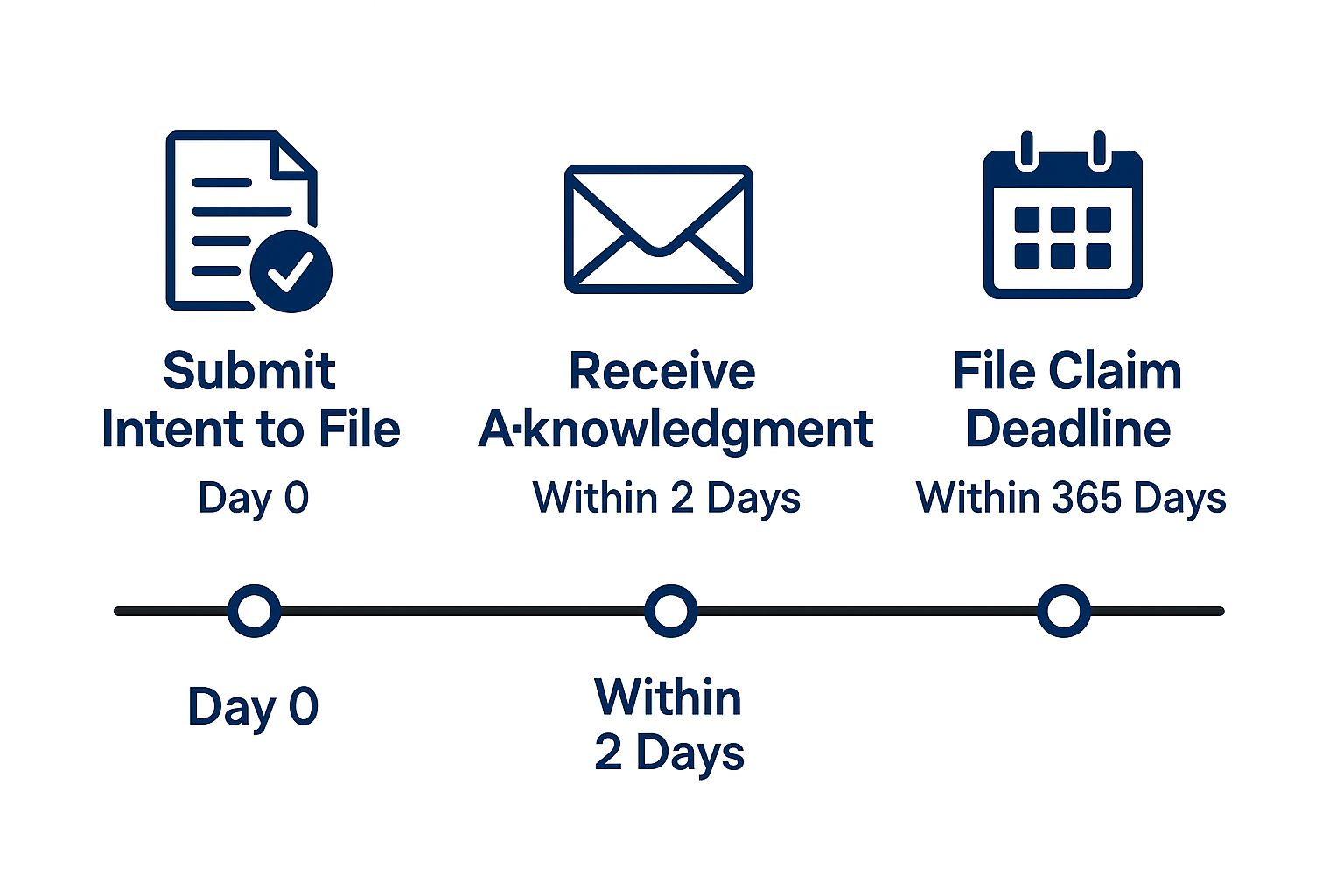
The infographic highlights the importance of filing your complete claim within 365 days of submitting your intent to file. This one-year period begins when the VA receives your intent to file, providing a definitive timeframe for action.
Organizing Your Documentation
Gathering the necessary documentation for a VA claim can be a daunting task. Begin by creating a comprehensive checklist. Include every piece of evidence you might need, from medical records and service records to any supporting documentation. This checklist will be your roadmap, keeping you organized and on track.
Prioritize the most important documents. Medical records directly connecting your condition to your service are crucial. Concentrating on this key evidence first establishes a strong foundation for your claim.
Creating Realistic Timelines for Medical Records
Obtaining medical records often takes longer than expected. Contact your healthcare providers early in the process. Inquire about their procedures for releasing records. Some may offer online portals for quick access, like My HealtheVet, while others might require formal requests. Factor in extra time for potential delays, especially if you’re requesting records from multiple providers.
Working With Healthcare Providers and Records Requests
A positive relationship with your healthcare providers and their administrative staff can make a significant difference. Clearly communicate the specific documents you need and the required deadlines to ensure a smoother process. When dealing with bureaucratic requests, patience and persistence are key. Regular follow-up calls can help keep your request moving forward.
Managing Delays and Expectations
Delays are sometimes unavoidable. Be prepared for potential roadblocks and have backup plans. If a provider is slow to respond, consider contacting the medical records department directly. Understanding realistic turnaround times for different types of documentation will help manage your expectations and keep your timeline on track.
Using Organizational Tools
Various tools can assist in managing your timeline. Spreadsheets, online calendars, and project management software, such as Asana or Trello, can help you track deadlines and monitor progress. These tools provide a visual overview and highlight any potential delays.
To help you stay organized, here’s a sample checklist you can adapt to your specific needs:
ITF Timeline Management Checklist
| Month | Key Tasks | Documentation Needed | Deadlines | Status Check |
|---|---|---|---|---|
| 1 | Gather service records | DD214, medical records from service | End of Month 1 | Complete |
| 2 | Request medical records from private providers | Doctor's notes, test results, treatment summaries | End of Month 2 | In Progress |
| 3 | Organize and review all gathered documentation | All records related to the claim | End of Month 3 | Not Started |
| … | … | … | … | … |
| 12 | Final review and submission of claim | Complete claim file with all supporting evidence | End of Month 12 (ITF deadline) |
This table provides a framework for managing your ITF timeline. Remember to adjust the tasks and deadlines based on your specific circumstances.
Recognizing Warning Signs and Emergency Strategies
Be aware of warning signs that you’re falling behind. Consistently missed deadlines or difficulty gathering key documents indicate the need to reassess your strategy. Emergency strategies, such as requesting extensions or seeking professional assistance from a Veteran Service Officer (VSO) or attorney, can help you regain control.
Timeline Extensions and How to Request Them
Under certain circumstances, the VA may grant timeline extensions. If you encounter unforeseen delays due to circumstances beyond your control, contact the VA immediately and inquire about the extension request process. Provide clear and comprehensive documentation supporting your request to improve your chances of approval.
Backup Plans When Time Is Short
Even with the best planning, you may find yourself running short on time. If your one-year deadline is approaching and you're still missing some documents, prioritize the most essential evidence. File your claim with the available documentation and explain the reasons for the missing pieces. You can submit additional evidence later, but filing the claim before the deadline protects your intent-to-file date.
Avoiding Costly Intent to File Mistakes

The intent to file (ITF) is a valuable tool for veterans. It allows them to establish an effective date for their claim, which can impact the amount of retroactive benefits they receive. However, mistakes during the ITF process can have significant consequences, potentially costing veterans thousands of dollars. This section examines the most common and costly ITF mistakes and provides strategies to avoid them.
Documentation Traps That Delay Claims
One of the most frequent mistakes is submitting an incomplete or inaccurate ITF. Missing key information, such as your social security number or service dates, can significantly delay your claim. Double-check all information for accuracy and completeness before submission. Another common pitfall is failing to keep copies of your ITF submission and related correspondence. These documents serve as crucial proof of your filing date and are essential if any discrepancies arise later.
Communication Missteps and Complications
Effective communication with the VA is paramount. Failing to respond promptly to requests for information or misunderstanding instructions can create unnecessary delays. Maintain open communication with the VA and seek clarification whenever needed. Proactive communication can prevent misunderstandings and keep your claim moving forward. Just as clear communication is essential between an architect and builder for a successful construction project, so too is it crucial for your VA claim.
Timing Errors That Cost Veterans Thousands
Timing is critical with the ITF process. The most significant mistake is missing the one-year deadline for submitting your complete claim after filing your intent to file. This oversight can cost you months, even years, of retroactive benefits. Set reminders, track your progress meticulously, and avoid missing this crucial deadline.
Understanding ITF Rules and Navigating Complex Situations
Many veterans misunderstand key ITF rules. For instance, some believe they can file multiple ITFs for the same condition. However, only one ITF is permitted per claim. If you have any questions about the ITF process, consult a Veteran Service Officer or an attorney specializing in VA claims. Their expertise can provide invaluable guidance and help you avoid costly errors, much like navigating a complex legal document requires expert help to understand the details and protect your rights.
Damage Control: Recovering From Mistakes
Even with careful planning, mistakes can happen. If you realize you’ve made an error, take immediate action. Contact the VA, explain the situation, and explore possible solutions. Depending on the circumstances, they may be able to rectify the issue. Don't let one mistake derail your entire claim. It's like fixing a flat tire – a temporary setback, but addressing it promptly gets you back on track.
Protecting Your Benefits When Things Go Wrong
If your ITF is rejected or you encounter other issues, several strategies can help protect your benefits. Gathering supporting evidence, such as medical opinions and buddy statements, can strengthen your case. Seeking legal counsel from an attorney specializing in veteran law can provide valuable advocacy and help you navigate complex situations. Remember, you have rights. Don't give up. Even if your initial ITF encounters problems, other avenues are available to pursue your claim and secure the benefits you deserve.
Your Intent to File Action Plan
Transforming your VA benefits knowledge into action is the next crucial step. This action plan offers practical steps you can take immediately, no matter where you are in the claims process. It consolidates key strategies, guides you through important decisions, and helps you effectively track your progress.
Creating Your Personalized ITF Roadmap
Your Intent to File (ITF) journey is unique. This plan helps you tailor your approach with adaptable checklists, contact information, and timeline templates. Whether you're just starting or already in the claims process, these tools empower you with clarity and confidence.
-
Assess Your Current Situation: Are you recently separated from service? Have you already identified potential claims? Knowing your starting point is key to defining your next steps.
-
Set Clear Objectives: What benefit goals do you have? What are your target effective dates? Defining these objectives helps maintain focus and motivation.
-
Develop a Realistic Timeline: Divide the claims process into smaller, manageable steps. Set deadlines for each task. Consider using a project management tool like Asana to visualize your timeline and monitor progress.
-
Identify Potential Challenges: Think about potential roadblocks, such as gathering medical records or understanding VA procedures. Develop contingency plans to address these proactively.
Decision Points: DIY vs. Professional Help
Understanding when to seek professional help is essential. Some veterans successfully navigate the ITF process independently, while others benefit from expert guidance.
-
Simple Claims: If your claim is straightforward and well-documented, managing it yourself might be an option. The VA offers resources to help self-filers.
-
Complex Claims: For claims involving multiple conditions, extensive medical evidence, or legal complexities, consider assistance from a Veteran Service Officer (VSO) or a lawyer specializing in VA claims.
-
Appeals: If you’re appealing a denied claim, professional legal representation is strongly recommended. The appeals process can be complex, and expert guidance can significantly improve your chances of success.
Tracking Your Progress and Staying Motivated
Consistent tracking is vital for staying on track and motivated.
-
Create a Detailed Checklist: List every required document and task. Track your progress carefully and celebrate milestones to maintain momentum.
-
Maintain Regular Communication with the VA: Stay informed about your claim’s status. Respond promptly to any information requests. Proactive communication prevents delays.
-
Seek Support: Connect with other veterans, family, or support groups. Sharing experiences and challenges offers valuable encouragement and motivation.
Troubleshooting and Backup Plans
Even with careful planning, unforeseen challenges can arise. This plan provides resources and strategies for navigating these situations.
-
VA Resources: Familiarize yourself with the VA's online resources, help desks, and your regional office’s contact information. These are valuable tools for addressing unexpected issues.
-
Professional Assistance: If you face complex legal or procedural issues, a VSO or attorney specializing in VA claims can provide crucial support.
-
Timeline Extensions: If unavoidable delays happen, contact the VA immediately to discuss a timeline extension. Provide clear documentation to support your request.
Celebrate Your Milestones and Stay Focused
Remember to acknowledge your accomplishments throughout the ITF process. Completing each step, gathering documentation, and overcoming challenges deserves recognition. Celebrating milestones helps you stay motivated as you work toward securing your VA benefits. Remain persistent, informed, and supported on this journey.
Ready for the next step? Homefront Group offers expert guidance and personalized support to veterans navigating VA claims. Our team of experienced professionals empowers veterans and first responders, offering specialized legal and professional services for a successful transition to civilian life. Contact us today for a free consultation.