
Navigating the Veterans Benefits Eligibility Landscape
Understanding eligibility for veterans benefits can feel like a daunting task. The process involves numerous factors and varied criteria, often leaving veterans feeling lost. This section aims to clarify the core requirements that determine your access to these essential benefits. We’ll cover the key elements of service requirements, discharge status, and required documentation, while also dispelling common misconceptions that prevent many veterans from receiving what they’ve earned.
Understanding Service Requirements
One of the main factors affecting eligibility is the length and nature of your service. Most benefits require active duty service, but the specific length of time varies. Some benefits necessitate a minimum service duration during wartime, while others account for peacetime service as well. For instance, eligibility for the Post-9/11 GI Bill requires at least 90 aggregate days of active duty service after September 10, 2001. Further, some benefits may require service in specific locations or during specific campaigns. It's important to identify the exact service requirements for the particular benefits you are seeking.
The Importance of Discharge Status
Your discharge status is critical in determining your eligibility. An honorable discharge is usually required to qualify for most VA benefits. However, general discharges under honorable conditions may also qualify you for certain benefits, whereas other discharge statuses, such as dishonorable discharges, will typically disqualify veterans. A clear understanding of the implications of your discharge status is vital for pursuing benefits successfully.
Gathering Essential Documentation
Proper documentation is paramount for a smooth application process. Key documents often include your DD214 (Certificate of Release or Discharge from Active Duty), providing proof of service and discharge status. You may also need medical records, particularly when applying for disability-related benefits. One must meet specific eligibility criteria to receive veterans' benefits. For example, to receive VA disability compensation, a veteran must have a service-connected disability. This signifies the disability was incurred or worsened during active military service.
The VA uses a rating system to ascertain the level of compensation, from 0% to 100% in 10% increments. As of December 2024, the monthly compensation for a veteran with a 10% disability rating is $175.51, while a 20% rating provides $346.95. Veterans with higher ratings receive more substantial compensation, reflecting the impact of their disabilities. For instance, a 100% disability rating results in a significantly higher monthly payment. These figures are not fixed and are subject to annual adjustments, such as the 2.5% cost-of-living adjustment (COLA) confirmed for 2025. More detailed statistics can be found here. Other important documents may include marriage certificates for spousal benefits and dependent information for related claims. Organizing your documents in advance simplifies the application process significantly.
Addressing Common Misconceptions
Several misconceptions prevent veterans from pursuing the benefits they are entitled to. One such misconception is the belief that only combat veterans qualify for benefits. In reality, numerous benefits exist for veterans who served in non-combat roles. Another misconception is that applying for benefits is excessively complex and time-consuming. While the process requires attention to detail, resources and support, such as Veterans Service Officers and accredited representatives, are available to assist veterans through every step. Understanding the facts and seeking professional guidance can empower veterans to access the benefits they deserve.
Unlocking Your VA Healthcare Benefits Access
Accessing VA healthcare benefits is a crucial step for many veterans transitioning back to civilian life. However, the VA healthcare system operates differently than civilian healthcare programs. This section breaks down the VA's unique structure, focusing on the priority group system, income thresholds, service-connected conditions, and special qualification pathways. We'll also explore practical strategies for a successful application.
Understanding the VA Priority Group System
The VA utilizes a priority group system to categorize veterans and determine their level of care and associated costs. This system prioritizes veterans with service-connected conditions and considers financial status. Think of it as a triage system, similar to a hospital emergency room. The most urgent cases are seen first, and similarly, the VA prioritizes veterans with the greatest needs, ensuring those with service-related health issues receive prompt care.
How Income Affects Your Eligibility
Income limits play a significant role in VA healthcare eligibility, and these limits are adjusted annually. For example, nonservice-connected veterans with incomes exceeding a certain threshold might not qualify for enrollment unless they meet specific criteria, such as prior enrollment. VA Healthcare eligibility guidelines detail these income limits and other factors impacting eligibility. Veterans seeking care for service-connected conditions generally receive priority. This complexity necessitates careful consideration of all eligibility factors.
Service-Connected Conditions and Guaranteed Coverage
Service-connected conditions often guarantee VA healthcare coverage. If your health issue is directly related to your time in service, you’re more likely to qualify for comprehensive care. The degree of disability resulting from the service-connected condition can also influence your coverage level and benefits. This prioritization ensures veterans facing health consequences from their service are provided for.
Special Qualification Pathways for Combat Veterans
Combat service can open specific qualification pathways for VA healthcare. Veterans who served in combat zones may be eligible for enhanced benefits and expedited processing. These pathways acknowledge the unique challenges and sacrifices made by those in combat situations, making a substantial difference in accessing timely and appropriate care.
VA Healthcare Priority Groups and Enrollment
Navigating the enrollment process efficiently is key to accessing your benefits. The following data chart visualizes the VA's eight priority groups, along with enrollment criteria and copay status.
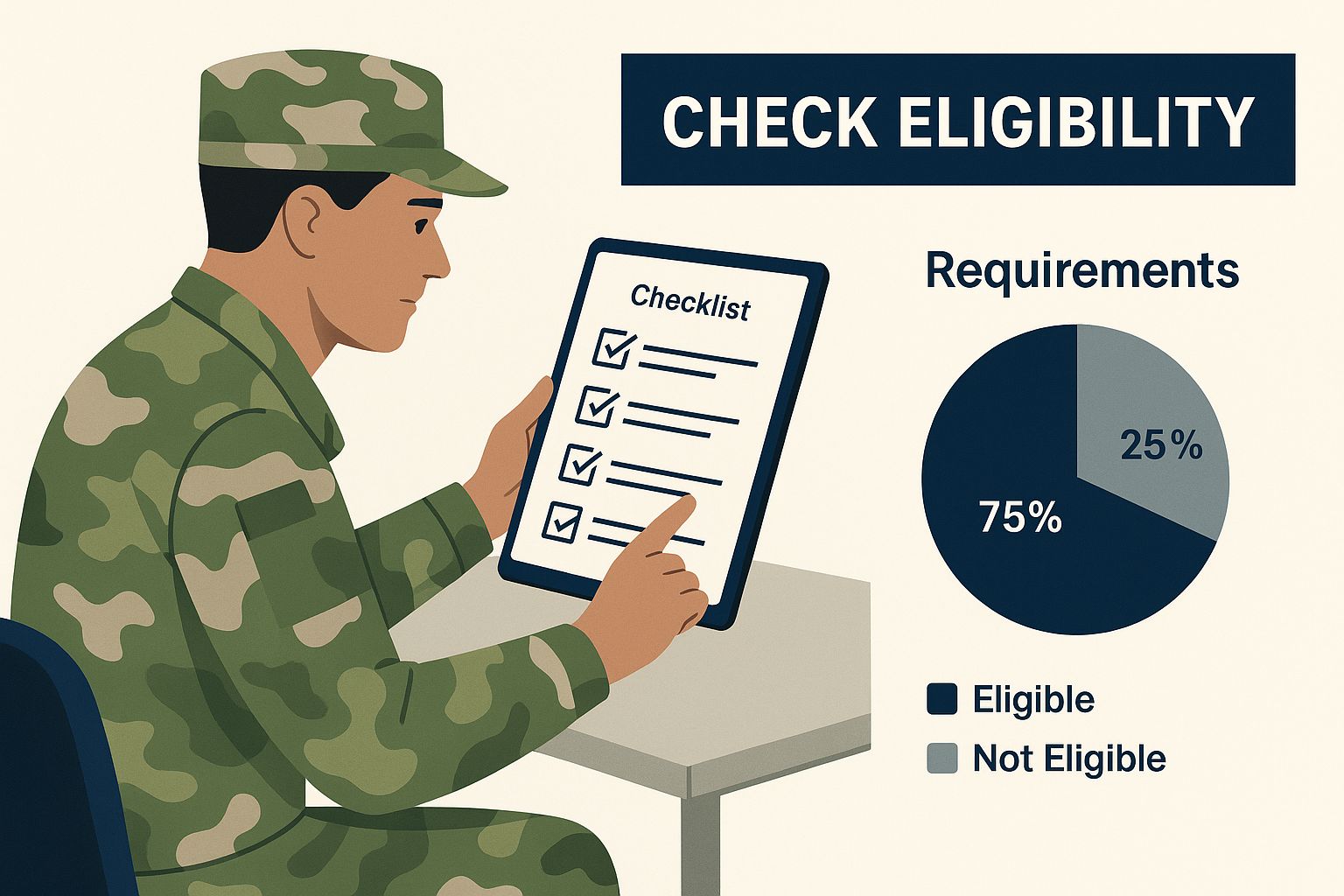
The data chart clearly highlights that Priority Groups 1 through 3, representing veterans with service-connected disabilities rated from 10% to 50% or higher, are exempt from copays. Other groups, such as combat veterans (Group 6) and those with nonservice-connected disabilities (Groups 7-8), may have copay requirements depending on their income level.
To further clarify the priority group system, the following table provides a more detailed overview of the eligibility requirements and benefits access for each level.
VA Healthcare Priority Groups
| Priority Group | Eligibility Requirements | Benefits Access |
|---|---|---|
| 1 | Service-connected disabilities 50% or higher | Comprehensive care, generally no copays |
| 2 | Service-connected disabilities 30%-49% | Comprehensive care, generally no copays |
| 3 | Service-connected disabilities 10%-29% | Comprehensive care, generally no copays |
| 4 | Receiving VA pension or Medal of Honor recipient | Access to care, may have copays for some services |
| 5 | Former POWs | Comprehensive care, generally no copays |
| 6 | Combat veterans | Access to care, may have copays based on income |
| 7 | Nonservice-connected disabilities and meet income limits | Access to care, may have copays based on income |
| 8 | Nonservice-connected disabilities and higher income | Limited access to care, may have higher copays |
This table summarizes the key factors determining a veteran's priority group and the associated level of benefits. Understanding these groups and gathering the necessary documentation can help streamline the application process.
Securing Your Earned Disability Compensation
Disability compensation acknowledges the sacrifices veterans make during their service. However, many veterans don't receive the full amount they are due. This section explains what a service-connected disability is and outlines how to effectively establish this connection to receive your deserved compensation.
Understanding Service-Connected Disabilities
A service-connected disability is an injury, illness, or condition incurred or worsened during active military service. This can include physical injuries, such as hearing loss or back problems, and mental health conditions like PTSD or anxiety. Importantly, even conditions appearing years later can be linked to your military service. Don't dismiss seemingly unrelated health issues that might have originated during your service.
The VA Rating System and Its Importance
The VA uses a rating system to assess the severity of service-connected disabilities. This system assigns a percentage from 0% to 100% in 10% increments. This percentage directly affects your monthly compensation. A 10% disability rating might provide $175.51 monthly, while 20% might be $346.95. These amounts are subject to annual cost-of-living adjustments.
Gathering Strong Evidence
Strong evidence is critical for a higher rating and maximum compensation. Your medical records, particularly those from your service time, are paramount. Statements from fellow service members, supervisors, or family can also support your claim. This evidence helps create a complete picture of your condition and its connection to your service.
Presumptive Conditions: A Simpler Path
Presumptive conditions are automatically considered service-connected if you served in specific locations or periods. For example, some cancers are presumed service-connected for Vietnam veterans who served within a defined timeframe. These presumptions simplify the process for those exposed to particular hazards.
Navigating Claim Denials and the Appeals Process
Even with proper documentation, claims can be denied. Common reasons include insufficient medical evidence, an unclear service connection, or missed deadlines. Don't be discouraged by a denial. Veterans Service Officers (VSOs) can provide vital assistance with gathering documentation and navigating the appeals process. They are skilled in advocating for veterans' rights and can significantly improve your chances of a successful appeal. VSOs can help you organize paperwork, file correctly, and understand the complexities of the system. Their support can be the difference between a denied claim and receiving your rightful compensation. The experiences of veterans who secured compensation even decades after their service highlight the importance of persistence and using available resources.
Mastering The VA Claims Process For Approval

Successfully navigating the VA claims process is crucial for veterans to access their earned benefits. Even those clearly eligible often face denials due to the system's complexity. This guide breaks down essential steps, from initial preparation to potential appeals, for a smoother, more successful claims experience.
Choosing The Right Claim Type
Understanding the different claim types is the first step. Are you filing for disability compensation, pension, or other benefits? Disability compensation focuses on conditions connected to military service, while a pension claim often relates to wartime veterans with financial needs. This initial choice sets the stage for the entire process.
Organizing Evidence For Persuasive Claims
Strong evidence is the cornerstone of any successful claim. Think of your claim as a legal case requiring proof. Organize medical records chronologically, highlighting connections between current conditions and your service. For instance, if claiming hearing loss, documentation of noise exposure during service is invaluable. Buddy statements from fellow service members can provide powerful corroboration.
The Significance Of Timing In The VA System
Timing is critical in the VA claims process. Deadlines exist for different claim types, and missing them can cause delays or denials. Promptly responding to VA information requests is equally important. Just as timing is crucial in military operations, timely submissions with all required information can greatly impact your claim’s success.
The Role Of Veterans Service Officers
Veterans Service Officers (VSOs) are essential allies. They can help you understand complex regulations, gather evidence, and present your case effectively. A VSO is like an experienced guide, navigating the intricacies of the VA system and helping you avoid common pitfalls.
Tracking Your Claim Status And Following Up
Actively track your claim’s status once submitted. The VA provides online tools and phone lines to monitor progress. This allows you to stay informed and address any emerging issues. The VA reviews military records and medical documentation to determine eligibility. Veterans seeking compensation must link their disabilities to their service.
This process often requires extensive documentation and medical evaluations. The VA processes thousands of claims annually, with an estimated 70% to 80% resulting in some service connection. The exact figures depend on the disability claimed and the supporting evidence. Despite the challenges, resources like veteran service organizations and VA claim consultants can assist veterans navigating the system. Find more detailed statistics here. Proactive tracking ensures a smooth process. Understanding realistic processing timelines also manages expectations. While the VA strives for efficiency, case complexity and claim volume can affect timelines.
Responding Strategically To Information Requests
The VA might request further information. Responding accurately and promptly is crucial. For example, if they request more medical evidence, provide clear, organized records that directly address their questions. This targeted approach prevents delays and demonstrates your proactive engagement. Mastering these key aspects of the VA claims process can significantly improve your chances of receiving the benefits you’ve earned.
Maximizing Your Education and Housing Benefits
Beyond healthcare and disability, military service opens doors to significant education and housing benefits. Each benefit has specific eligibility requirements. This section clarifies the differences between the Montgomery GI Bill and the Post-9/11 GI Bill, including transfer options for dependents. We'll also explore VA home loan qualifications, the meaning of entitlement, and how to obtain your Certificate of Eligibility.
Comparing the Montgomery and Post-9/11 GI Bills
The Montgomery GI Bill and the Post-9/11 GI Bill offer distinct educational support. Understanding their differences is crucial for maximizing your benefits. To help illustrate these differences, let's take a look at the following comparison table.
To help you compare and contrast the two programs, we've created a table summarizing the key differences in eligibility requirements and application processes.
| Benefit Type | Minimum Service Required | Additional Qualifying Criteria | Application Process |
|---|---|---|---|
| Montgomery GI Bill | Generally, 2 years of active duty | Must have paid $100/month for 12 months while on active duty | Apply online through the VA website or by mail |
| Post-9/11 GI Bill | 90 days of aggregate service after September 10, 2001 | Different tiers of benefit eligibility based on length of service | Apply online through the VA website or by mail |
| VA Home Loan | Varies based on dates of service | Honorable discharge and meeting specific service requirements | Apply through a VA-approved lender and obtain a Certificate of Eligibility |
This table highlights the core differences between the Montgomery and Post-9/11 GI Bills. Choosing the right one depends on individual circumstances and educational goals. For further assistance, consult with a Veterans Service Officer (VSO).
VA Home Loan Qualifications and Entitlement
VA home loans offer a significant advantage to eligible veterans. Understanding the qualifications is essential. You will typically need a Certificate of Eligibility (COE), which proves your satisfactory service. Your COE confirms you’ve met the minimum service requirements based on your service dates.
Entitlement refers to the dollar amount the VA guarantees on a loan. This guarantee minimizes risk for lenders, often enabling veterans to buy homes with no down payment. It's similar to having the VA co-sign your mortgage, which makes you a more attractive borrower.
Securing Your Certificate of Eligibility and Applying for a VA Loan
Getting your COE is a simple process. You can apply online via the VA website (va.gov), by mail, or with the assistance of a Veterans Service Officer (VSO). The application requires information about your service history and discharge status.
After receiving your COE, the home buying process resembles a conventional mortgage. The difference is you'll collaborate with a VA-approved lender. They will guide you through the loan process and help you find the best terms.
VR&E Programs for Disabled Veterans
Veterans with service-connected disabilities that impact their ability to work can utilize Vocational Rehabilitation and Employment (VR&E) programs. These programs offer support for career retraining, education, and job placement services. The VR&E program helps veterans develop new skills and return to the workforce. It provides personalized support and resources tailored to individual needs, creating a bridge between military service and civilian employment. Contacting a VSO or your local VA office can help determine your eligibility. This information is for general educational purposes and is not financial or legal advice. Consult with a financial advisor for personalized guidance.
Tapping Into Special Eligibility Programs
Your unique service circumstances may qualify you for enhanced benefits that many veterans overlook. This section explores special eligibility categories that can significantly impact your benefits access, including programs for those with specific service-connected conditions, combat experience, or unique circumstances like being a former Prisoner of War (POW). Knowing about these programs is the first step to unlocking potentially greater support.
Priority Processing and Enhanced Benefits
Certain groups of veterans receive priority processing for their benefit claims, acknowledging their particular sacrifices. Purple Heart recipients, for example, often benefit from expedited claim processing. This expedited service recognizes their valor and ensures quicker access to crucial resources.
Similarly, former POWs qualify for expanded healthcare and other support, addressing the unique challenges they faced. Understanding these distinctions is crucial for receiving the specific care you've earned. Explore additional resources like an Employee Benefits Guide for a comprehensive overview of the support available.
Presumptive Benefits for Specific Exposures
Exposure to hazardous substances during service, like Agent Orange, burn pits, or radiation, can lead to serious health complications. The VA recognizes these risks and offers presumptive benefits for certain conditions linked to such exposures.
This means that if you develop one of these presumptive conditions, the VA assumes a connection to your military service, streamlining the claims process. This removes the burden of proving a direct link, facilitating access to necessary healthcare and compensation. For example, certain cancers are presumptive conditions for Vietnam veterans exposed to Agent Orange.
Fully Developed Claims and Pension Programs
The Fully Developed Claims (FDC) program is designed to fast-track the claims process. By submitting a complete and well-organized claim with all necessary supporting documentation upfront, veterans can significantly reduce processing time. It’s like having all your ducks in a row—the VA has everything it needs to make a decision efficiently.
Additionally, specific pension programs exist to support wartime veterans facing financial challenges. These programs can provide a crucial safety net, ensuring financial stability for those who served our nation.
Support for Spouses and Dependents
Veterans benefits extend beyond the veteran themselves. Spouses and dependents may qualify for ongoing support through programs like Dependency and Indemnity Compensation (DIC) and Survivors Pension.
DIC provides monthly payments to eligible surviving spouses and children of veterans who died from service-connected conditions. The Survivors Pension offers similar support for families of wartime veterans who meet specific income and net worth requirements. These programs recognize that the impact of military service extends to the entire family and aims to provide ongoing support for those left behind.

Ready to take the next step in securing the benefits you deserve? Homefront Group offers specialized legal services to help veterans navigate the complexities of VA claims. Our team, led by a former Navy JAG officer, understands the unique challenges veterans face and provides expert guidance through every step of the process. Visit Homefront Group today for a free consultation and learn how we can help you achieve your financial goals.