
Understanding The VA Rating System That Actually Matters
Increasing your VA disability rating depends on understanding how the VA evaluates conditions. This isn't always intuitive, and what seems most important to you may not align with the VA's perspective. By learning from veterans experienced in navigating the system, we can clarify the key factors that influence your rating.
Symptom Severity vs. Functional Impact
There's a vital difference between the severity of your symptoms and their functional impact. While severe symptoms are undoubtedly important, the VA prioritizes how those symptoms affect your ability to perform everyday activities. For instance, experiencing chronic back pain is one thing; how that pain limits your mobility, ability to lift, or maintain employment is what truly matters to your rating.
Decoding VA Math
The VA combines multiple disability ratings differently than simple addition. It uses a tiered system where higher ratings have a disproportionately larger effect on the total. Increasing a higher percentage disability often leads to a more significant increase in your overall rating than increasing a lower one. Imagine building a pyramid: the top stones contribute more to the overall height than the base stones.
Criteria That Count
Increasing a VA disability rating often involves a thorough review of medical evidence and a deep understanding of the VA's rating schedule. Veterans generally need to demonstrate a worsening of their condition or provide new evidence supporting a higher rating. The VA has seen an increase in both the number of claims and the complexity of conditions being evaluated, including PTSD and other mental health conditions. Learn more about VA compensation rates. The key focus is on functional limitations resulting from your condition, which are assessed using specific criteria outlined in the VA's rating schedule. Concentrate on documenting how your condition affects these key criteria to bolster your claim.
Identifying Missed Opportunities
Many veterans initially miss out on a higher rating simply due to a lack of understanding of the VA's evaluation process. Knowing the nuances of the system can help you identify potential areas for improvement in your claim. This might involve highlighting specific functional impairments, supplying more detailed medical evidence, or even claiming secondary service-connected conditions.
Individual Unemployability: An Alternative Path
Sometimes, pursuing Individual Unemployability (IU) is a more effective strategy than seeking higher combined ratings. IU allows veterans unable to maintain substantially gainful employment due to service-connected disabilities to receive compensation at the 100% rate, even if their combined rating is lower. This option is particularly helpful for veterans whose conditions significantly hinder their ability to work.
Rating Changes You Need To Know Before Filing
The VA disability rating system is constantly evolving. Regular revisions impact how conditions are evaluated, directly affecting your disability rating. Keeping up with these changes is vital for maximizing your benefits and avoiding unpleasant surprises, especially if you're looking to increase your existing rating. For a comprehensive overview of veteran benefits, including disability compensation, see this guide: Veteran Benefits Guide.
Upcoming Changes to Rating Criteria
Major changes are anticipated in 2025, impacting key areas like mental health, sleep apnea, and tinnitus. These revisions require a proactive approach to managing your VA disability claim. For instance, mental health evaluations will place greater emphasis on symptom severity over social and occupational impact. This shift could result in higher ratings for veterans struggling with severe mental health conditions.
However, new sleep apnea criteria may lead to lower ratings for those using CPAP machines, possibly reducing a 50% rating to 10%. Changes to tinnitus assessments are also expected. These adjustments highlight the need to stay informed about updates to the rating system. Learn more about these anticipated changes: Learn more about 2025 VA disability changes.
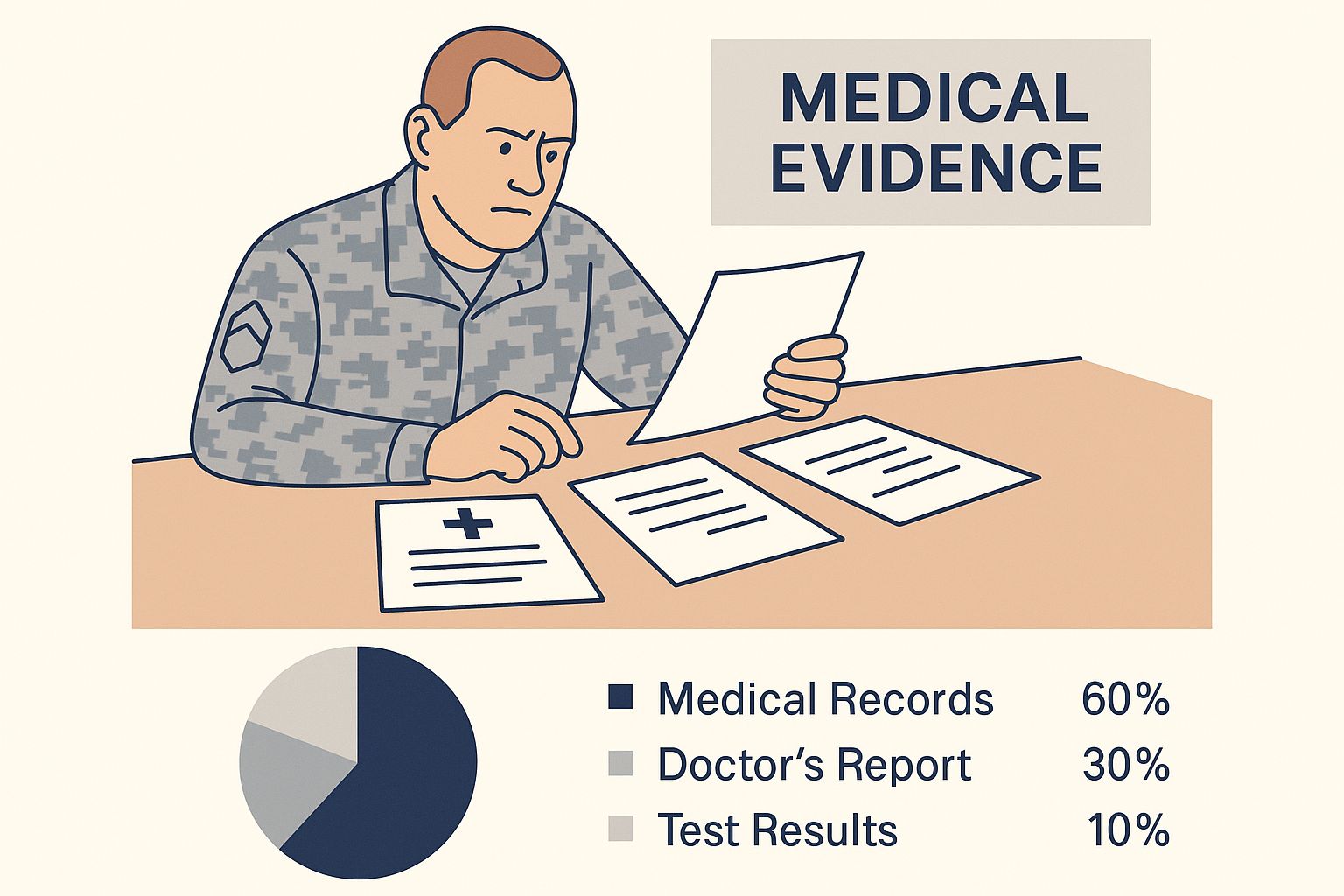
The infographic above shows a veteran reviewing medical records, emphasizing the critical role of medical evidence in the VA disability process. Thoroughly understanding how the VA evaluates evidence is crucial. A well-organized medical file can significantly strengthen a claim.
To help illustrate the potential impact of these changes, the following table provides a detailed comparison of the old and new rating criteria.
Comparison of Old vs New Rating Criteria
| Condition | Previous Criteria | New Criteria | Potential Impact |
|---|---|---|---|
| Mental Health | Focused on social and occupational impairment | Prioritizes symptom severity | Potentially higher ratings for veterans with severe symptoms, regardless of social/occupational impact |
| Sleep Apnea | Use of a CPAP machine often resulted in a 50% rating | New criteria may lower ratings for CPAP users | Potential decrease from 50% to 10% for some veterans |
| Tinnitus | Current criteria vary | Specific changes are still under review | Impact is currently uncertain, but adjustments are expected |
This table summarizes the key differences in how these conditions are evaluated, highlighting the potential for both increased and decreased ratings. Understanding these changes is crucial for veterans preparing to file or appeal a claim.
Adapting to the Changing Landscape
These changes underscore the importance of understanding how to effectively secure a VA disability rating. Veterans need to adapt their strategies, whether filing new claims or seeking to increase existing ones. This includes meticulously gathering and presenting medical evidence that aligns with the revised criteria.
Collaborating with medical professionals familiar with the VA system becomes even more vital. By proactively addressing these shifts, veterans can navigate the changing VA landscape and obtain the benefits they have earned.
Battle-Tested Strategies For Winning Rating Increases

Increasing your VA disability rating isn't a game of chance; it requires a strategic approach. This section explores proven methods employed by veterans who have successfully navigated the process and improved their ratings. These strategies are grounded in real-world results, offering a practical roadmap for your own journey.
Timing Is Everything: Knowing When to File
A crucial element in securing a VA disability rating increase lies in understanding the optimal timing for filing your claim. Avoid rushing the process. While acting promptly after your condition worsens is important, ensure you possess compelling evidence to substantiate your claim. Gathering strong medical documentation and, where relevant, buddy statements can greatly strengthen your case. This involves strategically choosing when to file for an increase rather than submitting prematurely with insufficient documentation. A calculated delay to compile more comprehensive evidence can often lead to a more favorable result.
Identifying and Claiming Secondary Conditions
Another key factor is recognizing and claiming secondary conditions. These are health issues that arise directly from your existing service-connected disability. For instance, if you have a service-connected knee injury causing a limp that then leads to back problems, those back problems could be considered a secondary condition. Identifying and claiming these secondary conditions can significantly increase your overall VA disability rating. This requires a clear understanding of the connection between conditions and providing documented medical evidence linking the primary and secondary ailments.
Leveraging Lay Evidence and Buddy Statements
While medical records are essential, lay evidence, including buddy statements, holds significant weight. These statements, provided by friends, family, or fellow service members, can corroborate the impact of your disability on your daily life. They offer a personal perspective on how your condition affects your ability to function, which can be highly valuable. For example, a buddy statement could describe how PTSD impacts your social interactions and ability to maintain employment, providing concrete examples to complement medical records. Recognizing when lay evidence is more impactful than medical opinions is a key strategy.
Strategic Use of Claim Types and Sequencing
Understanding the nuances of different claim types—such as increases, new claims, and secondary service connection claims—is essential. Strategically sequencing these claims can also bolster your chances of success. It might be more advantageous, for example, to file for an increase on an existing disability before filing a new claim for a separate condition. This method allows you to establish a stronger foundation for subsequent claims.
Avoiding Common Mistakes
Finally, being mindful of common pitfalls that can undermine your claim is paramount. These include insufficient medical documentation, failing to clearly link secondary conditions to the primary disability, and neglecting the importance of a well-crafted personal statement. By understanding and avoiding these mistakes, you can significantly improve your prospects of obtaining the VA disability rating increase you deserve.
Medical Evidence That Actually Moves The Needle

Your medical evidence forms the foundation of your VA disability claim. However, it's important to understand that not all evidence is viewed equally by VA raters. Knowing what the VA looks for and how to best present your records is key to potentially increasing your VA disability rating. This section explores the details of building a strong medical file that effectively supports your claim.
Working Strategically With Your Healthcare Providers
Open communication with your healthcare providers is vital for securing strong medical documentation. Make sure your providers document not only your diagnosis and symptoms, but also the functional limitations these symptoms create in your daily life.
For example, instead of simply noting "knee pain," your records should describe how this pain impacts your ability to walk, stand, or navigate stairs. This level of detail provides VA raters with a clearer understanding of how your condition affects your overall well-being.
Symptoms and Limitations: What Carries the Most Weight?
The VA rating system emphasizes how your service-connected conditions affect your ability to function. Therefore, the most impactful medical evidence will focus on specific symptoms and the resulting functional limitations.
For instance, if you are claiming PTSD, detailed accounts of your anxiety, sleep disruptions, and difficulty concentrating will be more compelling than a simple diagnosis. Furthermore, explaining how these symptoms impact your ability to work, maintain relationships, and engage in social activities significantly strengthens your claim.
Organizing Your Evidence for Maximum Impact
Presenting a disorganized collection of medical records can overwhelm VA raters and bury the key information supporting your claim. Organizing your evidence chronologically and by condition creates a clear and easy-to-follow narrative.
This organized approach allows raters to quickly understand the progression of your condition, the consistency of your symptoms, and the severity of their impact on your life.
Independent Medical Examinations (IMEs): When Are They Worth It?
While not always required, Independent Medical Examinations (IMEs) can be beneficial, particularly when your existing medical records lack detail or require expert analysis. A thorough IME should address any missing information and clearly link your current condition to your military service.
Obtaining Missing Military Records
If you have missing military records, retrieving them is essential for strengthening your claim. These records offer valuable context, especially if they document injuries or exposures sustained during your service.
The absence of these records can weaken your claim, so locating them is a worthwhile endeavor.
Insider Knowledge: What Makes Raters Take Notice?
VA raters value clarity, completeness, and consistency. Clear, concise, and well-organized records that specifically address the rating criteria for your condition are more likely to lead to a positive outcome.
By providing comprehensive documentation that clearly demonstrates the severity and impact of your condition on your daily life, you improve your chances of receiving the appropriate VA disability rating.
Mastering The Claims Process From Start To Finish
Understanding the VA claims process is crucial for increasing your VA disability rating. This section explains the timeline for rating increase claims, clarifies C&P exams, and provides strategies for staying proactive.
Tracking Your Claim’s Progress
After filing, track your claim's progress online via the VA website or by contacting the VA directly. This lets you monitor stages like evidence gathering and C&P exam scheduling. Early identification of potential roadblocks is essential. For instance, respond quickly to VA requests for additional evidence to minimize delays.
Understanding C&P Exams: What Really Happens
Compensation and Pension (C&P) exams are critical. Conducted by VA-approved medical professionals, these exams assess your condition and its link to your military service.
Prepare to detail your symptoms and their impact on your daily life. The examiner will inquire about your medical history, treatments, and limitations. Be honest and specific, emphasizing how your condition affects your daily activities.
Proactive Strategies Throughout the Process
Proactive engagement is vital for navigating the VA claims process. This includes:
- Regularly checking your claim status with the VA.
- Responding promptly to requests for information or evidence.
- Maintaining detailed records of all communication and documents.
These steps demonstrate your commitment and can help prevent delays.
C&P Exam Preparation: Beyond the Basics
Preparing for your C&P exam requires more than just understanding the basics. Gather all medical records, including doctor's notes, test results, and treatment plans. Organize these chronologically to show your condition’s progression. Practice describing your symptoms and their impact for effective communication.
Realistic Expectations for Processing Times
While the VA aims for efficiency, understand that processing times vary. Factors like claim complexity and examiner availability can cause delays. Be prepared for potential wait times to manage expectations.
Insider Tips for Following Up and Positioning Yourself for Success
Follow up at reasonable intervals with a professional demeanor. Avoid excessive contact. When communicating, state your purpose clearly and provide concise information. Success at each stage hinges on thorough preparation, proactive communication, and a clear understanding of the process.
Maximizing Your Benefits Beyond The Rating Increase
Increasing your VA disability rating is a crucial first step, but it isn't the only way to ensure you're receiving all the benefits you've earned. Think of it as building a strong financial foundation: your rating is the base, but you can add to it with smart planning and a full understanding of available resources. This section explores how to leverage your VA disability rating for greater financial security. You can start by clearly controlling project scope with your claims and benefits.
The Power of Cost-of-Living Adjustments (COLA)
When working to increase your VA disability rating, consider the long-term impact of Cost-of-Living Adjustments (COLA). COLA helps your compensation keep up with inflation, ensuring your benefits retain their value over time. For example, in 2024, VA disability pay rates increased by 3.2%, and a 2.5% increase followed in 2025. These adjustments are based on the Consumer Price Index for Wage Earners and Clerical Workers (CPI-W), calculated by the Social Security Administration. The 2023 COLA was a substantial 8.7%, the largest since 1981, demonstrating the potential impact of these yearly changes. Learn more about COLA and VA disability rates. Understanding COLA is a key component of long-term financial planning for veterans.
Supplemental Programs You Might Be Overlooking
Many veterans are unaware of supplemental programs that can significantly increase their overall benefits. These programs address specific needs and circumstances. For example, Special Monthly Compensation (SMC) provides additional financial assistance for veterans with severe disabilities. Similarly, aid and attendance benefits offer support for those who need help with daily living activities. Exploring these options can ensure you're receiving all the support available.
Impact on Family Financial Security
VA disability benefits extend beyond personal compensation; they contribute significantly to your family's financial well-being. A higher rating means larger monthly payments and access to dependent benefits. This can make a substantial difference in providing for your loved ones. Additionally, your rating can influence your family's eligibility for other valuable programs like healthcare and education benefits.
Tax Implications and Benefit Optimization
VA disability compensation is generally tax-free, providing a valuable financial advantage. However, it's important to understand how your VA benefits might interact with other income sources like Social Security or retirement pensions. Strategic planning and benefit optimization can help you maximize your tax advantages and improve your overall financial health.
Planning for the Financial Impact of Rating Changes
A successful rating increase can have a significant impact on your monthly income. Planning for this change is crucial for effective financial management. Consider budgeting for larger recurring expenses or creating a financial safety net. This proactive approach can help you build a more secure financial future with your increased benefits.
To further understand the breakdown of compensation rates, take a look at the table below:
VA Disability Compensation Rates by Rating Level
Current compensation rates for different disability ratings, including adjustments for dependents and recent COLA increases
| Rating % | Monthly Payment | With Spouse | With Spouse & Child | COLA Increase (2025) |
|---|---|---|---|---|
| 10% | $165.92 | $182.16 | $193.16 | $4.15 |
| 20% | $327.99 | $350.16 | $365.92 | $8.20 |
| 30% | $496.41 | $526.56 | $547.35 | $12.41 |
| 40% | $671.61 | $709.72 | $736.55 | $16.79 |
| 50% | $907.15 | $951.91 | $986.35 | $22.68 |
| Further data available through the VA |
This table provides a snapshot of how compensation changes based on disability rating and dependents. Remember to consult the VA for the most up-to-date and comprehensive information regarding your specific situation.
Key Takeaways
Increasing your VA disability rating can significantly improve your financial well-being and quality of life. This requires a strategic approach, using proven methods and a deep understanding of the VA system. Here’s a practical roadmap based on veteran experiences and expert advice:
Understanding the VA’s Perspective
The VA focuses on the functional impact of your condition, not just the severity of your symptoms. For example, while chronic pain is important, the VA prioritizes how that pain restricts your daily activities. Clearly documenting these limitations is crucial for a successful claim. Furthermore, “VA math” uses a combined rating system, which differs from standard addition. It’s essential to strategize how increasing certain disabilities will affect your overall rating.
Timing Your Claim Strategically
Filing at the right time is as important as the evidence itself. Rushing to file with insufficient documentation can hurt your chances. Waiting to gather comprehensive medical records, including detailed accounts of your symptoms and their functional impact, often leads to a more favorable outcome. Also, consider how claiming secondary conditions – conditions resulting from your primary service-connected disability – can bolster your overall rating.
Building a Comprehensive Medical File
Medical evidence is the foundation of your claim. Work with your healthcare providers to ensure your records detail the connection between your symptoms and your reduced ability to perform daily tasks. Organize your evidence chronologically and by condition. This makes it easier for raters to understand the progression and severity of your conditions.
Mastering the Claims Process
Staying proactive and informed throughout the claims process is essential. Track your claim’s progress online through the VA website, and promptly respond to any requests for additional information. Preparing for your C&P exam is vital. Bring organized medical records and be prepared to clearly describe your symptoms and their impact on your life.
Looking Beyond the Rating Increase
Explore all available resources to maximize your benefits. Consider Special Monthly Compensation (SMC) or aid and attendance benefits if applicable. Factor in the long-term benefits of Cost-of-Living Adjustments (COLA), which help your compensation keep up with inflation. Understanding the tax implications of your VA benefits can further enhance your financial security.
Are you ready to take the next step toward securing the VA disability rating and benefits you deserve? Homefront Group offers expert legal guidance and support to veterans seeking to increase their ratings. Our team of experienced professionals understands the intricacies of the VA system and can help you navigate the process effectively. Take our 3-minute quiz to discover your potential benefits and begin developing a personalized strategy for success.