
Navigating the VA Appeals System: What Veterans Need to Know
Understanding the VA appeals process is crucial for veterans seeking to challenge unfavorable decisions regarding their benefits. This system has evolved, transitioning from the Legacy system to the Appeals Modernization Act (AMA) system. Knowing which system applies to your claim and how to navigate it is the first step toward a successful appeal.
Understanding the Appeals Modernization Act (AMA)
The AMA, implemented in 2019, introduced three main appeal options: Higher-Level Review, Supplemental Claim, and Board Appeal. A Higher-Level Review involves re-evaluation by a senior reviewer. This is best if you suspect a clear error in the initial decision. A Supplemental Claim allows you to submit new evidence, strengthening your case. Finally, a Board Appeal takes your case to the Board of Veterans' Appeals for a formal hearing.
Choosing the Right Appeal Path
The best appeal lane depends on your case. Consider the claim type, existing evidence, and the availability of new, compelling evidence. For example, strong new medical evidence linking your condition to your service might make a Supplemental Claim the most strategic choice. If your claim was denied due to a perceived misinterpretation of evidence, a Higher-Level Review might be more efficient. Seeking guidance from a mentor can be invaluable. Learning how to find a spiritual mentor can offer support during this process.
Understanding Appeal Timelines
Realistic expectations about processing times are essential. The infographic below visualizes average processing times for three key appeal stages.
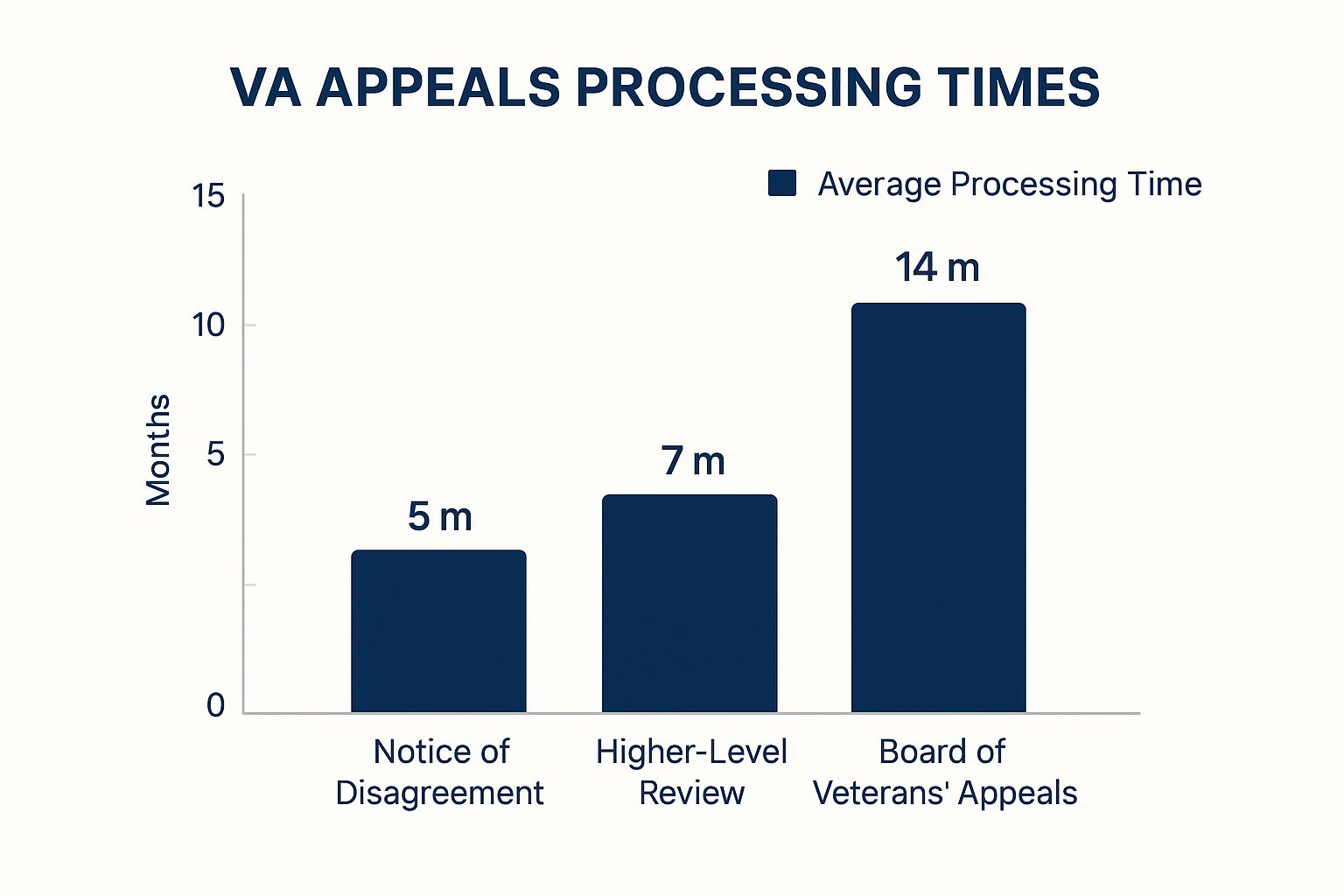
A Notice of Disagreement takes approximately five months, a Higher-Level Review about seven months, and a Board of Veterans' Appeals appeal averages 14 months. These timelines can vary.
To help veterans understand the appeals process better, let's compare the Legacy and AMA systems. The table below summarizes the key differences.
Comparing Legacy vs. AMA Appeal Systems
This table compares the key differences between the older Legacy appeal system and the newer Appeals Modernization Act (AMA) system
| Feature | Legacy System | AMA System | Advantage |
|---|---|---|---|
| Appeal Options | Limited | Three distinct lanes (Higher-Level Review, Supplemental Claim, Board Appeal) | More choices tailored to individual circumstances |
| Structure | Complex, often confusing | Streamlined, more transparent | Easier to understand and navigate |
| Timelines | Often lengthy and unpredictable | More predictable, generally faster | Reduced wait times |
| Evidence Submission | Restricted | More flexible opportunities to submit new evidence | Stronger case building |
The AMA system offers more choices, a clearer structure, and more opportunities to submit evidence.
In the 2024 fiscal year, the Board of Veterans' Appeals (BVA) issued 116,192 decisions. The AMA system handled 61% of these appeals, demonstrating improved outcomes with lower remand rates and a higher grant rate compared to the Legacy system. Learn more here. Understanding these timelines and statistics helps veterans make informed decisions.
Filing Your Appeal: A Step-by-Step Action Plan

After gaining an understanding of the VA appeals system, you're ready to begin the process. This section provides a step-by-step plan to help you file your appeal effectively. This detailed approach will clarify each stage, ensuring a smooth progression.
Interpreting Your VA Decision Letter
The first step is to thoroughly review your VA decision letter. This letter outlines the reasons for the denial or the assigned rating. Understanding the VA's rationale is crucial for building a strong appeal. Highlight important phrases and reasons given for the decision.
Choosing the Correct VA Form
Your next step is selecting the appropriate form. This choice is based on your chosen appeal path: Higher-Level Review, Supplemental Claim, or Board Appeal. For a Higher-Level Review, use VA Form 20-0995. For a Supplemental Claim, use VA Form 20-0996. If you're initiating a Board Appeal, use VA Form 10182. Selecting the correct form is essential for a successful appeal.
Completing the Forms Accurately
Complete the selected form thoroughly and accurately. Be sure to provide all necessary information, including your name, claim number, and the specific issues you wish to appeal. Double-check for any errors or omissions. Accuracy and attention to detail can prevent processing delays. A well-defined process is important for efficiently handling your VA appeal. For further guidance, see this step-by-step action plan.
Gathering and Organizing Supporting Evidence
Gather all supporting evidence. This may include medical records, nexus letters, and lay statements. Organize these documents logically and clearly to assist the VA in reviewing your case. A well-organized submission strengthens your appeal.
Submitting Your Appeal and Confirming Receipt
Submit your completed form and supporting evidence to the appropriate VA office. Confirm receipt of your submission. This verification ensures your appeal is entered into the system promptly. You can track its status through the VA website or by contacting the VA directly.
Tracking Your Appeal's Progress
Use online tools and resources to monitor your appeal's progress. Staying informed about its status reduces uncertainty and allows you to quickly address any potential problems. This proactive approach can help minimize delays. Wait times for appeals have improved significantly. In 2021, over 217,000 legacy appeals were pending. Projections indicate this number will drop to approximately 25,000 by the end of fiscal year 2025. More detailed statistics are available here. This data underscores the importance of starting your appeal promptly.
Choosing Your Best Appeal Path: Decision Strategies That Work
Deciding how to appeal a VA decision is crucial. The best path depends on your specific case. This section helps you determine whether a Higher-Level Review, Supplemental Claim, or Board Appeal is best for you.
Understanding Your Appeal Options
Each appeal option under the AMA system has pros and cons. A Higher-Level Review, conducted by a senior reviewer, is often the fastest. This is generally best if a clear error was made, such as misapplying regulations or misinterpreting evidence.
A Supplemental Claim lets you submit new and relevant evidence. This is ideal if you have important documentation unavailable during your initial filing. This might include new medical records, service records, or buddy statements connecting your condition to your service.
A Board Appeal involves a formal hearing before the Board of Veterans' Appeals. This allows in-depth review by a Veterans Law Judge. This path often benefits complex cases or those needing significant legal arguments.
Matching Your Case to the Right Appeal
Consider the nature of your claim when choosing a path. For PTSD claims, new medical evidence and nexus letters might be better than a Higher-Level Review. For physical injuries, clear medical records and a nexus opinion are crucial, regardless of the appeal type.
The timeline matters too. A Higher-Level Review is usually faster than a Board Appeal. But a well-prepared Board Appeal, with strong evidence and representation, may be more successful. Balance the need for a quick decision against a potentially more favorable outcome.
Strategies for Success
Successful veterans emphasize the importance of strategy. Timing your submissions strategically is important. Filing a Supplemental Claim too early, without enough new evidence, could lead to denial. Similarly, rushing into a Board Appeal without preparing your case and evidence can be harmful.
Switching appeal lanes can be a viable strategy. You might start with a Higher-Level Review, then switch to a Supplemental Claim if new evidence appears. Understanding these nuances helps achieve a favorable outcome. Avoid common pitfalls like incomplete forms or missed deadlines.
Comparing VA Appeal Options
To help you choose the best path, the following table compares the three main VA appeal options:
VA Appeal Options Comparison: A comprehensive comparison of the three main appeal options under the AMA system, helping veterans choose the most appropriate path
| Appeal Option | When to Choose | Timeline | Evidence Allowed | Success Rate |
|---|---|---|---|---|
| Higher-Level Review | Suspected error in the initial decision | Fastest | No new evidence | Varies |
| Supplemental Claim | New and relevant evidence available | Moderate | New evidence allowed | Varies |
| Board Appeal | Complex cases, significant legal arguments | Longest | New evidence allowed | Varies |
The success rate for each appeal option varies depending on individual circumstances and the quality of the evidence presented. While a Higher-Level Review is generally the fastest, it may not be the most effective if the initial decision was based on a complex legal interpretation. A Supplemental Claim offers the chance to strengthen your case with new evidence, while a Board Appeal provides the most comprehensive review process. Choosing the right path depends on carefully evaluating your individual situation.
Building a Winning Evidence Strategy For Your Appeal
A successful appeal to the Department of Veterans Affairs (VA) depends heavily on a well-crafted evidence strategy. Not all evidence carries equal weight. This section explores the most impactful documentation types, based on common claim denial reasons. Understanding effective presentation of this information is key to winning your appeal.
Obtaining and Utilizing Medical Records
Medical records are the foundation of any VA claim. This means gathering all relevant records, including those the VA may have missed. For a back injury claim, for example, ensure your records document every instance of back pain, all treatments received, and the impact on your daily life. This thorough approach establishes a clear timeline of your condition and its severity. Furthermore, private medical records often provide crucial details missing from the VA's system.
The Power of Nexus Opinions
A nexus opinion, a medical professional's statement directly linking your condition to your military service, is crucial. A strong nexus opinion goes beyond simply stating a connection; it explains the medical reasoning behind the link, citing your medical and service history. For example, if you developed respiratory problems after serving in an area with known environmental hazards, a pulmonologist's nexus opinion explaining this connection is invaluable. Consider a nexus opinion the bridge connecting your service and current condition for the VA.
Crafting Compelling Lay Statements
Lay statements, personal testimonies from family, friends, or colleagues, provide powerful context. These statements should detail your condition's impact on daily life. Instead of stating you have difficulty walking, a lay statement could describe a specific instance where knee pain prevented you from participating in a family event. This adds a human element, demonstrating the real-world impact.
Organizing Your Evidence Effectively
Present your evidence logically and clearly, enabling VA raters to easily follow your case timeline and understand its severity. Consider a chronological approach, grouping documents by date, or organize by condition, presenting all related evidence together. This organized presentation can significantly expedite the process. The VA appeals process has undergone modernization efforts, making it more accessible and potentially faster. Learn more about these 2025 updates to the appeals process and how they might affect your appeal strategy: Appealing to the Board of Veterans' Appeals.
Presenting a Winning Case
Ultimately, a winning appeal presents a clear, concise, and persuasive argument. Highlight the key connections between your service, your condition, and its impact. Directly address the initial denial reasons, providing evidence to refute them. Presenting your case clearly and concisely increases your chances of a successful outcome.
Mastering Your Board Hearing: Preparation Strategies

A Board hearing is a critical step in the VA appeals process. It offers Veterans the opportunity to present their case directly to a Veterans Law Judge and address any outstanding questions. Thorough preparation is key to maximizing this opportunity. This section outlines strategies to help you effectively navigate your Board hearing and improve your chances of a favorable outcome.
Preparing Your Opening Statement
Your opening statement is your first impression on the judge. It should concisely summarize the issues you're appealing and why you disagree with the previous VA decision. For instance, if your appeal concerns a denied service connection for a knee injury, your statement should briefly explain how the injury happened in service, the medical treatment you received, and the impact it has on your daily activities. This sets the stage for your argument and is a vital component of a successful appeal.
Organizing Your Evidence
A well-organized evidence file is essential for a productive hearing. Arrange your medical records, nexus letters, lay statements, and other supporting documents chronologically or by issue. This ensures easy access when the judge requests specific information. Disorganized evidence can disrupt the hearing and detract from your credibility. Your evidence should be presented logically, building a strong case for the judge.
Handling Questions With Confidence
The judge will ask questions to understand your claim better. Answer honestly and directly, referencing specific evidence to support your answers. It’s perfectly acceptable to ask for clarification if you’re unsure about a question. For example, if the judge asks about the relationship between your service and current back pain, you might refer to medical records documenting a back injury during basic training and a nexus letter connecting that injury to your present condition. Demonstrating a clear understanding of your case and the supporting evidence strengthens your appeal.
Managing Hearing Anxiety
Board hearings can be understandably stressful. Practicing your opening statement and anticipating potential questions can boost your confidence. Deep breathing and mindfulness exercises can help calm nerves before and during the hearing. Remember, the judge's role is to understand your case. Keeping this in mind can ease anxiety and allow you to present your appeal effectively.
In-Person Vs. Virtual Hearings
Regardless of whether your hearing is in person or virtual, certain preparation strategies are universal. For virtual hearings, ensure a stable internet connection, a quiet environment, and functional audio/video equipment. Testing your setup beforehand prevents technical issues. In both formats, dress professionally, maintain eye contact with the judge, and communicate clearly and respectfully. This demonstrates respect for the process and bolsters your credibility.
Post-Hearing Procedures and Expectations
After the hearing, the judge will review all evidence presented and issue a decision. This process takes time. While awaiting the decision, familiarize yourself with potential outcomes and the next steps in the appeals process. This proactive approach allows you to prepare for any scenario. Understanding the post-hearing procedures reduces uncertainty and helps you navigate the next stages of the appeal process. By mastering these preparation strategies, you create the best possible foundation for a successful Board hearing and a positive outcome in your VA appeal.
Getting Expert Help: Maximizing Representative Relationships
Navigating the VA appeals process can be daunting. Finding the right representative can significantly influence your appeal's outcome. This section explains how to make the most of these relationships, focusing on selecting the right advocate and collaborating effectively. This involves understanding the different types of representation available and knowing what questions to ask to ensure they meet your needs.
Choosing the Right Advocate: VSOs, Agents, and Attorneys
Three primary types of representatives assist veterans with appeals: Veterans Service Organizations (VSOs), accredited claims agents, and attorneys. Each offers unique benefits. VSOs often provide free services, a valuable option for many veterans. Accredited claims agents, authorized by the VA, possess specialized knowledge of the claims process. Attorneys bring legal expertise, particularly helpful for complex cases or Board appeals.
Choosing the right type depends on your individual situation. A straightforward claim might benefit from a VSO's assistance, while a more complex appeal involving legal arguments might require an attorney. The best choice aligns with your specific circumstances and your appeal’s complexity. Much like a spiritual mentor offers guidance through challenging life events, the right representative provides essential support during the appeals process.
Evaluating Potential Representatives: Beyond Credentials
When selecting a representative, consider more than just basic qualifications. A representative’s experience with cases similar to yours is vital. For instance, if you're appealing a PTSD claim, a representative with a strong background in PTSD cases is best equipped to handle the specific nuances involved.
Their communication style is also important. Open communication and a clear explanation of the process are essential for a productive relationship. Ask potential representatives about their typical communication frequency and methods to ensure it aligns with your expectations.
Finally, inquire about their approach to evidence gathering. A strong representative thoroughly reviews existing evidence and identifies gaps. They will also actively seek new evidence to present a compelling case.
Working Effectively With Your Representative
Successfully navigating the appeals process takes collaboration. Actively provide information and respond promptly to your representative’s requests. This partnership ensures your representative has everything needed to effectively advocate on your behalf.
Maintain realistic expectations. Appealing a VA decision can be lengthy, and not all appeals result in full benefits. A good representative will honestly assess your case and set realistic expectations. Just as a successful newsletter relies on a strong strategy and consistent communication, so does a successful VA appeal. Consider creating a step-by-step action plan to ensure effective communication.
Formalizing Representation and Managing Communication
After selecting a representative, formalize the relationship by completing the necessary VA paperwork. This authorizes them to act on your behalf. Understand the fee structure, if any. While VSOs typically offer free services, attorneys and accredited agents may charge fees. Keep communication open throughout the process. Regular updates and strategy discussions ensure you’re informed and actively involved in your appeal. Effective communication maximizes your representation and contributes to a well-informed appeal strategy.
Different Approaches: Hearings, Evidence, and Strategy
Representatives approach Board hearings, evidence gathering, and overall appeal strategy in different ways. Some prioritize direct communication with the VA, while others focus on legal arguments. Some may have more experience with specific medical conditions or legal issues, such as toxic exposure claims. Understanding these differences helps you choose a representative whose approach best suits your needs. A lawyer specializing in toxic exposure, for example, can offer more focused guidance than a general representative. Choosing the right representative, actively participating, and maintaining open communication significantly improve the chances of a successful VA appeal.
Are you a veteran or first responder needing expert help with your VA appeal or other legal matters? The Homefront Group, founded by a former Navy JAG, provides specialized legal and professional services to help veterans transition to civilian life and secure their deserved benefits. Explore their services and take their free 3-minute quiz to identify your qualifying benefits at Homefront Group. They offer nationwide support and boast a proven track record, with $45 million in pending claims for injured veterans. Don’t navigate this challenging process alone; let the Homefront Group guide you.