Navigating the VA Appeals Maze: Your Starting Point
Receiving a denial for a VA claim can be discouraging. The appeals process can seem complicated, but understanding your options is the first step. This section explains the modernized VA appeals system, breaking it down into three pathways: Supplemental Claims, Higher-Level Reviews, and Board Appeals. Choosing the right path is essential for a successful outcome.
Understanding Your Appeal Options
Each appeal type has its own advantages and disadvantages. Supplemental Claims are the best option when you have new and relevant evidence to strengthen your initial claim. Think of it as providing missing information to complete the picture. For example, if your claim was denied due to insufficient medical evidence, a Supplemental Claim allows you to submit additional records or expert opinions.
Higher-Level Reviews are an option if you believe the VA made a procedural error when processing your claim, such as misapplying regulations or overlooking key evidence. This review involves a senior VA employee re-evaluating your case. It's important to note that you cannot submit new evidence with a Higher-Level Review.
Finally, Board Appeals involve escalating your case to the Board of Veterans' Appeals (BVA). This is generally a last resort, best suited for complex cases with significant disagreements about the facts or application of law. This process can involve formal hearings and may require legal representation.
To help visualize the process, take a look at the infographic below:
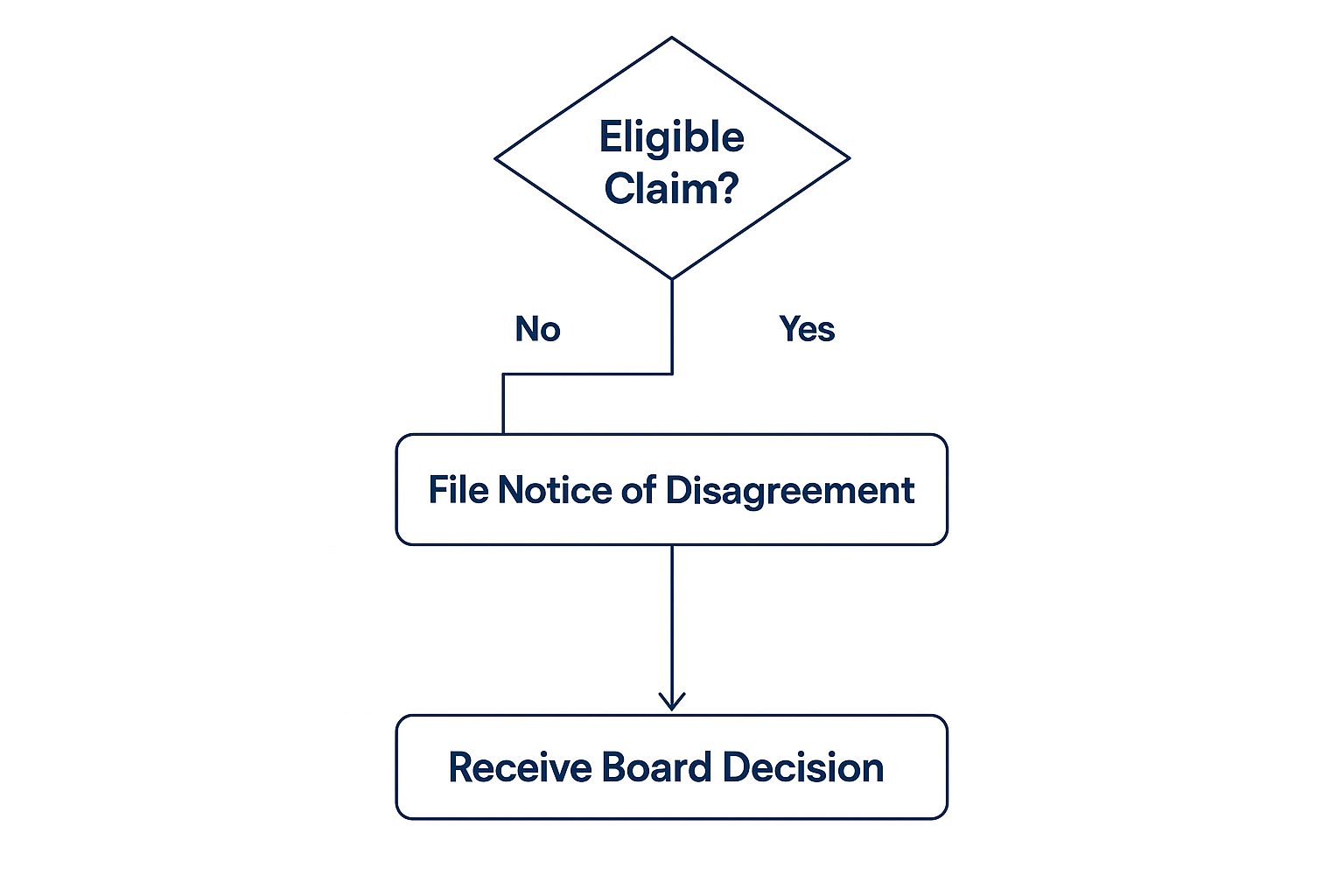
This infographic simplifies the appeals process, illustrating that filing a Notice of Disagreement is the first step for eligible appeals, ultimately leading to a Board Decision. While this infographic provides a general overview, the actual process can be complex, requiring a deeper understanding of the VA appeals system.
It's important to remember that many claims are resolved before reaching the appeals stage. The appeal rate to the BVA was only 10% in Fiscal Year 2024, indicating that many veterans find resolution earlier in the process. This highlights the importance of understanding each stage of the appeals process and preparing your claim thoroughly. For further information on these statistics, you can find more detailed statistics here.
Choosing the Right Path
Choosing the right appeal type is critical for maximizing your chances of a successful outcome. Several factors, such as the strength of your new evidence, the nature of the VA’s error, and the overall complexity of your case, play a significant role. For example, if your denial was based on a clear factual error, a Higher-Level Review may be sufficient. However, if you have a complex medical condition with conflicting medical opinions, a Board Appeal may be necessary.
To help you choose the best option, let's look at a comparison of the three appeal types:
VA Appeals Options Comparison: A side-by-side comparison of the three main appeal options available to veterans.
| Appeal Type | Timeline | New Evidence Allowed | Who Reviews | Best For |
|---|---|---|---|---|
| Supplemental Claim | Varies | Yes | VA Regional Office | Claims with new and relevant evidence |
| Higher-Level Review | Varies | No | Senior VA Claims Reviewer | Cases with suspected VA errors in processing |
| Board Appeal | Can be lengthy | Yes | Board of Veterans' Appeals (BVA) | Complex cases or disagreements on law/fact |
This table highlights the key differences between the appeal types. As you can see, Supplemental Claims and Board Appeals allow for new evidence, while Higher-Level Reviews do not. Each option also has a different reviewing authority, which can influence the timeline and complexity of the process.
By understanding these initial steps, you can confidently navigate the VA appeals process and work towards getting the benefits you deserve. The next section will help you determine when your VA claim might warrant another look.
Recognizing When Your VA Claim Deserves Another Look

Not every denied VA claim requires an appeal. Understanding when yours does, however, is crucial. This section helps you identify legitimate grounds for appealing a VA claim decision and increase your likelihood of success. We'll examine scenarios where the VA might have missed key evidence, misinterpreted regulations, or assigned ratings that don't accurately reflect the impact of your disability.
Common Reasons for Successful Appeals
Sometimes, the VA overlooks crucial pieces of evidence. This could be anything from a missing medical record to a buddy statement corroborating your in-service injury.
For example, a veteran might have been denied benefits for Post-Traumatic Stress Disorder (PTSD) because the VA couldn't connect their current symptoms to their service. A later-discovered buddy statement detailing a traumatic event witnessed during deployment could be the missing link. This new evidence can form the basis of a strong appeal.
VA regulations can be complex. It's possible for the VA to misapply these regulations when evaluating your claim. This can lead to an incorrect decision, even if all the evidence is present.
For example, the VA might incorrectly interpret the criteria for service connection for a particular condition. This misapplication can be grounds for a successful appeal.
Another common reason for appealing a VA claim is an inaccurate disability rating. The VA assigns a percentage rating to reflect the severity of your condition. Sometimes, this rating might not accurately reflect how your disability affects your daily life.
This is particularly important, as your rating directly affects the amount of compensation you receive. If your assigned rating is lower than the impact of your disability justifies, appealing for a higher rating can significantly improve your benefits.
Pinpointing Errors in Your Decision Letter
The first step in determining if your claim warrants an appeal is carefully reviewing your VA decision letter. This letter outlines the reasons for the denial and provides valuable clues for building a successful appeal. Look for specific phrases and references to regulations. This will help you understand the VA's rationale and identify potential errors. Highlighting these errors in your appeal can significantly strengthen your case.
Understanding which issues have higher success rates on appeal can help you focus your efforts. For instance, appeals based on clear factual errors or new medical evidence tend to have a better chance of success than those based on disagreements over medical opinions.
Therefore, if your claim was denied due to a lack of medical evidence, gathering additional medical documentation and appealing via a Supplemental Claim can be a more effective strategy.
Finally, look for overlooked connections between your service and current conditions. The VA must establish a nexus, or link, between your time in service and your disability. If the VA failed to recognize this crucial connection, gathering evidence demonstrating that link is essential for a strong appeal.
This often involves seeking medical opinions that specifically address the relationship between your military service and your current health issues. By clearly demonstrating this connection, you increase your chances of a successful appeal and obtaining the benefits you deserve.
Building Your Appeal Arsenal: Evidence That Wins Cases
A successful VA claim appeal relies on a compelling case supported by solid evidence. This section explores the most effective documentation for VA reviewers, based on proven appeal strategies. We'll cover gathering persuasive medical opinions, securing impactful buddy statements, and locating critical military records.
The Power of Persuasive Medical Opinions
Medical opinions are crucial for establishing service connection, the link between your disability and your military service. A strong medical opinion clearly explains how your time in service caused or aggravated your condition. For instance, a medical professional specializing in Post-Traumatic Stress Disorder (PTSD) could connect your current symptoms to a documented traumatic event during deployment. This expert testimony strengthens your appeal, particularly when the initial VA decision questioned the service connection.
Buddy Statements: Corroborating Your Story
Buddy statements, firsthand accounts from fellow service members, are invaluable. These statements, from those who witnessed your condition develop or worsen during service, offer independent corroboration. They can also provide details you might not remember or have documented, filling in important gaps in your narrative.
Unearthing Essential Military Records
Crucial details often reside within your military records. These records might contain documentation of injuries, illnesses, or exposures that support your claim. Locating them might require persistence, but these records can provide objective evidence. A record of a training injury, for example, could be the missing link connecting your current condition to your military service.
Tailoring Evidence to Specific Conditions
Different conditions require different types of evidence. A nexus letter linking a physical injury to an in-service event might be sufficient for some claims. However, PTSD claims often benefit from detailed psychological evaluations and personal statements. Understanding the most impactful evidence for your specific condition ensures you present the strongest possible case.
Timing Your Evidence Submission Strategically
When you submit evidence is as important as what you submit. Aligning your submission strategy with your chosen appeal lane is crucial. For a Supplemental Claim, submitting all new evidence at once is essential. A Higher-Level Review, however, doesn't allow new evidence. Understanding VA processing times is key. In Fiscal Year 2025, the VA processed over one million disability claims, achieving this nearly two weeks faster than the prior year, despite a 15.6% increase in claims received. Find more detailed statistics here. This efficiency highlights the importance of submitting complete and well-organized evidence upfront to maximize your appeal's impact. Strategic timing and the right evidence ensure your strongest case is presented at the optimal time.
Filing Your Appeal: Step-by-Step Combat Strategy
Now that you understand the different appeal options and have gathered your supporting evidence, this section provides a step-by-step combat strategy for filing your VA claim appeal. We'll break down the processes for each appeal type and explain how to use the required forms, create a compelling narrative, and avoid common mistakes.
Understanding the Forms
Knowing which form to use for each appeal type is the first step in a successful appeal. The VA uses specific forms for each appeal pathway, and using the correct one is crucial. These forms ensure the VA receives the necessary information to process your appeal efficiently.
Here's a breakdown of the essential forms:
-
VA Form 20-0995 (Supplemental Claim): Use this form for Supplemental Claims when submitting new and relevant evidence. This form allows you to explain how the new evidence supports your claim and addresses the reasons for the initial denial.
-
VA Form 20-0996 (Higher-Level Review): This form is for Higher-Level Reviews, where you believe a procedural or factual error occurred during the initial decision. The form allows you to detail the specific errors. Remember, you cannot submit new evidence with this appeal type.
-
VA Form 10182 (Notice of Disagreement – Board Appeal): This form initiates a Board Appeal to the Board of Veterans' Appeals. It allows you to formally disagree with the prior decision and explain why you believe it's incorrect.
Crafting a Compelling Narrative
Simply submitting forms isn't enough. You need a compelling narrative explaining why your appeal deserves reconsideration. This narrative should clearly highlight the errors in the original decision and link your supporting evidence to those errors. Think of it as presenting your case persuasively.
When building your appeal, you may need to bolster your arguments by citing relevant precedents. Here’s a guide on how to effectively research case law. This can add significant weight, especially for complex cases.
Organizing Your Evidence for Maximum Impact
Organize your evidence logically and clearly. Present it so the VA reviewer can easily understand the connection between your evidence and your claim. Use clear labels, indices, and summaries to guide the reviewer. This streamlined presentation can significantly improve the review process.
Submission Methods and Timing Strategies
You can submit your appeal and supporting documents through various channels, including mail, fax, or online through the VA website. Choose the method that best suits your needs. Also, understand the deadlines for each appeal type. Missing deadlines can significantly impact your appeal.
Avoiding Common Mistakes
Several common missteps can hurt your appeal. These include incomplete forms, disorganized evidence, and failing to clearly explain your reasons for appealing. By understanding these potential problems, you can take steps to avoid them and improve your chances of a successful outcome.
To help you further, here's a table summarizing key information for each appeal type:
VA Appeal Forms and Submission Methods: Essential forms required for different appeal types and various ways to submit them.
| Appeal Type | Required Form | Submission Methods | Processing Time | Special Notes |
|---|---|---|---|---|
| Supplemental Claim | VA Form 20-0995 | Mail, Fax, VA Website | Varies | New and relevant evidence required |
| Higher-Level Review | VA Form 20-0996 | Mail, Fax, VA Website | Varies | No new evidence allowed |
| Board Appeal | VA Form 10182 | Mail, Fax, VA Website | Varies | Formal disagreement with previous decision |
This table provides a concise overview of the critical aspects of each appeal type. Understanding these key elements can empower you to navigate the appeals process confidently and advocate effectively for your earned benefits. A well-prepared and well-executed appeal significantly increases your chances of a favorable outcome.
Finding Your Appeal Allies: Representatives Who Get Results
Securing the right advocate can significantly impact the outcome of your VA claim appeal. This section clarifies the different representation options available, from the free assistance offered by Veterans Service Organizations (VSOs) to specialized attorneys who handle complex cases. Understanding the strengths of each approach is crucial for making the best choice for your individual circumstances.
Veterans Service Organizations: Free Support and Advocacy
VSOs offer invaluable free assistance to veterans navigating the often-complicated appeals process. Organizations like the American Legion, Disabled American Veterans (DAV), and Veterans of Foreign Wars (VFW) provide accredited representatives to guide you through each step. These representatives often possess extensive experience with VA claims and can offer both practical advice and crucial support. They can assist with gathering evidence, completing the required paperwork, and representing you at hearings. This free assistance can be especially helpful for veterans feeling overwhelmed by the complexities of the appeal.
Attorneys Specializing in VA Claims: Expert Legal Counsel
For more complex cases involving intricate legal arguments or significant disagreements with the VA, hiring an attorney specializing in VA claims can be a critical decision. These attorneys possess deep legal knowledge specific to veteran benefits law. They can offer expert representation at all stages of the appeal, including Board hearings and potential appeals to the U.S. Court of Appeals for Veterans Claims. While attorneys typically charge fees for their services, their expertise can prove invaluable in complicated or challenging cases.
Choosing the Right Representation for Your Needs
Deciding between a VSO and an attorney depends on a variety of factors, including the complexity of your case and your comfort level navigating the VA system. For straightforward appeals with readily available supporting evidence, a VSO might be sufficient. However, for complex cases involving nuanced legal issues, or if your previous appeal was denied due to errors in the initial decision, legal counsel from a specialized attorney could make all the difference. When filing your appeal, ensure you’re following current regulations; an HR compliance checklist 2025 can offer guidance.
Identifying Representatives With Relevant Expertise
When selecting a representative, look for expertise in your specific disability area. For instance, if appealing a claim related to Post-Traumatic Stress Disorder (PTSD), a representative with experience in mental health claims is ideal. This specialized knowledge allows them to better understand the nuances of your condition and advocate more effectively for your specific needs.
Building a Strong Partnership With Your Representative
Before signing any authorization forms, ask potential representatives questions about their experience, their approach, and their expected outcomes. Establish clear communication channels and ensure you feel comfortable with their communication style. A productive partnership between you and your representative is essential for a successful outcome. Remember, you are an active participant in your appeal. Even with a representative, stay informed and involved throughout the process.
Formalizing Your Representation: VA Forms 21-22 and 21-22a
Use VA Form 21-22 (Appointment of Veterans Service Organization as Claimant's Representative) or VA Form 21-22a (Appointment of Attorney or Agent as Claimant's Representative) to formally establish your relationship with your chosen advocate. These forms ensure the VA recognizes your representative's authority to act on your behalf. The Veterans Benefits Administration (VBA) continually strives to improve its efficiency. In 2023, the VBA completed over 1.9 million disability compensation and pension claims. The VA also continues to refine its processes, such as by hiring additional claims processors in Fiscal Year 2025. Learn more about VA claims processing. Understanding these operational realities can help you approach your appeal strategically and manage your expectations.
Mastering Your Board Hearing: Present Your Case With Impact
If your VA claim appeal reaches the Board of Veterans' Appeals, the hearing offers a critical opportunity to present your case effectively. This stage can significantly influence the outcome of your appeal. Drawing on insights from veterans and representatives experienced in navigating Board hearings, this section will equip you with the knowledge to prepare and present a compelling case.
Preparing For Different Hearing Formats
Board hearings can take several formats: virtual, in-person, or at a regional office. Each format has specific preparation requirements. Virtual hearings, conducted through video conferencing platforms like Zoom, demand a stable internet connection and a quiet, private setting.
In-person hearings, held at a Board of Veterans' Appeals (BVA) office, necessitate travel arrangements and familiarity with the hearing room layout. Regional office hearings, conducted closer to your location, offer convenience but require similar preparation to in-person BVA hearings. Understanding these differences will help you adapt and present your case confidently.
Impressing the Veterans Law Judge
Veterans Law Judges look for clear, concise, and credible presentations. Organize your evidence logically, presenting it chronologically and highlighting key supporting points. Avoid overwhelming the judge with excessive detail.
Instead, focus on a cohesive and persuasive narrative that connects your service, disability, and supporting evidence. This focused approach ensures the judge understands the core of your claim.
Anticipating and Addressing Challenging Questions
Prepare for questions about your service, medical history, and the impact of your disability. Practicing answers beforehand, focusing on clarity and honesty, will help you maintain composure and present your information effectively under pressure.
Presenting Your Strongest Evidence
Knowing when to introduce your most impactful evidence is crucial. Timing is key for maximizing impact. Don’t present everything at once. Instead, strategically introduce evidence to address specific points or counter-arguments, keeping the judge engaged and your presentation persuasive.
Communicating Your Disability’s Impact
Clearly and credibly communicate how your disability affects your daily life. Use concrete examples and describe specific challenges you encounter. This personalizes your case and helps the judge understand the real-life impact of your condition.
Handling Unexpected Developments and Post-Hearing Actions
Be prepared for unexpected questions or challenges during the hearing. Maintain composure and address any unforeseen issues calmly and professionally. After the hearing, promptly follow up with any requested documentation or information. This demonstrates your commitment and keeps your appeal progressing.
Realistic Timelines and Veteran Experiences
Understand that Board decisions can take time. While the VA strives for efficiency, the appeals process is often complex. Maintain regular communication with your representative, if you have one.
Learning from other veterans’ successful board appeal experiences can provide valuable insights, offering practical advice on preparation, expectations, and managing the emotional aspects of the process. This shared knowledge can boost your confidence and illuminate the path toward a favorable outcome. Applying these strategies can improve your chances of a positive decision and securing the benefits you deserve.
When the Decision Arrives: Victory Paths and Next Steps
The VA claim appeals process can be a winding road. Whether you receive a full grant, a partial approval, or a denial, each decision presents new opportunities and potential hurdles. This section will help you understand your options and navigate the next steps, drawing on examples from veterans who have successfully achieved their claims goals.
Evaluating Partial Approvals: Is Further Appeal Necessary?
A partial approval can be both encouraging and frustrating. It acknowledges some aspects of your claim but may not grant all the benefits you believe you deserve. Careful evaluation of the decision is essential. For example, you might receive a service connection for a knee injury but with a lower disability rating than the severity of your condition warrants. In this situation, appealing the rating specifically could lead to increased benefits.
Understanding Deadlines for Appealing VA Claim Denials
If your claim is denied, understanding appeal deadlines is critical. Different timeframes apply to Supplemental Claims, Higher-Level Reviews, and Board Appeals. Missing these deadlines can significantly impact your chances, so meeting them is crucial to protect your rights.
Implementing Favorable Decisions and Ensuring Proper VA Action
Even with a favorable decision, your work isn't necessarily over. You need to ensure the VA correctly implements the decision and disburses the awarded benefits. This involves confirming the benefit amount and verifying timely payments. Understand the VA's implementation process for rating changes and retroactive benefits. Proactive follow-up will ensure you receive everything you've been awarded.
Introducing New Evidence and Strengthening Future Appeals
If your appeal is denied, knowing how to introduce new evidence is key to future success. New evidence, like medical records or buddy statements, must be relevant and directly address the reasons for the previous denial. Strategic presentation of this evidence strengthens your case. Also, leverage any positive aspects of the previous decision to support future arguments. For instance, even if your claim for PTSD was denied, if the VA acknowledged a service-connected knee injury, this can be used as a foundation to connect your PTSD to your overall service.
Appealing to the CAVC: When and How to Take it to the Next Level
Sometimes, appealing to the U.S. Court of Appeals for Veterans Claims (CAVC) becomes necessary. This usually occurs after exhausting other appeal options and when you believe a legal error occurred. Understanding the specific circumstances and procedures for a CAVC appeal is crucial. This includes gathering required documentation and meeting strict filing deadlines. This process can be complex, so consulting with a lawyer specializing in VA claims is strongly recommended. CAVC appeals require a deep understanding of legal procedures and precedents, making expert legal representation vital for navigating this stage effectively.
Ready to navigate your VA claim appeal with expert guidance? Homefront Group, founded by a former Navy JAG, empowers veterans like you. Our team of experienced lawyers and client advocates understands the nuances of veteran benefits and offers personalized support. From free consultations to tailored strategies, we fight for the justice and financial security you deserve. Take our 3-minute quiz to explore potential benefits and begin your journey toward a successful appeal with Homefront Group.