Choosing Your Appeal Path When the VA Says No
Getting that denial letter stings. It feels like a setback, and honestly, it can be pretty disheartening. But take a deep breath – this isn’t the end of the road. Your next move is actually more important than your initial claim, and I want you to be prepared. I’ve worked with so many veterans who felt defeated after a denial, only to find success later on. The key is understanding your options and picking the right path forward. So let's break down the three real appeal options, not the confusing bureaucratic jargon, but what they actually mean for your situation.
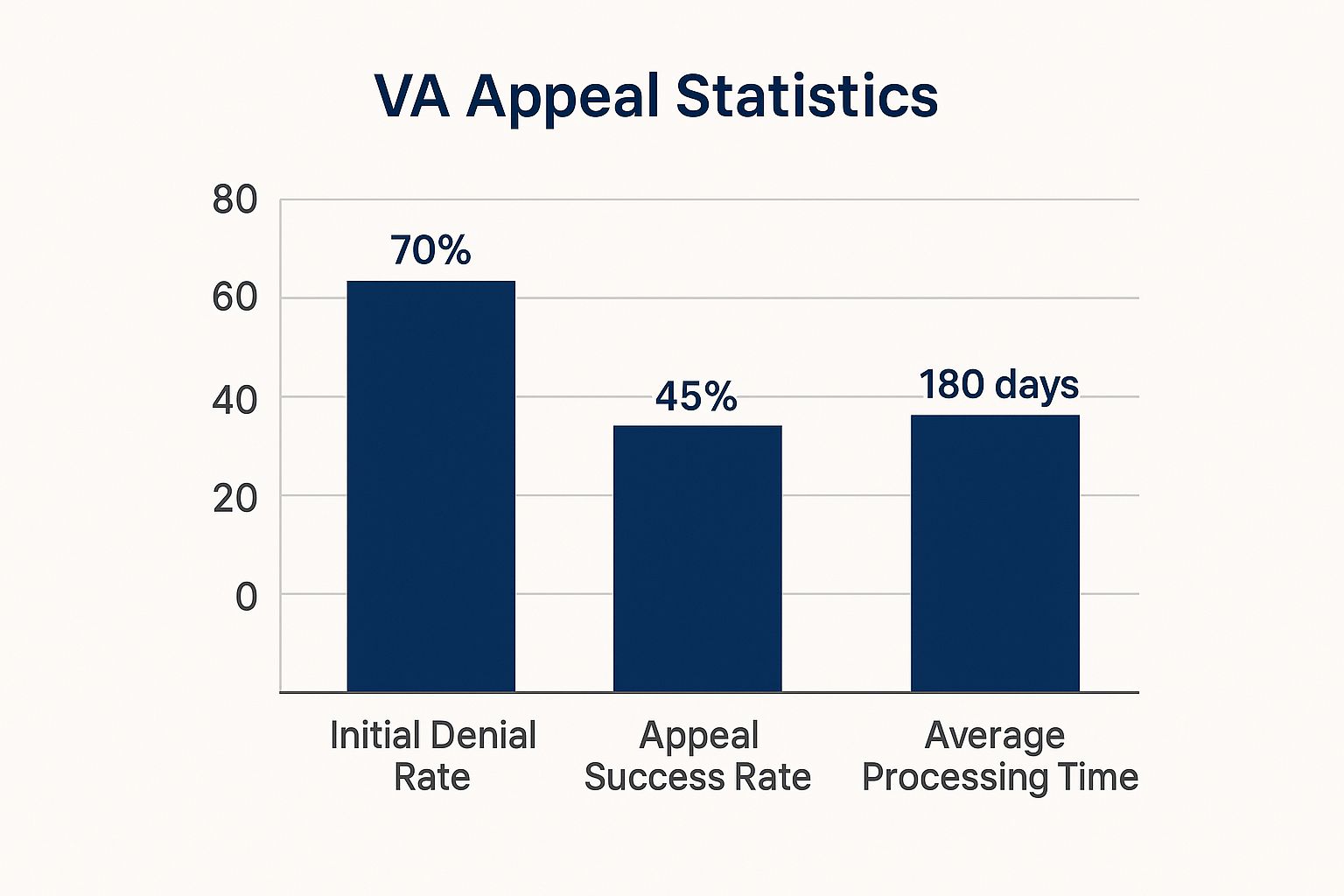
The infographic above gives you a visual snapshot of the VA appeal landscape, including the initial denial rate, appeal success rate, and average processing time. Notice the high initial denial rate—it’s tough, but not uncommon. The good news? There's a significant chance of success on appeal. This means persistence pays off, and choosing the right path is crucial.
Higher-Level Review: The Quickest Option (Sometimes)
Think of a Higher-Level Review (HLR) like asking for a supervisor to double-check the work. It's the fastest route, generally taking a few months. This option is best when the VA made a clear mistake, like missing a crucial document in your initial claim. For example, if you have a recent doctor’s statement directly linking your current condition to your service, an HLR might be your best bet. However, if your denial involves more complex medical issues or needs more evidence, an HLR probably won't get you far.
Supplemental Claim: New Evidence, New Hope
A Supplemental Claim gives you the opportunity to submit new and relevant evidence. Imagine you’re putting together a puzzle, and you just found some missing pieces. That's what a Supplemental Claim does for your case. This is the route to take if your initial claim didn't have enough evidence. Let's say you were denied for PTSD, but you’ve since gathered buddy statements and therapy records. A Supplemental Claim lets you present this new information and make your case stronger. This can dramatically boost your odds, but keep in mind, it does add to the processing time.
Board Appeal: The Long Game
A Board Appeal takes your case to the Board of Veterans' Appeals (BVA). This is the most formal option and can often take over a year. It might seem daunting, but it can be surprisingly effective, especially in complex cases or when there are differing medical opinions. Think of it like appealing to a higher court where you can present your case before a Veterans Law Judge. Navigating the VA disability appeal process can sometimes feel like appealing a denied insurance claim. For more info on that process, check out this article on how to appeal denied insurance claim.
To help you visualize the different appeal paths, take a look at this table:
VA Appeal Options Success Rates and Timelines
Comparison of the three main VA appeal types showing success rates, processing times, and key characteristics
| Appeal Type | Success Rate | Processing Time | New Evidence Allowed | Best Used When |
|---|---|---|---|---|
| Higher-Level Review (HLR) | ~50% | 4-6 Months | No | Clear VA error; Missing document |
| Supplemental Claim | ~50% | Varies (longer than HLR) | Yes | Insufficient evidence in initial claim |
| Board Appeal (BVA) | ~38% | 12-18+ Months | Yes | Complex cases; Disputed medical opinions |
This table summarizes the key differences between the appeal options. As you can see, while HLRs are quickest, they don't allow for new evidence. Supplemental Claims and Board Appeals offer the opportunity to strengthen your case with new evidence, but they come with longer processing times. You can learn more about VA disability appeal success rates. Choosing the right path is essential for success. Each option has its own advantages and disadvantages. Carefully consider your specific circumstances and the reasons for your denial before making a decision.
Building Evidence That Actually Wins Your Case
Let's be honest: the VA isn't going to do the detective work for you. They're not actively searching for missing pieces of your story. Veterans who succeed with their appeals understand this. They know it's not about burying the VA in paperwork. It's about crafting a compelling narrative that directly addresses the reasons for the initial denial. Let me break down the types of evidence that can really turn things around, from impactful buddy statements to medical records that fill in those critical gaps.
The Power of a Well-Rounded Narrative
Think of your appeal like assembling a puzzle. The VA denied your claim because they saw a picture with missing pieces. Your goal? Provide those missing pieces and complete the picture. This is about strategy, not just volume. Choose evidence that specifically tackles the VA's stated reasons for the denial. If they said your medical evidence doesn't connect your current condition to your service, just piling on more general medical records won't cut it. You need the piece that bridges that gap – a doctor's statement directly linking your condition to your service, or maybe a buddy statement confirming an in-service injury or event.
Medical Evidence That Makes a Difference
Working with your doctors to obtain strong, targeted medical opinions is absolutely essential. Generic letters simply stating you have a condition are practically useless. You need statements that explicitly explain how your condition is connected to your service, citing specific medical evidence and referencing your service history. Imagine appealing a denial for knee pain. A truly helpful doctor's statement wouldn't just diagnose your current condition. It would also explain how your in-service knee injury, documented in your military records, could have led to your current problems. This is what demonstrates the direct connection the VA is looking for.
Buddy Statements: More Than Just Friendly Testimony
Done correctly, buddy statements can be incredibly powerful tools. These aren’t just your buddies vouching for your character. They're eyewitness accounts from people who served alongside you, witnessed your injuries, or saw the events that contributed to your condition. A strong buddy statement is rich with detail: specific dates, locations, clear descriptions of the incident, and how your condition presented at the time. For example, a buddy could back up your claim for PTSD by describing a traumatic event you both experienced, how it affected you during service, and how it continues to impact you today.
Unearthing Lost Military Records
Sometimes, key information gets buried in your military records, and the VA overlooks it. Don’t assume they’ve found everything. Be proactive. Request your complete service records and review them carefully. You might be surprised by what you find – documentation of an injury or incident the VA missed, which could be the linchpin of your appeal.
Avoiding Common Evidence Mistakes
I've seen veterans submit mountains of evidence, thinking more is better. But much of it ends up being irrelevant to the actual claim. This just clutters your file and distracts from the truly important evidence. Focus only on what directly addresses the VA’s reasons for denial. This means carefully analyzing your denial letter and truly understanding what they’re looking for. This VA website shown below explains decision reviews for claims you don't agree with:

This screenshot highlights the importance of understanding your options for appealing a VA decision. It emphasizes the different review options available and encourages veterans to explore these paths if they disagree with the initial decision.
Presenting Your Case Effectively
Finally, the way you present your evidence matters just as much as the evidence itself. Organize it logically, using a clear and concise format. Make it easy for the VA to connect the dots between your condition, your service, and the supporting documents. A well-organized, targeted presentation makes a world of difference. Getting help with your VA disability appeal, especially when it comes to gathering and presenting evidence, can significantly strengthen your case. Building a strong case requires a comprehensive approach, addressing every aspect of your condition and its connection to your service. With careful preparation and a focused strategy, you can greatly improve your chances of a successful appeal and get the benefits you’ve earned.
Working Smart With the VA's Improved System
Things are looking up at the VA! Their claims and appeals process has genuinely gotten better. Knowing the ins and outs of this improved system can really make a difference in how quickly your case moves along. Let's break down how these changes can impact your appeal strategy and timeline.

Understanding The VA's New Efficiency
The VA has been putting in the work to streamline things. This isn’t just empty promises; we’re talking real, tangible changes that veterans will notice. Take case tracking, for example. The online portal is much improved, offering more detailed tracking info, so you’re not left in the dark. Knowing where your appeal stands can take a lot of the stress out of the process. Plus, the VA is really leaning into digital communication these days. This means quicker updates and less waiting for things to arrive in the mail.
This lets you manage your expectations and plan your next steps. Instead of playing the guessing game with your claim's status, you have access to real-time updates. This allows you to focus on what you can control, like gathering supporting evidence or scheduling a C&P exam.
The Department of Veterans Affairs (VA) has made some serious strides in processing claims more efficiently. In Fiscal Year 2025, they processed over one million disability claims, hitting that mark almost two weeks earlier than the previous fiscal year. This is especially impressive given they received 15.6% more claims than the year before. In fact, on February 20, 2025, the VA processed its one-millionth claim for FY25, setting a new record. Over 60% of those claims were granted, and the VA's accuracy rate jumped to over 92% through January 2025. Check out the details on this VA processing milestone.
Making the System Work For You
Knowing the ropes of the improved system is a huge advantage in your help with va disability appeal. Understanding peak processing times, for example, can help you decide when to submit your appeal. While you shouldn't delay things unnecessarily, strategically timing your submission might mean your case lands with a less overloaded adjudicator, potentially speeding things up. Keeping up with VA processing trends is key here.
Communicating Effectively With the VA
Communication with the VA has also improved. Though frustrating delays can still happen, the available communication channels are generally better now. Use the online portal to send secure messages and track responses. And when you do need to call, keep a detailed log of every conversation. Note the date, time, and the name of the representative you spoke with. This keeps everyone on the same page and helps avoid misunderstandings, which can really bog things down.
Recognizing When To Escalate Issues
Even with the improvements, things can still slip through the cracks. Knowing when and how to escalate an issue without burning bridges with the VA is an important skill. If you’ve been waiting an unreasonable amount of time for a response or a decision, don’t hesitate to contact your congressman’s office or a veteran service organization. They can often help get your case moving again. This isn’t about being difficult, it’s about self-advocacy within the system. Just like understanding the VA's internal metrics, knowing how to navigate challenges is crucial for a successful appeal.
Remember, the VA system is complicated. Even with improvements, staying informed and being proactive throughout the appeals process is critical. Homefront Group specializes in navigating this system and offers personalized help with va disability appeals to get you the best possible result. Their experts keep their fingers on the pulse of the latest VA changes, so you have the most current and accurate information. They can help you understand the nuances of the new system and use them to your advantage.
Mastering Appeal Timing for Maximum Benefits
Timing is everything, right? Especially with VA disability appeals. Sure, deadlines are important, but strategic timing can be the difference between a smooth process and years of frustration. I've seen vets rush into appeals unprepared, only to get stuck in a cycle of denials. Others, with a bit of planning, navigated the system much more effectively and secured the benefits they earned. Let's talk about how to use that one-year appeal window to your advantage.
Why Rushing Can Backfire
That urge to file right after a denial? I get it. But sometimes, pausing is the smartest move. Rushing an appeal without all the necessary evidence often leads to another denial, dragging things out even longer. It's like baking a cake – you wouldn't throw it in the oven before the ingredients are mixed! Take the time to build a strong case before going back to the VA.
Coordinating Multiple Conditions
Many veterans have multiple service-connected conditions. Instead of filing separate appeals for each, think about bundling them together. This streamlined approach not only saves time, but also gives the VA a more complete picture of your overall health. This can lead to a more accurate disability rating. For example, appealing service-connected knee and back pain together shows how they impact each other, potentially justifying a higher combined rating.
Strategic Timing and VA Processing Cycles
The VA, like any large organization, has its own internal rhythms and processing times. Working with these cycles can be hugely helpful. If you know the VA tends to be slower during certain times of year, you can strategically time your submission to avoid backlogs. Staying informed about current VA processing times and trends is key. Speaking of which, the VA has made significant progress in reducing the backlog of compensation claims. As of May 22, 2025, the backlog dropped below 200,000 for the first time since March 5, 2023. This shows a real improvement in their efficiency. You can learn more about this on the reduced VA claims backlog page.
Maximizing Back Pay
Timing also affects your potential back pay. The date you file your appeal is the starting point for calculating back pay if you win. While you shouldn't delay just to increase back pay, understanding this calculation helps you make informed choices. It's about finding the right balance between getting your benefits quickly and maximizing what you're owed.
The Emotional Side of Timing
Appealing a VA decision can be emotionally tough. The pressure to act fast can be overwhelming. Remember, this is a marathon, not a sprint. Take the time you need to prepare thoroughly, even if it means waiting a bit longer. Focus on the long-term goal and avoid rushing a decision you might regret. A well-planned appeal has a much better chance of success than one driven by panic. And remember, Homefront Group offers valuable help with VA disability appeal processes. Their expertise can truly make a difference.
Overcoming the Roadblocks That Derail Most Appeals
Appeals rarely go smoothly. Veterans who ultimately win their appeals are the ones who know how to handle the bumps in the road. It's like a cross-country road trip—you're going to hit some potholes. The important thing is knowing how to change a tire and get back on track. Let's talk about the common roadblocks veterans run into and how to get around them.
Missing Medical Records
It's beyond frustrating when important medical records seem to disappear. This happens more than you might think. Don't panic! First, contact every medical facility where you were treated. Keep detailed notes of every interaction. Also, if you’re a veteran, request your complete service medical records. Sometimes things get misplaced or simply overlooked. Persistence is key.
Uncooperative Doctors
Getting the right medical statements from your doctor can be a real challenge. A generic letter isn’t enough. You need a statement that clearly links your current condition to your time in service. Schedule an appointment to talk with your doctor specifically about your appeal and what the VA is looking for. Bring your denial letter and show them the exact information the VA needs. Explaining the connection clearly and directly can make all the difference.
Confusing VA Correspondence
The VA isn't known for its straightforward communication. Those letters can be dense and confusing. Take a deep breath and break it down. Highlight the key points. Figure out exactly what they are asking for. If you’re unsure, reach out to a Veteran Service Officer (VSO) or someone specializing in help with VA disability appeals. They can cut through the jargon and help you figure out your next steps.
Unproductive Phone Calls
We've all been there: endless phone calls that go nowhere. Before calling the VA, write down your questions. Have your claim number and other relevant information at your fingertips. Keep records of each call – the date, time, who you spoke with, and what was discussed. This way, you'll have a helpful log if you need to follow up later.
The Emotional Toll
This process can be long and emotionally draining. It's perfectly normal to feel frustrated, discouraged, or even overwhelmed. Don’t give up! Find other veterans who understand what you’re going through. Support groups, online forums, and veteran organizations are great resources for emotional support and practical advice. You are not alone.
Staying Organized
With all the paperwork involved, staying organized is a must. Create a system, either physical or digital, to keep track of everything – medical records, VA letters, evidence, contact info. Trust me, this will save you time and stress down the road.
Maintaining Momentum
A lengthy appeal can feel like it’s dragging on forever. To keep your motivation up, break the process down into smaller steps. Celebrate your progress. Remember why you started this process in the first place and keep your eye on the prize. Getting professional help with your VA disability appeal from Homefront Group can provide much-needed support and expertise.
Knowing When to Start Over
Sometimes, no matter how hard you try, an appeal just isn't going to work. Knowing when to cut your losses and start a new claim can be tough, but sometimes it’s the best strategy. Talk to a professional to see if that’s the best move for you. They can help you figure out if your appeal is viable or if starting fresh is the right path forward.
Let's take a look at common roadblocks and their solutions in more detail:
Common VA Appeal Problems and Solutions
Typical roadblocks veterans face during appeals and practical steps to overcome each obstacle
| Common Problem | Why It Happens | Immediate Action | Long-Term Solution | Prevention Tips |
|---|---|---|---|---|
| Missing Medical Records | Misfiling, administrative errors, closed facilities | Contact all previous treatment facilities, request military service records | Maintain personal copies of all medical records | Request records regularly and store them securely |
| Uncooperative Doctors | Lack of understanding of VA requirements, busy schedules | Schedule a dedicated appointment, provide denial letter and key information | Build a strong doctor-patient relationship | Keep your doctor informed of your condition and any VA claims |
| Confusing VA Correspondence | Complex language, dense information | Highlight key points, identify requests | Seek help from a VSO or appeals specialist | Keep a log of all VA correspondence |
| Unproductive Phone Calls | High call volumes, inexperienced representatives | Prepare questions beforehand, keep detailed notes | Designate a specific contact person, follow up in writing | Document everything meticulously |
| Emotional Toll | Lengthy process, frustrating setbacks | Seek support from veteran groups or counselors | Build a support system, practice self-care | Connect with other veterans, manage expectations |
| Difficulty Staying Organized | Overwhelming paperwork, complex process | Create a dedicated file system, digitize documents | Use organizational tools and software | Establish a system from the beginning |
| Losing Momentum | Long wait times, lack of communication | Break down the process into smaller steps, celebrate progress | Seek professional guidance, set realistic goals | Stay informed about the process, maintain contact with the VA |
This table summarizes some of the biggest challenges veterans face, offering immediate actions, long-term solutions, and tips for avoiding these problems in the first place. Keeping these tips in mind can significantly smooth the process and help you stay on track.
Getting Professional Help That Actually Pays Off
Not every veteran needs a lawyer or claims agent for their VA disability appeal. But knowing when to get help—and what kind—can save you years of frustration and potentially thousands of dollars in benefits. I've seen it myself – the right support makes all the difference. Let’s talk about the different types of help out there and what they bring to the table.
Is Professional Help Right For You?
First, figure out if your case is actually complex enough to need professional help. Something simple, like a missing document, might just need a quick Higher-Level Review, which you can handle on your own. But if your case involves multiple conditions, conflicting medical opinions, or a service connection that's hard to prove, getting a professional on board can be a huge help. Think of it like this: you wouldn't try to rebuild your car's engine if you’re not a mechanic. A complicated VA appeal can be just as tricky, and might require the skills of someone who knows the ropes. Many veterans worry about AI detection when writing their appeals. Learning how to bypass AI detection can be a valuable tool.
Choosing The Right Professional
If you decide to get professional help, finding the right person is key. There are a few different types of professionals who can help with VA disability appeals:
-
Veteran Service Officers (VSOs): VSOs are often your first stop, and they don’t charge for their services. They know the VA system and can help you gather evidence and file your appeal. They're a great resource for less complicated cases.
-
Attorneys: Attorneys specializing in VA disability law offer more in-depth legal representation, which is especially helpful for complex cases or appeals going to the Board of Veterans' Appeals.
-
Claims Agents: Accredited claims agents can represent veterans before the VA. They often have a ton of experience with the claims process.
Questions To Ask Potential Representatives
Don’t be shy about interviewing potential representatives. Ask them about their experience with cases like yours, how often they win, and what they charge. Someone good will be upfront about their fees and what you can realistically expect. Here are some important questions to ask:
- "How many VA disability appeals have you handled?"
- "What’s your success rate with cases similar to mine?"
- "Can you give me references from other veterans?"
- "What are your fees, and how do they work?"
- "How do you communicate with clients, and how often will we talk?"
Avoiding Scams
Unfortunately, there are scammers out there targeting veterans. Be careful of anyone who guarantees a certain outcome or wants money upfront before doing any work. Legitimate representatives only charge a percentage of your back pay if your appeal is successful.
The Value Of Professional Help
While professional help comes with a cost, think about the potential return. A successful appeal can mean significant back pay and ongoing monthly benefits. A skilled professional can help you build a stronger case, deal with the complicated VA system, and boost your chances of winning.
Maintaining Control Of Your Case
Even with professional help, remember that it’s your appeal. Stay involved, ask questions, and make sure you understand what’s going on. A good representative will keep you in the loop and involve you in the important decisions. Don't be afraid to speak up if something doesn’t feel right.
Finding the right help with your VA disability appeal can completely change your outcome. By knowing your options, asking the right questions, and staying involved, you can significantly improve your chances of getting the benefits you deserve. Remember, resources like Homefront Group are there to offer expert guidance and support every step of the way.
Your Complete Appeal Success Blueprint
Navigating a VA disability appeal can feel like wandering through a maze blindfolded. Believe me, I’ve been there. This blueprint isn't some dusty old map—it’s a field-tested guide, forged from the real-world experiences of veterans like you. It's designed to help you keep moving forward, even when the going gets tough. We’re talking practical advice and proven strategies to overcome the unique hurdles veterans face when fighting for their earned benefits.
Action Checklists and Realistic Timelines
We'll give you specific action checklists, tailored to your appeal type. Forget generic lists. These are designed for the specific ins and outs of HLRs, Supplemental Claims, and Board Appeals. We’ll also give you realistic timelines, because let's be honest, the VA system isn’t known for its speed. Knowing what to expect can save you a lot of frustration. We’ll even show you how to track your progress, so you always know where you stand and what to do next. It's all about breaking down the overwhelming process into manageable pieces.
Staying Organized and Motivated
Paperwork. It’s the bane of every veteran's existence. We’ll share proven strategies for staying organized without getting buried alive. Think practical tips like color-coded folders, digital filing systems, and even tracking spreadsheets. It's not just about being neat; it's about simplifying the whole process. We’ll also help you recognize when to push forward aggressively and when to take a strategic pause. This is a marathon, not a sprint. Sometimes, a well-timed break is the smartest move. And because the appeals process can be emotionally draining, we'll talk about celebrating small wins. Those little victories can keep you fueled for the long haul.
Recognizing Red Flags and Shifting Your Mindset
Every step in our blueprint outlines what you should expect. We’ll also highlight the red flags that tell you it’s time to adjust your course. For example, waiting months for a VA response after submitting requested information? Giant red flag. We'll discuss what to do when you hit these roadblocks. We'll also talk about the mindset shifts that separate veterans who ultimately win their appeals from those who give up. This isn't just about paperwork; it’s about keeping your fighting spirit alive. You can find additional helpful articles online that offer more support and information.
Maintaining Your Fighting Spirit
This isn’t just a process; it's a fight for what you deserve. Staying motivated is crucial. We’ll talk about managing the emotional rollercoaster of the appeal journey—the frustration of waiting, the hope of a positive development. Building a support network is vital. Connect with other veterans, join support groups, and lean on those who understand what you’re going through. Sharing your experience with others who “get it” can make all the difference.
This blueprint is your guide to navigating the VA disability appeals maze. It’s a resource you can come back to again and again throughout the process. Remember, you’re not alone in this fight. Homefront Group is here to provide expert help with VA disability appeal cases. Our team understands the challenges you face, and we're dedicated to helping you get the benefits you earned. Contact us today for a free consultation—let’s get started.