Unlocking Financial Opportunities for Veterans
Transitioning to civilian life can be challenging, especially when it comes to finances. This listicle provides eight key financial assistance programs available to veterans. Learn about valuable resources like the VA Home Loan Guarantee, GI Bill, disability compensation, pension benefits, vocational rehabilitation, healthcare, survivors' benefits, and housing grants. These programs offer crucial support for veterans seeking financial stability after their service. Discover the financial assistance you deserve.
1. VA Home Loan Guarantee Program
The VA Home Loan Guarantee Program stands as a cornerstone of financial assistance for veterans, offering a powerful pathway to homeownership. This program doesn't involve the VA directly lending money. Instead, the Department of Veterans Affairs guarantees a portion of the loan you secure from a private lender. This guarantee significantly reduces the risk for lenders, allowing them to offer veterans incredibly favorable terms, often including no down payment and no private mortgage insurance. This program helps veterans, active-duty service members, and eligible surviving spouses purchase, build, repair, retain, or adapt homes. It's a vital resource for those who have served our country, making the dream of homeownership a tangible reality.
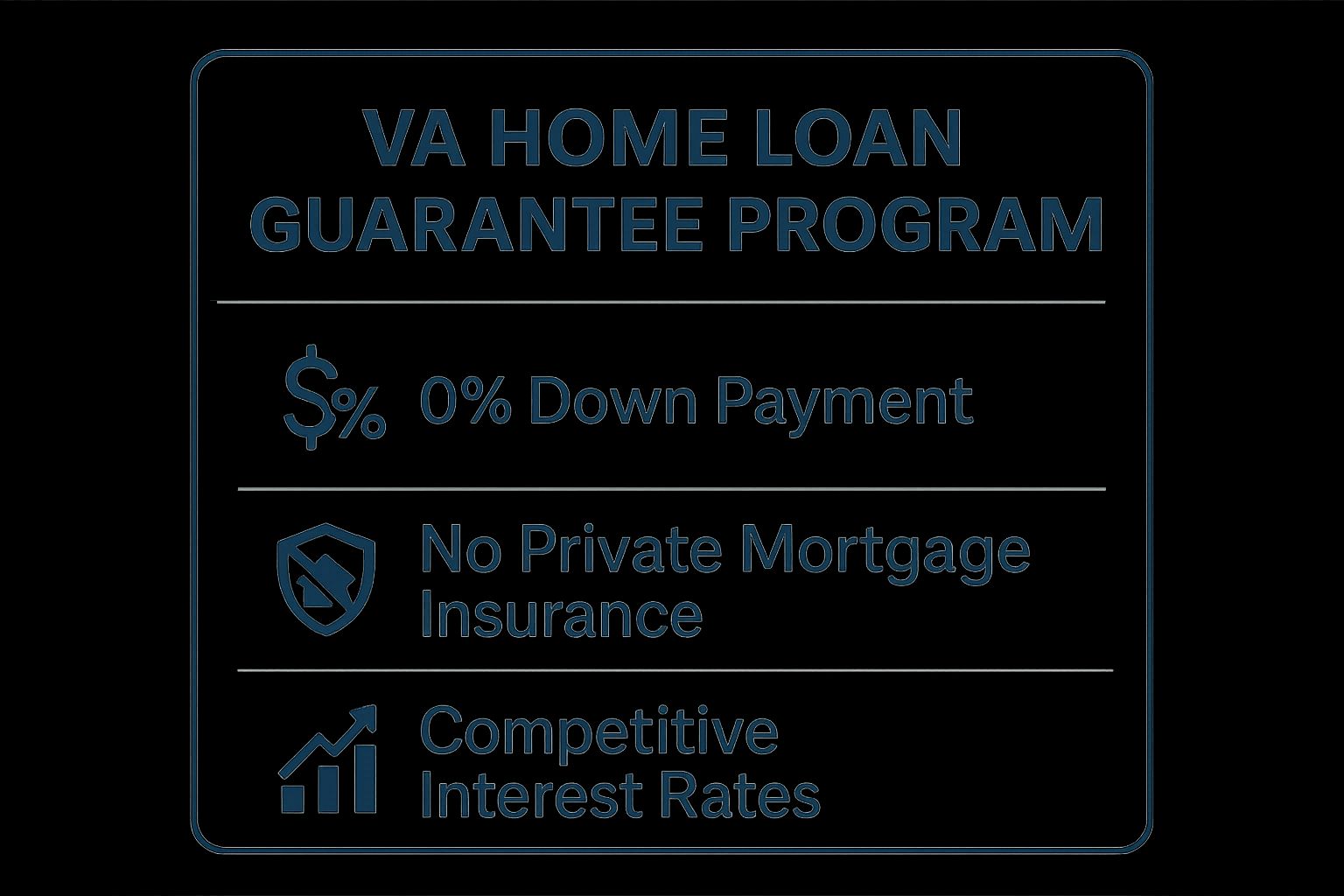
The infographic above provides a quick reference for the core benefits of the VA Home Loan Guarantee Program: no down payment, no PMI, and competitive interest rates. These advantages can translate into significant savings and easier access to homeownership for veterans.
This program deserves its place on this list of financial assistance for veterans due to its potential to significantly improve their financial well-being and quality of life. The program features several key advantages, including: no down payment requirement for qualified borrowers, no private mortgage insurance (PMI) requirement, competitive interest rates compared to conventional loans, limited closing costs which may be paid by the seller, no prepayment penalties, and availability for primary residences. These features combine to make homeownership more accessible and affordable.
Pros:
- Can buy a home with $0 down payment: This eliminates a major hurdle for many aspiring homeowners.
- Lower credit score requirements compared to conventional loans: Makes homeownership accessible even with less-than-perfect credit.
- No monthly mortgage insurance: Results in lower monthly payments compared to conventional loans with PMI.
- Reusable benefit throughout lifetime: Veterans can use the benefit multiple times to purchase or refinance homes.
- Streamlined refinancing options available: Makes it easy to take advantage of lower interest rates or change loan terms.
Cons:
- VA funding fee required (though waived for some disabled veterans): While this fee helps support the program, it does add to the upfront cost.
- Can only be used for primary residences, not investment properties: Limits the program's use for wealth-building through real estate investment.
- Some sellers may be hesitant to accept VA loans due to perception of complexity: This can sometimes make negotiations more challenging.
- Property must meet VA appraisal standards: Ensures the property is safe and sound, but can sometimes lead to delays or require repairs before closing.
Examples of Successful Implementation:
- A veteran with a 70% service-connected disability rating purchased a $350,000 home with no down payment and no funding fee, illustrating the program's benefits for disabled veterans.
- A military family used the VA loan to build a custom home tailored to accessibility needs, highlighting the program's flexibility.
- A Navy veteran refinanced a conventional mortgage to a VA loan, saving $250 monthly, showcasing the potential for significant cost savings through refinancing.
Tips for Utilizing the VA Home Loan Guarantee Program:
- Obtain your Certificate of Eligibility (COE) before house hunting: This document verifies your eligibility for the program and streamlines the loan application process.
- Compare multiple VA-approved lenders for best rates: Don't settle for the first offer you receive. Shop around to find the most competitive interest rates and loan terms.
- Consider asking the seller to pay closing costs in negotiation: This can further reduce your upfront expenses.
- Understand your county's VA loan limits: Loan limits vary by location and can affect the maximum loan amount you can qualify for.
- Disabled veterans should apply for funding fee exemption: This can significantly reduce the upfront cost of the loan.
While the VA doesn't provide a direct link to apply, you can find more information and connect with VA-approved lenders through the U.S. Department of Veterans Affairs website. This program is a powerful tool for veterans seeking financial assistance and a pathway to homeownership. It's a valuable resource for those who have served our nation, offering a tangible benefit that can significantly improve their financial well-being and overall quality of life.
2. GI Bill Education Benefits
The GI Bill is a cornerstone of financial assistance for veterans, offering invaluable support for pursuing education and vocational training after military service. It represents a significant investment in veterans' futures, helping them transition to civilian life and acquire the skills and knowledge needed for successful careers. This program is a crucial resource for veterans seeking financial assistance, especially those transitioning to civilian life and facing the costs of higher education or vocational training. It allows them to gain new skills, enhance their existing qualifications, and pursue rewarding careers, contributing both to their personal well-being and the overall economy.

The Post-9/11 GI Bill, the most widely used version today, provides comprehensive funding for eligible veterans. This includes tuition and fees paid directly to the educational institution, a monthly housing allowance based on the location of the school, and an annual book stipend of up to $1,000. Veterans can use these benefits for a variety of educational pursuits, from undergraduate and graduate degrees to vocational training programs and professional certifications. The program offers up to 36 months of education benefits.
Features of the GI Bill:
- Up to 36 months of education benefits: Provides ample time to complete degree programs or extensive training.
- Direct tuition and fee payments: Streamlines the payment process and ensures funds go directly to the institution.
- Monthly housing allowance: Helps cover living expenses during the period of study.
- Annual book stipend: Assists with the cost of textbooks and other required materials.
- Yellow Ribbon Program: Supplements GI Bill benefits at participating private and out-of-state schools, potentially covering all tuition and fees.
- Transferability to dependents: Under specific circumstances, veterans can transfer unused benefits to their spouse or children.
Pros:
- Comprehensive funding: Can potentially cover the entire cost of a degree or training program.
- Flexibility: Covers a wide range of educational paths, including college degrees, vocational training, and certifications.
- Housing allowance support: Provides crucial financial assistance for living expenses while studying.
- Forever GI Bill: Eliminates the 15-year time limit on benefits for veterans who served after January 1, 2013.
- Online education eligibility: Allows for flexible learning options, although with potentially reduced housing allowances.
Cons:
- Time limitations (for some): Benefits expire 15 years after discharge for veterans who served before the Forever GI Bill was enacted.
- Complex eligibility tiers: Benefit levels vary based on length of service.
- Limited housing allowance for online students (pre-COVID exceptions): Fully online students may not receive a full housing allowance.
- Yellow Ribbon Program limitations: Not all schools participate, which can impact affordability at private or out-of-state institutions.
Examples of Successful GI Bill Usage:
- A Marine veteran graduated with a bachelor's degree debt-free thanks to the Post-9/11 GI Bill.
- An Army veteran transferred a portion of their benefits to two children, helping fund their undergraduate education.
- An Air Force veteran used the GI Bill to complete a commercial pilot certification program.
Tips for Utilizing the GI Bill:
- Apply early: Confirm eligibility and benefit level before enrolling in a program.
- Research Yellow Ribbon schools: If considering private or out-of-state schools, look for institutions participating in the Yellow Ribbon Program.
- VA-approved programs: Ensure your chosen school and program are approved by the Department of Veterans Affairs.
- Compare GI Bill options: Determine whether the Montgomery GI Bill or the Post-9/11 GI Bill is more advantageous for your individual situation.
- Use the GI Bill Comparison Tool: The VA website provides a tool to estimate potential benefits based on your service and chosen program.
Why the GI Bill Deserves its Place:
The GI Bill is essential for financial assistance for veterans, offering a pathway to education, career advancement, and a successful transition to civilian life. It empowers veterans to invest in their futures and contribute meaningfully to society. Visit the VA website for more information and to apply.
3. VA Disability Compensation
VA Disability Compensation is a crucial form of financial assistance for veterans who have disabilities resulting from diseases or injuries incurred or aggravated during their active military service. This benefit provides monthly, tax-free payments directly to eligible veterans, offering vital financial support to help manage the challenges posed by their service-connected conditions. This makes it a significant resource for veterans seeking financial assistance, and it rightfully earns a top spot on this list.
How it Works:
The amount of compensation received depends on the severity of the veteran's disability, which is assigned a disability rating by the VA ranging from 0% to 100% in 10% increments. The higher the percentage, the greater the monthly payment. The rating is based on the impact the disability has on the veteran's ability to perform daily activities and maintain employment. The VA maintains a detailed schedule for rating disabilities, ensuring a standardized approach to evaluation. Furthermore, the payment amount also considers the number of dependents a veteran has.
Features and Benefits:
- Tax-free monthly payments: This provides a reliable, tax-free income stream for veterans.
- Scaled compensation: The payment amount increases with the disability rating percentage (10-100%).
- Dependency allowances: Veterans with higher disability ratings may receive additional allowances for dependents.
- Special Monthly Compensation (SMC): Available for veterans with exceptionally severe disabilities, SMC provides a higher level of financial support beyond the standard compensation rates.
- Cost-of-living adjustments (COLA): Annual COLAs ensure that benefits keep pace with inflation.
- Concurrent receipt: Veterans with disability ratings of 50% or higher can receive both VA disability compensation and military retirement pay simultaneously.
Pros:
- Lifetime benefit: VA Disability Compensation is a lifetime benefit that doesn't require renewal, offering long-term financial security.
- Stable income: Provides consistent income for managing service-connected conditions.
- Gateway to other benefits: Eligibility for VA Disability Compensation often opens doors to other valuable VA benefits, such as healthcare, education, and home loan guarantees.
- No income or asset limits: Eligibility is not affected by the veteran's income or assets.
- Combinable with other benefits: Can be combined with other federal benefits and employment income.
Cons:
- Complex application: The application process can be complex and requires thorough medical evidence linking the disability to military service.
- Long processing times: Claims often take several months (sometimes 3-6 months or more) to process.
- Challenging appeals: Appealing a denied claim can be a difficult and lengthy process.
- Service connection requirement: Veterans must establish a clear connection between their disability and their military service.
- Potential for underrating: Without proper documentation and advocacy, conditions may be underrated, resulting in lower compensation.
Examples of Successful Implementation:
- A combat veteran diagnosed with Post-Traumatic Stress Disorder (PTSD) received a 70% disability rating and a monthly payment of $1,529.95.
- A veteran with service-connected diabetes and secondary conditions received a 100% disability rating.
- A Gulf War veteran successfully claimed presumptive conditions related to toxic exposure.
Tips for Applying:
- Seek professional assistance: Work with a Veteran Service Officer (VSO). They can provide invaluable guidance and assistance throughout the claims process.
- Thorough documentation: Submit all relevant medical evidence with the initial application to avoid delays.
- Obtain service records: Request copies of all service medical records to substantiate your claim.
- Consider secondary conditions: Explore potential secondary conditions connected to primary service-connected disabilities.
- File an intent to file: Filing an "intent to file" form preserves your effective date while you gather necessary evidence.
- Attend C&P exams: Attend all Compensation and Pension (C&P) examinations and be thorough when describing your symptoms and their impact on your daily life.
While the process can be challenging, the financial stability and access to additional resources provided by VA Disability Compensation make it an invaluable resource for eligible veterans. Don't hesitate to seek assistance and pursue the benefits you deserve.
4. VA Pension Benefits: Financial Assistance for Qualifying Wartime Veterans
VA Pension benefits offer crucial financial assistance for veterans who served during wartime and meet specific needs-based criteria. This program provides tax-free monthly payments to help qualifying veterans and their families cope with financial challenges related to age or non-service-connected disabilities. This form of financial assistance for veterans differs from VA disability compensation, which is paid for service-connected injuries. The VA Pension program focuses on providing supplemental income for those with limited means.
How it Works:
The VA Pension program is designed for wartime veterans who are 65 years or older, or who are permanently and totally disabled due to a non-service-connected condition. Eligibility is determined based on several factors, including income and net worth limitations. The benefit amount is calculated based on the veteran's countable income, with a dollar-for-dollar reduction applied for income exceeding the established limits. As of 2023, the net worth limit is $138,489.
Features and Benefits:
- Tax-free Monthly Payments: The payments are not considered taxable income.
- Needs-Based Program: Eligibility depends on financial need, with income and asset limits.
- Enhanced Pension (Aid & Attendance and Housebound Benefits): Veterans requiring regular assistance with daily activities (Aid & Attendance) or those confined to their residence (Housebound) can qualify for significantly higher monthly payments.
- Survivor Pension: Eligible surviving spouses and dependent children of deceased veterans may also qualify for pension benefits.
Pros:
- Provides essential financial support for elderly or disabled wartime veterans.
- The Aid & Attendance supplement can substantially increase the benefit amount, helping cover the costs of assisted living or in-home care.
- No direct connection to service-related injuries is required.
- Can contribute towards long-term care expenses.
- Offers financial security to surviving spouses and dependent children.
Cons:
- Strict income and net worth limitations can disqualify some veterans.
- Requires service during specific wartime periods.
- Countable income reduces the pension amount on a dollar-for-dollar basis.
- Transferring assets to meet net worth requirements may trigger penalties due to the look-back period.
- More restrictive eligibility criteria compared to VA disability compensation.
Examples:
- A WWII veteran residing in an assisted living facility qualified for the maximum Aid & Attendance benefit, enabling him to afford the care he needed.
- A Vietnam-era veteran diagnosed with non-service-connected Alzheimer's disease received a pension with Aid & Attendance, providing financial relief for his family.
- The surviving spouse of a Korean War veteran, who had been the family's primary earner, received a survivor pension, ensuring her financial stability.
Actionable Tips:
- Track Medical Expenses: Unreimbursed medical expenses can be deducted from your countable income, potentially increasing your benefit amount. Keep meticulous records.
- Doctor's Documentation: Obtain a detailed doctor's statement documenting the need for Aid and Attendance if applicable. This statement should explicitly outline the assistance required with daily activities.
- Legal Counsel: Consult with a VA-accredited attorney before transferring assets. They can advise you on how to navigate the look-back period and avoid penalties.
- Application Forms: Use VA Form 21P-527EZ (for veterans) or 21P-534EZ (for survivors) to apply.
- Consider Unreimbursed Medical Expenses: Deducting unreimbursed medical expenses from your countable income can significantly impact your benefit amount.
When and Why to Use This Approach:
VA Pension benefits are a valuable resource for wartime veterans facing financial hardship due to age or non-service-connected disabilities. If you meet the service and needs-based requirements, this program can provide a critical safety net. It's especially beneficial for those struggling with the costs of long-term care or those whose limited income restricts their ability to meet basic needs. Even if you aren't sure if you qualify, exploring this option is a worthwhile step for any wartime veteran experiencing financial difficulties. While applying for financial assistance for veterans can feel complex, the potential benefits are significant for those who qualify.
While there is no direct website link for "VA Pension Benefits," you can find detailed information and application forms on the official U.S. Department of Veterans Affairs website (va.gov) by searching for "VA Pension." You can also connect with a local VA office or a VA-accredited representative for personalized assistance.
5. Vocational Rehabilitation and Employment (VR&E)
Vocational Rehabilitation and Employment (VR&E), also known as Chapter 31 or Veteran Readiness and Employment, is a crucial form of financial assistance for veterans with service-connected disabilities. This program helps veterans prepare for, find, and maintain suitable employment, or achieve independence in daily living. It deserves a place on this list because it offers comprehensive support beyond simple financial aid, addressing the unique challenges veterans with disabilities face when entering or re-entering the civilian workforce.
How VR&E Works:
VR&E provides personalized support based on individual needs. The process begins with an application and determination of eligibility. Upon acceptance, veterans work closely with a Vocational Rehabilitation Counselor (VRC) to develop an individualized employment plan. This plan outlines the veteran's employment goals, the services needed to achieve those goals, and a timeline for completion. Services can include:
- Vocational counseling: Guidance and support in choosing a career path.
- Education and training funding: Financial assistance for college, vocational schools, apprenticeships, on-the-job training, and other approved programs. This funding can cover tuition, fees, books, supplies, and necessary equipment.
- Job placement assistance and coaching: Help with resume writing, interview skills, and job searching. VR&E also assists with connecting veterans with potential employers.
- Self-employment support: Resources and training for veterans interested in starting their own businesses.
- Independent living services: For veterans with severe disabilities, VR&E can provide services to improve their ability to live independently.
- Monthly subsistence allowance: A monthly payment provided during training to help with living expenses. Veterans can participate in the program for up to 48 months.
Examples of VR&E Success:
- An Army veteran with a back injury preventing him from returning to his physically demanding pre-service job received training in IT management through VR&E, including adaptive equipment for his workstation. He now works successfully as an IT manager.
- A Marine struggling with PTSD received vocational counseling and job placement assistance through VR&E, ultimately securing a fulfilling career in federal employment.
- A Navy veteran leveraged the self-employment track within VR&E to receive small business startup assistance and launch a successful entrepreneurial venture.
Pros and Cons of VR&E:
Pros:
- More flexible than the GI Bill for career training, allowing for specialized programs tailored to individual needs.
- Includes adaptive equipment and assistive technology for disabilities.
- Continues until the employment goal is reached, not strictly time-limited like the GI Bill.
- Provides ongoing support after employment is secured.
- Can be used alongside or after GI Bill benefits.
Cons:
- Typically requires a 10% or higher service-connected disability rating.
- Involves more oversight and counselor interaction than the GI Bill.
- Requires demonstrating that the service-connected disability creates an employment handicap.
- Limited to employment-focused education pathways.
- The application process can be more complex than other education benefits.
Tips for Utilizing VR&E:
- Apply early: The program approval process can take time.
- Prepare for your initial meeting: Have clear career goals in mind and research potential career paths.
- Maintain regular contact with your VRC: Communication is key to a successful VR&E experience.
- Consider combining with the GI Bill: Use the GI Bill for general education requirements and VR&E for specialized vocational training.
- Explore self-employment: If you're interested in starting a business, inquire about the self-employment track.
When and Why to Use VR&E:
VR&E is an excellent resource for veterans with service-connected disabilities who need support beyond traditional financial aid to achieve their employment goals. If your disability impacts your ability to work or requires specialized training for a new career, VR&E can provide the necessary resources and support to help you succeed. This program is especially valuable for veterans transitioning to civilian life, those seeking a career change due to their disability, and those interested in entrepreneurial pursuits. While the GI Bill provides valuable educational benefits, VR&E offers targeted vocational rehabilitation and employment services specifically designed for disabled veterans, making it a powerful tool for achieving financial assistance for veterans and long-term career success. For more information and to apply, visit the VA's VR&E website. (Please note: the link provided is the actual VA website for VR&E)
6. VA Healthcare System
The VA Healthcare System offers a crucial form of financial assistance for veterans by providing comprehensive medical services at little to no cost. While not a direct financial aid program like grants or loans, the VA Healthcare System significantly reduces the financial burden of healthcare, which can be a major expense for many. This system provides everything from routine checkups and preventative care to complex surgeries and specialized treatments for service-connected conditions. This comprehensive approach makes it a valuable resource for veterans seeking financial relief and high-quality medical care.
The VA Healthcare System operates on a priority group system, which determines the level of copayment required for non-service-connected care. Eligible veterans are assigned to a priority group based on factors such as service-connected disability rating, income level, and special eligibility status (e.g., former Prisoner of War). Veterans with service-connected conditions often receive care at no cost. The system covers a wide array of services, including:
- Primary Care: Routine checkups, preventive screenings, and management of chronic conditions.
- Specialized Treatments: Care for specific service-connected disabilities, like PTSD, traumatic brain injury, and exposure to toxic substances.
- Mental Health Services: Therapy, counseling, and medication management for conditions like PTSD, depression, and anxiety.
- Long-Term Care: Nursing home care, assisted living, and home health services.
- Prescription Medications: Low-cost or no-cost medications through the VA pharmacy system.
Pros:
- No Upfront Costs: No enrollment fees, monthly premiums, or deductibles for eligible veterans.
- Comprehensive Coverage: Covers virtually all healthcare needs within a single system.
- Specialized Care: Expertise in treating military-specific conditions and injuries.
- Integration with Other Insurance: Can be used in conjunction with private insurance or Medicare.
- Nationwide Network: Access to VA facilities across the country.
- Reduced or Eliminated Copays: For service-connected conditions.
- Community Care: The Mission Act expands access to care in the community when VA services are unavailable or geographically inconvenient.
Cons:
- Priority Group System: Can limit access for some veterans based on their priority group assignment.
- Wait Times: Some facilities may have long wait times for appointments.
- Geographic Limitations: Access to specific services might depend on the proximity to a VA facility.
- Community Care Complexity: The referral process for Community Care can be complex.
- Varying Quality of Care: The quality of care can vary across different VA facilities.
- Copays for Non-Service-Connected Care: May be required based on income and priority group.
Examples:
- An Iraq War veteran with a 30% PTSD rating receives weekly therapy and medication at no cost through the VA.
- A Vietnam veteran with Agent Orange-related diabetes receives comprehensive care through priority group 1.
- A Gulf War veteran utilizes the VA's specialized toxic exposure screening program.
Tips:
- Enroll Early: Enroll in the VA Healthcare System even if you have other insurance as a backup option.
- Travel Reimbursement: Apply for travel reimbursement if traveling for VA appointments.
- My HealtheVet: Sign up for the My HealtheVet online portal to manage appointments and access medical records.
- Community Care: Request Community Care if VA wait times are too long or a facility is too far away.
- Disability Compensation: File for disability compensation for any service-connected issues to potentially improve your priority group.
- VA Pharmacy Mail Order: Utilize the VA pharmacy mail-order service for convenient prescription refills.
The VA Healthcare System deserves its place on this list of financial assistance resources for veterans because it directly addresses a significant potential expense: healthcare. By providing comprehensive medical services at low or no cost, the VA helps veterans maintain their health and well-being without incurring substantial financial strain. This is especially important for veterans dealing with service-connected conditions, toxic exposures, or other health challenges related to their military service. For more information, visit the VA website.
7. Survivors Pension and Dependency and Indemnity Compensation (DIC)
Losing a loved one is a devastating experience, made even more challenging by the sudden loss of financial support. For surviving family members of veterans, the Department of Veterans Affairs (VA) offers crucial financial assistance for veterans' families through the Survivors Pension and Dependency and Indemnity Compensation (DIC) programs. These programs aim to alleviate some of the financial burden faced by eligible surviving spouses, dependent children, and parents. Understanding these benefits is critical for families navigating life after the loss of a veteran.
How They Work:
-
Survivors Pension: This needs-based program provides monthly payments to surviving spouses and dependent children of wartime veterans with limited income and assets. The amount of the pension depends on the survivor's financial need, with the VA setting specific income and asset limits.
-
Dependency and Indemnity Compensation (DIC): This program provides a monthly, tax-free benefit to surviving spouses, dependent children, and sometimes parents of veterans whose death was service-connected (caused by injury or illness incurred or aggravated during active military service) or who were totally disabled by a service-connected condition at the time of death. Unlike the Survivors Pension, DIC is not based on financial need.
Features and Benefits:
Both programs offer tax-free monthly payments and annual cost-of-living adjustments. DIC provides a flat-rate compensation amount, while the Survivors Pension amount varies based on individual financial need. Both programs may also offer additional allowances for dependent children. DIC recipients might also be eligible for Dependents' Educational Assistance. Furthermore, beneficiaries of both programs might be eligible for healthcare benefits through the Civilian Health and Medical Program of the Department of Veterans Affairs (CHAMPVA). There's also the possibility of Aid & Attendance or Housebound supplements for those needing assistance with daily living activities.
Examples:
- The widow of a Vietnam veteran with a service-connected disability receives a $1,437.66 monthly DIC payment.
- The surviving spouse of a peacetime veteran with limited income receives a Survivors Pension to help cover basic living expenses.
- The parents of a service member killed in action receive Parents' DIC.
Pros:
- Ongoing Financial Support: Provides crucial financial stability to survivors after the loss of a veteran.
- No Income or Asset Limitations for DIC: DIC focuses solely on the veteran's service-connected death or disability, not the survivor's financial status.
- Long-Term Benefits for Spouses: Surviving spouses can receive benefits for life or until remarriage after age 57 (with some exceptions).
- Benefits for Children: Dependent children are eligible for benefits until age 18 (or 23 if attending school).
- Potential Healthcare Benefits: Eligibility for CHAMPVA can significantly reduce healthcare costs.
Cons:
- Strict Requirements for Survivors Pension: Income and asset limitations can disqualify some surviving spouses and children.
- Complex DIC Eligibility: Determining service connection for the veteran's death or disability can be complex.
- Remarriage Before Age 57 Can Affect Benefits: Remarriage before age 57 generally terminates a surviving spouse's benefits (though there can be exceptions).
- Potential Offsets: Benefits may be offset by Survivor Benefit Plan (SBP) payments in some cases.
- Challenging Application Process: Navigating the VA system and completing paperwork can be difficult, especially during bereavement.
Tips for Applying:
- Apply Promptly: Apply as soon as possible after the veteran's death to avoid missing out on benefits.
- Include Death Certificate: Submit the veteran's death certificate with the application.
- Explore Supplements: Consider the Aid & Attendance or Housebound supplements if additional assistance is needed.
- Report Income Changes (Survivors Pension): Keep the VA informed of any changes to your income.
- Seek Assistance: Work with a Veteran Service Officer (VSO) for guidance and support during the application process. They can help navigate the complexities and ensure all necessary documentation is submitted.
- Request Expedited Processing: In cases of financial hardship, request expedited processing of the claim.
Why This Benefit Matters:
These programs provide essential financial assistance for veterans' families coping with the loss of a loved one. The loss of income coupled with the emotional distress of bereavement can be incredibly difficult. The Survivors Pension and DIC offer critical support, allowing families to focus on healing and rebuilding their lives. This is why they are a vital part of the financial assistance available to the veteran community. While navigating these benefits can be complex, the support they offer is invaluable. Don't hesitate to seek assistance from a VSO or other qualified professional to maximize your eligibility and receive the benefits you deserve.
8. VA Specially Adapted Housing (SAH) and Special Housing Adaptation (SHA) Grants
For veterans with service-connected disabilities, adapting their living space to accommodate their needs is crucial for maintaining independence and quality of life. The Department of Veterans Affairs (VA) offers significant financial assistance for veterans through the Specially Adapted Housing (SAH) and Special Housing Adaptation (SHA) grant programs. These grants can be a vital source of financial assistance for veterans, allowing them to modify their homes to enhance accessibility and facilitate independent living. This makes them a critical resource worth exploring when considering financial assistance for veterans.
How They Work: Both SAH and SHA grants provide funds for the construction, renovation, or modification of a veteran's primary residence. The difference lies in the severity of the disability and the corresponding grant amount. The SAH grant, reaching up to $101,754 in FY2023, is designed for veterans with more severe service-connected disabilities. The SHA grant, capped at $20,387 in FY2023, assists veterans with less severe disabilities. In addition, the Temporary Residence Adaptation (TRA) grant allows for modifications to a family member's home where the veteran is temporarily residing. Importantly, these grants are not loans and do not need to be repaid. The VA also offers the Special Adapted Housing Assistive Technology (SAHAT) grant for developing new adaptive technologies.
Who Qualifies and When to Use: These grants are specifically for veterans with service-connected disabilities that impact their mobility and daily living. If your disability necessitates home modifications for accessibility, these grants are a valuable avenue to pursue. Because the grant amounts are substantial and don't require repayment, they significantly reduce the financial burden of creating a safe and accessible home environment. Applying early is crucial, as processing can take several months.
Features and Benefits:
- Substantial financial assistance (up to $101,754 for SAH and $20,387 for SHA in FY2023).
- No repayment required.
- Can be used in conjunction with VA Home Loan benefits.
- Improves accessibility and independence.
- Grant amounts are adjusted annually to reflect construction costs.
- Can be used up to six times, up to the maximum grant amount, allowing for adaptations as needs change.
- TRA option for temporary modifications to a family member's home.
Examples of Successful Implementation:
- A paralyzed veteran used an SAH grant to install an elevator, widen doorways, and create a roll-in shower.
- A blind veteran utilized an SHA grant for voice-activated home systems and tactile improvements.
- An amputee veteran installed ramps, lowered countertops, and automated entry systems.
Pros:
- Significant financial relief for necessary home modifications.
- Improves quality of life and independence.
- Adaptable to changing needs over time.
Cons:
- Strict eligibility criteria.
- Lengthy application and approval process.
- May not cover all costs for extensive renovations.
- Limited to one primary residence (except TRA).
- Requires working with a VA-assigned agent.
Actionable Tips:
- Apply early: Processing and approval can take several months.
- Work with experienced contractors: Ensure they are familiar with accessibility modifications.
- Consider future needs: Plan modifications with long-term needs in mind.
- Obtain detailed quotes: Compare costs before finalizing plans.
- Coordinate with your VA-assigned agent: Maintain consistent communication throughout the process.
- Explore other resources: Investigate combining these grants with other state or non-profit adaptive housing programs.
While the application process may require patience and careful planning, the benefits of SAH and SHA grants are undeniable for eligible veterans. These grants provide vital financial assistance for veterans seeking to create a comfortable, accessible, and independent living environment. For more information, visit the VA website. (Please note that the specific URL for SAH/SHA grants may change; using a search term like "VA adapted housing grants" on the VA website is recommended if this link becomes outdated.)
Financial Assistance Programs for Veterans Comparison
| Program | Implementation Complexity 🔄 | Resource Requirements ⚡ | Expected Outcomes 📊 | Ideal Use Cases 💡 | Key Advantages ⭐ |
|---|---|---|---|---|---|
| VA Home Loan Guarantee Program | Moderate – requires lender and VA coordination | Low to Moderate – no down payment, private lenders involved | Homeownership with favorable loan terms, no PMI | Purchasing or refinancing a primary residence | $0 down, no PMI, reusable benefit |
| GI Bill Education Benefits | Moderate – requires application and school coordination | Moderate to High – tuition coverage, housing allowance | Higher education funding, living expense support | College, vocational, certification, transferred benefits | Covers full tuition, housing allowance, transferable |
| VA Disability Compensation | High – complex application with medical evidence | Low – monthly tax-free payments based on disability rating | Stable, lifelong income support for disabilities | Veterans with service-connected disabilities | Tax-free payments, no renewal needed |
| VA Pension Benefits | Moderate to High – income/asset verification | Low – needs-based monthly payments | Supplemental income for low-income elderly/disabled | Wartime veterans with limited income | Aid & Attendance supplement, tax-free payments |
| Vocational Rehabilitation and Employment (VR&E) | High – requires disability rating proof, tailored plan | Moderate – funding for education, training, subsistence | Employment readiness and job placement support | Disabled veterans seeking career training | Flexible training, adaptive equipment, ongoing support |
| VA Healthcare System | Moderate – enrollment and eligibility verification | High – ongoing healthcare services | Access to comprehensive medical care | Eligible veterans needing healthcare | No premiums, specialized military care |
| Survivors Pension and Dependency & Indemnity Compensation (DIC) | Moderate – application for survivors with documentation | Low – needs-based or flat-rate monthly payments | Ongoing financial support after veteran's death | Surviving spouses, dependent children, parents | Tax-free, no income limits on DIC, includes health benefits |
| VA Specially Adapted Housing (SAH/SHA) Grants | High – specific disability eligibility and long approval process | Moderate – grant funds for home modifications | Improved accessibility and independence | Severely disabled veterans needing home adaptations | Substantial grants, multiple uses, improved quality of life |
Taking the Next Step Towards Financial Security
Navigating the landscape of financial assistance for veterans can feel overwhelming, but it doesn't have to be. This article has highlighted eight key programs designed to support veterans financially, ranging from housing assistance through the VA Home Loan Guarantee Program and SAH/SHA grants, to education benefits through the GI Bill, healthcare through the VA Healthcare System, and crucial income support through VA Disability Compensation, VA Pension benefits, and Survivors Pension/DIC. Furthermore, programs like Vocational Rehabilitation and Employment (VR&E) can empower veterans to achieve career stability and financial independence. Mastering these programs is crucial for veterans to achieve the financial security they deserve after their service. The impact of utilizing these benefits extends beyond individual well-being; it strengthens families and communities, recognizing the invaluable contributions of veterans to our nation.
Taking advantage of these programs is an essential step in securing your financial future. Don't navigate this complex process alone. Homefront Group specializes in assisting veterans with accessing the full spectrum of financial assistance for veterans, including navigating VA claim appeals, fighting for compensation for toxic exposure or work injuries, securing medical malpractice claims, and providing essential estate and financial planning. Secure your financial future and get the support you deserve. Visit Homefront Group today for a personalized consultation and learn how they can help you maximize your benefits.