
The Complete Veterans Benefits Ecosystem: What You've Earned
Transitioning from military service to civilian life presents unique challenges. It also opens doors to a wide range of benefits earned through your service. This section explores the comprehensive ecosystem of these veterans benefits, going beyond the basics to help you understand the full scope of available support. We'll also examine how various programs intersect and can be strategically combined.
Understanding the Breadth of Your Benefits
Many veterans are unaware of the sheer number of benefits they are entitled to. These benefits extend far beyond healthcare. They can significantly impact your financial well-being, education, and overall quality of life. Some key areas include:
- Healthcare: Access to VA medical facilities, prescription medications, and specialized care.
- Disability Compensation: Financial support for service-connected disabilities.
- Education Assistance: Funding for college, vocational training, and other educational pursuits.
- Home Loans: Guaranteed loans with favorable terms to help veterans purchase homes.
- Pension Programs: Regular payments for eligible wartime veterans with limited income.
- Life Insurance: Affordable life insurance options tailored to veterans' needs.
For example, a veteran might use their education benefits to pursue a degree. Simultaneously, they could receive disability compensation for a service-connected injury. They might also leverage a VA home loan, creating a strong foundation for civilian life.
Strategic Benefit Combination for Maximum Impact
Applying for veterans benefits isn't simply about accessing individual programs. It's about strategically combining them to maximize their impact. This requires understanding your circumstances and how different benefits can work together to achieve your goals. The Department of Veterans Affairs (VA) budget plays a significant role in the benefits process.
The 2025 budget request for the VA totals $369.3 billion, with $210.6 billion dedicated to traditional benefits. This highlights the substantial commitment to supporting veterans and emphasizes the importance of streamlined applications. Learn more about the VA budget here.
Understanding the interplay between benefits can be complex. Resources like Veterans Service Officers (VSOs) can provide invaluable guidance. They can help identify the optimal combination of benefits based on your needs and eligibility, ensuring you receive the full support you deserve. VSOs can also debunk eligibility myths, empowering you to claim your earned benefits.
Cracking the Eligibility Code: Are You Leaving Benefits Behind?
Applying for veterans benefits can feel overwhelming. Understanding the eligibility criteria is often the first hurdle. This section clarifies the complexities of these requirements, offering clear insights into the factors that determine your qualification status. Taking the time to understand these factors is the first step toward a successful application.
Key Factors Affecting Your Eligibility
Several factors play a crucial role in determining your eligibility for specific veterans benefits. Familiarizing yourself with these factors can streamline the application process.
- Service Length: The length of your active duty service is a significant factor. Many benefits have minimum service requirements.
- Discharge Status: Your discharge status (honorable, general, etc.) directly affects your eligibility for various programs. A less than honorable discharge may limit your access to certain benefits.
- Era of Service: The period in which you served, wartime or peacetime, can influence the benefits available to you. Wartime veterans often qualify for programs not available to peacetime veterans.
- Medical Conditions: Service-connected disabilities are a key consideration. Both the severity and type of disability impact the level of support available.
To better understand how these factors intersect with specific benefit programs, consult the table below. It provides a clear comparison of eligibility criteria across major VA programs.
Eligibility Requirements by Benefit Type
| Benefit Type | Minimum Service Requirement | Discharge Status Needed | Other Qualifying Factors |
|---|---|---|---|
| VA Home Loan Guaranty | Varies depending on era of service. Generally 90 days during wartime. | Honorable, general, or under honorable conditions | Must meet lender's credit and income requirements |
| VA Health Care | Varies greatly depending on factors such as service era, combat experience, and income level. | Generally honorable or general under honorable conditions. Some exceptions apply. | May include income limits or specific health conditions. |
| VA Disability Compensation | Must have a service-connected disability. | Discharge status usually not a factor for service-connected disabilities. | Disability must be connected to your military service. |
| VA Education and Training (GI Bill) | Varies based on the specific GI Bill program. | Generally honorable or general under honorable conditions. | May include requirements related to enrollment status and academic progress. |
This table provides a general overview, and specific eligibility criteria can be quite complex. It's always best to consult the official VA website or speak with a VA representative for the most accurate and up-to-date information.
Navigating Eligibility for National Guard and Reservists
Eligibility for National Guard and Reservists presents unique complexities. Their service often includes a mix of active and inactive duty time. This can make determining eligibility more involved than for those who served solely on active duty. Careful review of each program's specific requirements is essential.
Additionally, the prevalence of service-connected disabilities impacts the demand for veterans benefits. As of August 2024, approximately 5.5 million veterans had a service-connected disability, with one-third employed in government jobs. This highlights the importance of accessible and efficient benefits programs. You can find more statistics from the Bureau of Labor Statistics.
Addressing Discharge Characterization and Service Record Gaps
Questions about your discharge characterization or gaps in your service record can seem daunting. However, these situations don't necessarily lead to disqualification. Address these issues openly and honestly in your application. Providing supporting documentation and clear explanations can significantly improve your chances of a successful outcome. These proactive steps are key to securing the benefits you've earned.
Mastering the Application Process: A Tactical Approach
Applying for veterans benefits can often feel overwhelming. This section offers a tactical approach, breaking down the process into manageable steps. We'll cover the best application sequence, guidance for each submission channel, and effective tracking methods. This strategic roadmap, drawn from the experiences of successful applicants and benefits counselors, empowers you to confidently secure the benefits you deserve.
Preparing For a Successful Application
Before starting the application process, thorough preparation is essential. This means gathering all necessary documents, setting up your VA.gov account, and understanding the specific requirements of each benefit program. Just like preparing for a critical mission, having everything in order beforehand greatly increases your chances of success.
-
Gather Essential Documents: Compile your Social Security number, bank account information for direct deposit, education and military service history, and information about your chosen school or training program (if applicable). Having these documents readily available streamlines the application process.
-
Establish VA.gov Credentials: Create an account on VA.gov to access online application portals, track your application status, and communicate with VA representatives. This is your central hub for managing your benefits.
-
Understand Specific Requirements: Research the specific eligibility criteria and required documentation for each benefit you plan to apply for. This ensures you submit a complete and accurate application.
Choosing Your Application Method
Once you're prepared, the next step is selecting your submission method. You have several options, each with its own pros and cons. Choosing the right method for your situation can simplify the process.
-
Online (VA.gov): This method is convenient and often offers faster processing times. However, you need a reliable internet connection and comfort using online portals.
-
Mail: This traditional method provides a physical record of your application. However, it can be slower than online submissions and requires attention to postage and delivery confirmation.
-
In-Person (VA Regional Office): Visiting a VA regional office lets you receive personalized assistance from a VA employee. However, this requires scheduling an appointment and may involve travel.
-
With Assistance (VSO or Accredited Representative): Working with a Veterans Service Officer (VSO) or accredited representative offers expert guidance and support. This is particularly helpful for complex claims. They can help you navigate the complexities of the system.
To help you choose the best application method, review the comparison table below:
Application Methods Comparison
Pros and cons of different application methods for VA benefits
| Application Method | Processing Time | Convenience | Documentation Requirements | Best For |
|---|---|---|---|---|
| Online (VA.gov) | Often faster | High | Same as other methods | Tech-savvy applicants |
| Slower | Moderate | Same as other methods | Those preferring physical records | |
| In-Person (VA Regional Office) | Varies | May require travel | Same as other methods | Those needing personalized assistance |
| With Assistance (VSO or Accredited Representative) | Varies | High | Same as other methods | Complex claims |
This table highlights the key differences between each application method, allowing you to make an informed decision based on your individual needs and preferences.
The infographic below visualizes the simplified application steps: completing the VA Form 21-526EZ, choosing your submission method, and receiving confirmation within approximately 30 days.
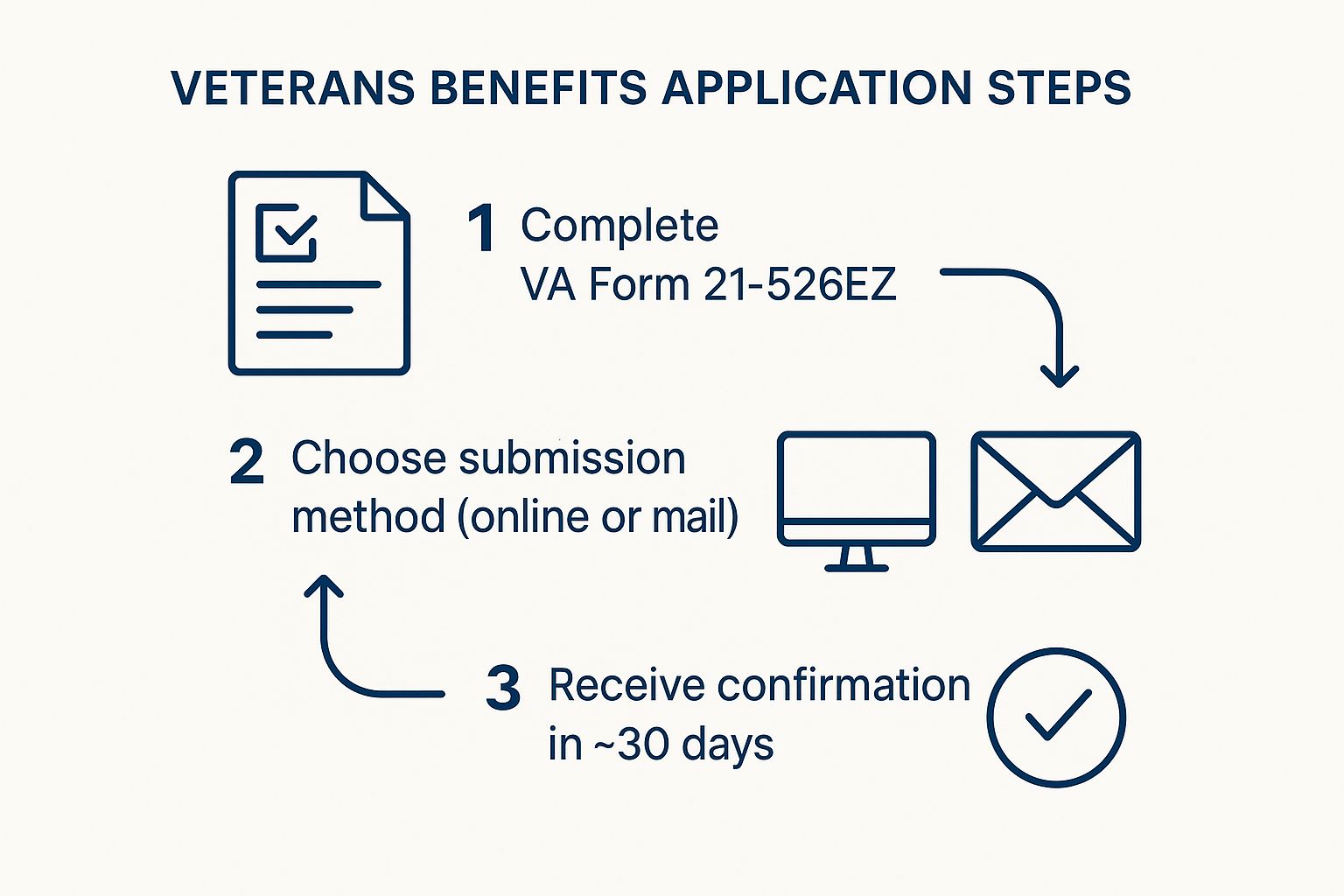
This simplified process flow emphasizes the straightforward approach and the relatively quick initial confirmation turnaround time. Remember, complete processing times vary depending on the specific benefit and individual circumstances.
Tracking Your Application and Avoiding Common Mistakes
After submitting your application, active tracking is key. This means regularly checking your application status online, responding promptly to requests for information, and understanding typical processing times. Proactive engagement can significantly speed up the process.
-
Monitor Your Status: Use the tools on VA.gov to track your application's progress. This keeps you informed and allows you to address any potential issues promptly.
-
Respond to Requests: Be ready to provide additional documentation if the VA requests it. Delayed responses can significantly affect processing times.
-
Understand Timelines: Familiarize yourself with the estimated processing times for various benefit programs. This helps you set realistic expectations and gauge your application’s progress.
Avoid common mistakes that can delay your application. These include submitting incomplete forms, failing to provide all necessary documentation, and neglecting to follow up on information requests. These oversights can have significant consequences.
By carefully preparing your application, choosing the appropriate submission channel, and actively tracking its progress, you can take control of the process and improve your chances of a successful outcome. Applying for veterans benefits is a vital step toward receiving the support you've earned. Resources like VSOs and accredited representatives are available to help you every step of the way.
Disability Claims That Win: Building Your Strongest Case
Disability compensation is often the most crucial—and sometimes the most confusing—benefit veterans seek. Understanding the VA’s evaluation process, from the initial application through any potential appeals, is essential for a successful claim. This section explains how the VA assesses disabilities, the connection between assigned ratings and compensation amounts, and how to effectively document your condition when applying for benefits.
Understanding the VA Disability Evaluation Process
The VA uses a comprehensive process to evaluate disability claims. VA rating specialists meticulously review all submitted medical evidence to determine the severity of your condition and how it impacts your ability to function in everyday life. This goes beyond simply diagnosing a condition; the VA focuses on assessing its practical impact on your overall well-being.
This careful assessment results in a disability rating, which is expressed as a percentage ranging from 0% to 100% in increments of 10. The higher the percentage, the more severe the VA considers your disability, and the greater your monthly compensation will be. Importantly, a 50% rating is not simply half as severe as a 100% rating; each percentage represents a specific, defined level of functional impairment.
The Importance of Comprehensive Medical Evidence
Solid medical evidence is the foundation of a successful disability claim. This means providing detailed medical records that clearly connect your current health issues to your military service. Think of it as building a legal case: you need strong supporting evidence. Essential evidence can include:
-
Service Medical Records: These documents demonstrate the initial onset or diagnosis of any injuries or illnesses during your time in the military.
-
VA Medical Records: Documentation of any treatments or diagnoses you’ve received through the VA healthcare system after leaving the service.
-
Private Medical Records: Evidence from civilian doctors who have treated your condition. This can supplement your service and VA records.
Preparing for Compensation and Pension Exams
In many cases, the VA will request a Compensation and Pension (C&P) exam. This exam, performed by a VA-approved healthcare professional, provides an independent evaluation of your disability. Thorough preparation for this exam is critical. Be sure to bring all relevant medical records, be ready to discuss your symptoms in detail, and be completely honest about how your disability affects your daily activities. Understanding and following regulations is also key; for instance, some veterans may find they need to navigate areas like FAA Part 107 Drone Licensing if their condition impacts their previous work.
Navigating Complex Claims
Some claims, particularly those related to Agent Orange, burn pit exposure, PTSD, and Military Sexual Trauma (MST), often necessitate more specialized documentation. These conditions can involve long-term health consequences that may not appear immediately following service. Gathering supporting evidence, such as lay statements from fellow service members or family members, can greatly strengthen your claim. These statements provide important context and corroboration for your experiences. Furthermore, working with a Veterans Service Officer (VSO) or an accredited attorney can be invaluable for navigating these more complex situations. Their expertise can ensure you present the most compelling case possible.
Expert Allies: Leveraging Professional Assistance For Success
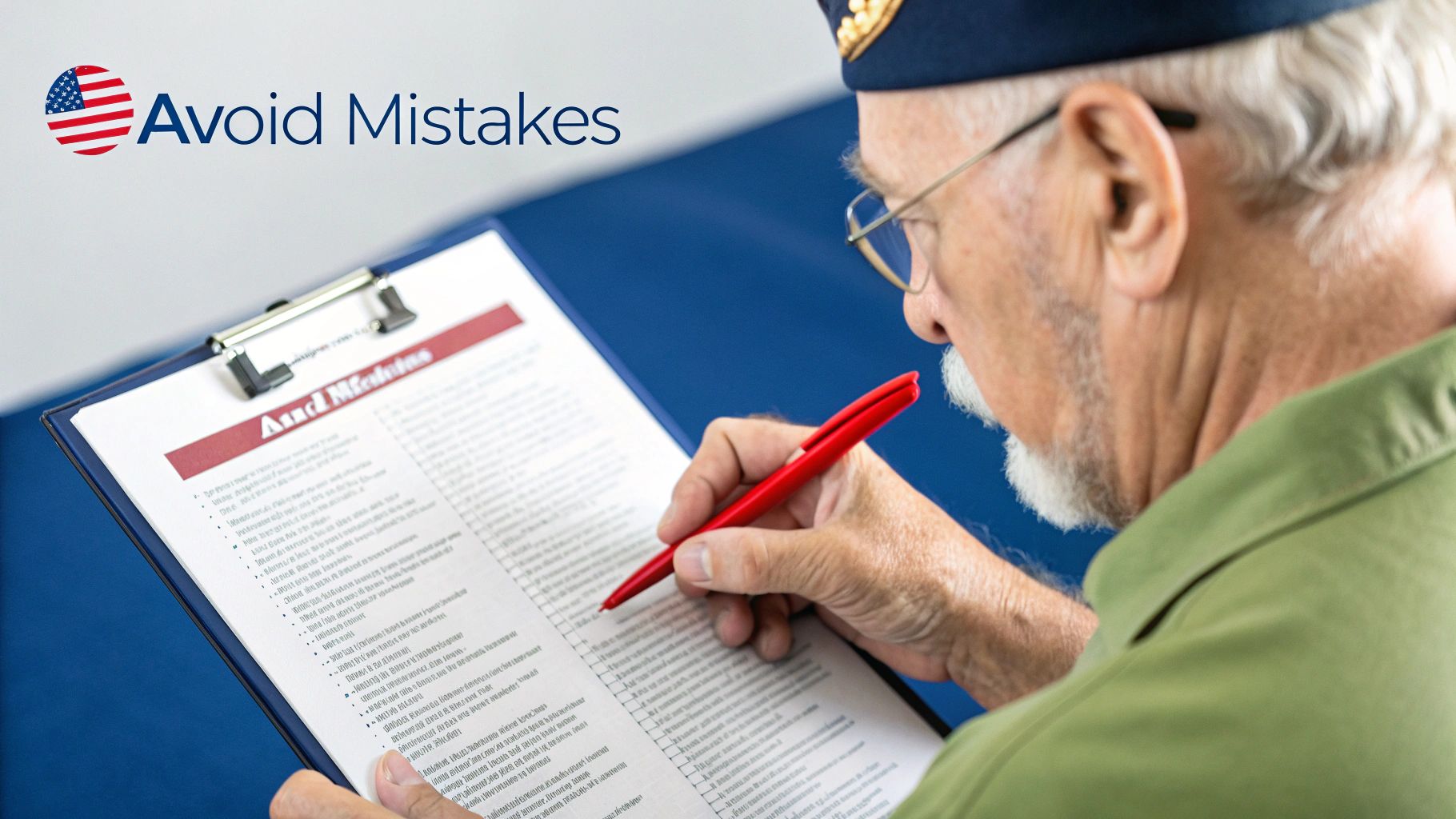
Successfully applying for veterans benefits often depends on having the right support. Many veterans, however, aren't aware of the network of free resources available. This section explores how professional assistance can be key to a smoother, more successful claims process. Knowing where and how to find this help can make all the difference.
Tapping Into Your Network Of Support
Several types of professionals can assist you when applying for veterans benefits. Each offers unique expertise and support:
-
Veterans Service Officers (VSOs): VSOs are trained and accredited professionals providing free assistance with the entire benefits application process. They can help gather necessary documentation, complete required forms, and even represent you during appeals. They are your dedicated guides through the often complex benefits system.
-
VA Benefits Counselors: These counselors, at VA regional offices, provide information about different benefit programs, eligibility requirements, and the application process. They offer valuable insights and can address your specific questions.
-
Accredited Representatives: Similar to VSOs, accredited representatives are authorized by the VA to assist veterans with their claims. They often work for veterans organizations or law firms, providing specialized knowledge in areas like disability claims or appeals.
Finding Reputable Assistance
Locating qualified assistance in your region is crucial. Start by researching accredited VSOs through the VA website or contacting your state's Department of Veterans Affairs. Look for organizations with a proven track record of successful claims and positive reviews. This research ensures you receive the quality support you deserve.
Identifying exceptional advocates requires careful consideration. Ask about their experience, specializations, and communication style. A strong advocate will be responsive to your questions, keep you informed about your claim's status, and actively work on your behalf. Open communication is key.
Preparing For A Productive Collaboration
Preparing for your first meeting with a VSO or representative is just as important as preparing for your application. Gather all relevant documents, including your military service records, medical history, and any previous denial letters. Having this information readily available makes for a more efficient meeting.
Clearly articulate your needs and goals during the meeting. Explain the specific benefits you are seeking and any challenges you have encountered. This helps your advocate understand your situation and tailor their support accordingly. Think of it as a team effort.
When Legal Representation Becomes Necessary
While VSOs and representatives handle most benefits applications, legal representation might be necessary for complex cases, especially appeals. Attorneys specializing in veterans law have advanced knowledge of the appeals process and can represent you before the Board of Veterans' Appeals.
Be wary of predatory services charging for assistance that should be free. Legitimate VSOs and accredited representatives never charge for their services. If someone asks for payment upfront, it’s a major red flag. Report such instances to the VA immediately.
By leveraging the expertise of these professional allies and understanding the system, you can confidently pursue the benefits you've earned.
Beyond Submission: Navigating the Post-Application Journey
Submitting your application for veterans benefits is a significant step, but it's not the final one. The period after submission can often feel uncertain. This section clarifies what to expect after you apply, offering insights into tracking your application, understanding decision outcomes, and navigating the next steps, regardless of whether your claim is approved or denied.
Tracking Your Application and Managing Expectations
After submitting your application, it's crucial to use the VA's online tools to track its status. These tools provide real-time updates, allowing you to monitor your application's progress through the review process. It's similar to tracking a package delivery, where you can see its journey from dispatch to arrival.
Understanding processing timeframes is also essential. While the VA aims for efficiency, processing times vary based on the specific benefit requested and the complexity of your case. Knowing these potential variations helps manage expectations and reduces stress during the waiting period.
Responding to Requests for Evidence
The VA may request additional evidence to support your claim. This is a common practice, and responding promptly and thoroughly is essential. These requests aren't a sign of denial; instead, they offer a chance to strengthen your application. Providing the required documentation quickly helps prevent processing delays.
Interpreting Decision Outcomes and Next Steps
The VA will notify you of its decision regarding your application. This decision can take several forms:
-
Approval: Your claim is granted, and you'll receive the benefits you applied for. Information on payment schedules and reporting requirements will be covered later.
-
Denial: If your claim is denied, you have the right to appeal. We'll later discuss strategic approaches to the appeals process, including utilizing the Appeals Modernization system, which provides various review options.
-
Partial Approval: You may receive a partial approval, where some aspects of your claim are granted, while others are denied. This can be a complex situation, and seeking guidance from a Veterans Service Officer (VSO) can help you understand your choices.
Furthermore, the employment landscape for veterans is relevant in the benefits context. Many veterans transition to civilian life after service, and 6.5% of veterans with a disability are unemployed. Learn more about veteran employment here. This data underscores the importance of continued support programs for veterans as they transition into both the benefits system and the job market.
Managing Your Benefits: Payments, Reporting, and Adjustments
Understanding payment schedules is important for approved claims. The VA typically distributes benefits electronically through direct deposit. Knowing when to expect these payments allows for effective financial planning.
Some benefit programs require ongoing reporting, such as updates to income or employment status. Meeting these reporting requirements ensures uninterrupted benefit payments.
Your circumstances may change after you begin receiving benefits. Perhaps your disability worsens, or you require more support. Understanding the process and optimal timing for requesting benefit increases or adding new benefits helps you maximize the support you receive.
Looking for guidance in navigating your post-application journey and maximizing your veterans benefits? Contact Homefront Group today for a free consultation and personalized support. Our team of professionals is dedicated to helping veterans like you achieve their goals and secure the benefits they deserve.